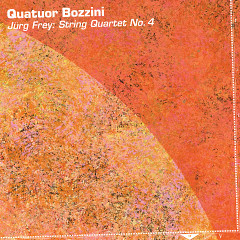
Jürg Frey: String Quartet No. 4 in Boring Like A Drill
There was a lot of excited chatter around when
In a way not readily apparent before, Frey lets a curious lop-sidedness define this composition from the outset and then tries to find a balance between the incongruous forces at play. The overall structure even suggests this, with the fifth movement taking up a little over half of the quartet’s hour-plus duration. His early tendency towards silence and his later one towards romanticism are set against each other throughout the piece. The opening movement even falls into two halves, when the reduced heart rate of the slow-breathing chorale that begins the work suddenly drops into a period of whispered, near-pitchless bowing. For the rest of the piece, you’re left wondering if a similar gap in the sound will re-open. Subsequent movements contrast moments of prolonged stillness with more classically-motivated interplay between the instruments, albeit in Frey’s characteristic manner of distilling such passages to their most essential, in slow motion. The second movement takes fragile gestures from unaccompanied and builds them into something articulate and expressive, while the third begins with a more assertive chorale before dissolving into brooding, introspective solos. That long final movement consolidates the preceding tendencies into a coherent statement, but without resolving any of the contradictions, finding it to be achievement enough to give expression to the complexities inherent to the composition. Heard in isolation, the movement could be taken as a self-sufficient and eloquent work in its own right, but what we’ve heard before exposes us to the tensions that animate the music.
This is a troubled work, where Frey has stripped away more of the artifice that has previously constrained his expressive tendencies behind a facade of impassive observation. It shows us more of a composer wrestling with imbalances and contradictions, in turn requiring the listener’s involvement far beyond what would have once been assumed as little more than contemplation of an impeccable surface.