March 13, 2008: Turntablism Mini-Festival: Freedman , Lussier , Tétreault
Lori Freedman, René Lussier, and Martin Tétreault will give a performance as part of the Revolutions
![Martin Tétreault live at Garage Festival (Germany) [Photo: Éric Mattson, August 2003]](https://res.electrocd.com/image.php/image/t/tetreault_ma.9.jpg?width=n2&cropratio=1:1)
October 5 – 8, 2007: Tétreault To Peform in October, Montréal
Martin Tétreault is the next guest of MAC’s Nocturnes. He will present the concert version of
April 21, 2007: Lussier Sings in Montréal
René Lussier will present his song cycle
![René Lussier [Photo: Pierre Crépô]](https://res.electrocd.com/image.php/image/l/lussier_re.1.jpg?width=n2&cropratio=1:1)
April 1, 2006: Les Queues de Veaux Live in Montréal
The abstract bluegrass of the band Les Queues de Veaux (Pierre Lavoie, dobro and Lap Steel guitar
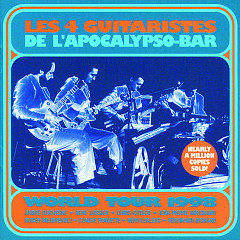
World Tour ’98, Chants rupestres, L’oasis, Tout le monde, Au royaume du silencieux, Musique d’hiver, Zucchini, La boulezaille, Chants et danses du monde inanimé, Fanfare Pourpour, Interférence sardines, René Lussier, Pierre Tanguay in actuellecd.com
When I was asked to dive into DAME’s catalog in search of intersecting points or recurring themes that would sketch discovery trails, the trad connection stood out immediately. Not only because of the importance of traditional folk music in the development of avant-garde music in Quebec, but also because the albums belonging to this line usually speak to us in a more immediate way and are easier to grasp.
It may seem a bit paradoxical, but tradition and innovation often go together hand in hand. When a culture’s avant-garde artists look for ways to overstep the rules of the music industry, they often turn their attention to roots — theirs and others — to find new paths to explore. Traditional folk music often holds at his core treasures of stylistic freedom and improvisation. Furthermore, its festive outlook can make it easier for an audience to accept and appreciate the introduction of new rhythmic, melodic or improvisational parameters. That’s what happened and continues to happen in Quebec. Here’s a listening trail in three parts, three original ways DAME artists approach the tradition
Revisited folk
Late 1970s
In Ambiances Magnétiques, René Lussier has continued to explore a rereading of Quebec’s music history. His discography is peppered with folk tunes stripped naked and dressed anew. On his three albums with Les Granules (a duo with Jean Derome) he exaggerates the Dionysian character of the music (
Reinvented folk
The folklore of a nation is not limited to a body of songs, it is also a state of mind, a substratum from which many artists in DAME’s catalog dig to reinvent our traditional folk music (and others too). On La Boulezaille, Pierre Tanguay and Pierre Langevin (masters of many European folk music in the group Strada) mix up traditional and modern instruments in search of a new, “actuel” folk freed from the cage in which all kinds of traditionalists would like to preserve it. Groups like Interférence Sardines and La Fanfare Pourpour shape their original pieces in ways that bring to mind the Devil’s fiddler or street fair music (music of the people, the prime definition of “folk” music). Joane Hétu’s Musique d’hiver doesn’t have that festive side to it, but it nevertheless redefines the folklore of our Quebec winters with much more precision and evocative strength then Nelligan’s famous poem.
Made-up folk
Traditional folk music refers to an instinctive form of music-making, music created outside the institutions and their codes, everyday music. And what if one wants to step out of the everyday
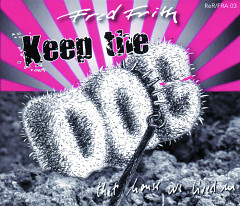
Keep the Dog: That House We Lived In, Jean Derome, Fred Frith, René Lussier in Audion
A case of bad planning, the day we happened to start up Ultima Thule as an official business, I’d already booked to see Keep The Dog at the South Bank in London. That was Monday July 3rd, 1989, and an excellent concert it was too. Keep The Dog then consisted of