actuellecd

Michel F Côté

66 results
  • 3
  • 4
  • 5
  • 6
  • 7
  • 8
  • 9
  • 10
  • 11
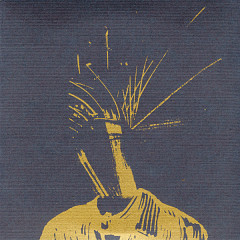
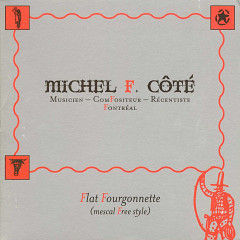
  • Flat fourgonnette (Mescal Free Style), Michel F Côté in UnAmerican Activities

    “Review”, Ken Waxman, UnAmerican Activities, no. 75, December 19, 2005
    Monday, December 19, 2005 Press

    Québécois have been alternately fascinated and repulsed by the United States — and by extension American music — from the time the French-speaking Canadian province began to assert its distinct identity in the early 1960s. Obvious exceptions like Céline Dion notwithstanding, names and language prevent most Québécois artists from affecting a similar transference to that taken by English Canadians, whose shared language with the masses of English speakers south of the border manifests itself in discomfort with many aspects of American values and culture at the same time as proximity allows them to pass as ersatz Americans. Yet, as anyone who has ever seen Québec situation comedies or pop performers can attest, the lure of the U.S. remains in the independence-minded province.

    Percussionist Michel F Côté’s Flat Fourgonnette (Ambiances Magnétiques) is simultaneously a celebration of and a satire on Yankee musical imperialism. A member since 1988 of the Montréal-based Ambiances Magnétiques collective, Côté and the others call their sounds musique actuelle — music of today — and mulch together rock, folk, contemporary classical, jazz, and other influences. Côté, however, is involved with many dramatic, dance, and film projects, to the extent that Flat Fourgonnette’s 19 tracks are often as theatrical as they are musical, with the 20 featured musicians taking on many actorly roles.

    A member of ensembles including the jazz-rock trio Klaxon Gueule, the percussionist provides his interpretation of American music by going right to its source: early folk, country, and pop music. Not only does he mix in excerpts from recordings of Mississippi John Hurt, Hank Williams, and Clarence Ashley, to name three, but many of the tunes have a purported country & western background. That isn’t too far-fetched since cowboy hat, bolo tie, and boot-wearing country singers have long been as much a part of rural French-Canadian spectacles as they are in performances elsewhere in North America.

    The particular talent of Côté, who plays drums, percussion, harmonica, organ, and sings here, is to produce his own songs written in an idiom similar to the actualités so that there’s no fissure. Accordion, steel guitars, and fiddles, shouted “yee-haws”, pinched-noise harmonies and — as Côté puts it — “poor whistling” are therefore put to use alongside the refined and reliable improvisations of folks like trombonist Tom Walsh and reedist Jean Derome. All in all, the treatment of the material is more like the gentle spoofs of guitarist Eugene Chadbourne than the savage parodies of Frank Zappa.

    Among the stand-out tracks are My Girl (“my gal’s a corker/ she’s a New Yorker”) sung in near moribund dead-pan fashion in English by AnneBruce Falconer, whose voice is balanced on top of the quivering soundscape of Bernard Falaise and Claude Fradette’s weeping electric guitars; and Sitting Bull, a 1940s-style faux C&W instrumental featuring speedy fills from Falaise and Frédéric Boudreault on electric bass with Côté contributing vocal gurgling, drum beats, and the rhythmic shaking of a vitamin bottle.

    Also featured are sound manipulations such as House Carpenter and Parti longtemps. The latter uses a false stereo echo chamber to have Hank Williams distantly singing one of his more lachrymose ballads, accompanied by what Côté calls “cheap polyrhytme” from the percussionist plus simple guitar licks and metallic slashes from Frank Martel’s theremin. The former mixes stinging rock guitar distortion, backbeat drumming, organ crescendos, and kazoo-like twittering into a four-chord punk rock-like outing, only to have the tune fade into a recording of old timey banjoist Clarence Ashley picking the same rhythm acoustically.

    Since Côté describes the CD as being poetic like “an old story-telling buffalo”, whose imprecise recollections include cowboys and horses, a saloon and its pretty manageress, a love story, “and even an Indian or two”, it’s not unfair to note that when his compositions are serious, they take on a certain Old World romantic flavor. Yeux de Lucie, for example, features clarinetist Jean-Denis Levasseur, trumpeter Nemo Venba, trombonist Walsh — a committed jazzer as well as a musique actuelle participant — guitarist Bernard Poirier, and Lou Babin on accordion in a brassy lilt, midway between a fanfare and a tarantella.

    Meanwhile Incendies, which completes the program, becomes a Beaux Epoch café waltz performed by Falaise, overdubbed on both electric bass and guitar, Côté on glockenspiel and percussion, and Luzio Altobelli on accordion. Only the squealing split tone from the alto and baritone saxophones of Derome — another long time Ambiances Magnétiques participant, who also plays jazz—hints that this is anything more than easy-listening fluff.

    If it sounds middle of the road, at least this tune is musically sophisticated, high-class fluff, just as many of the other compositions transcend satiric origin to reveal the sensitivity at their cores. Flat Fourgonnette, Côté’s “album of American music” shows that the Québécois, like the Dutch and the Italians — and unlike Americans — can amalgamate energy, passion, caricature, and cacophony into a sonic package. Without bitterness or vulgarity, the outcome is a product that entertains at the same time it stretches sound barriers.

    Since many American improvised music fans are familiar with the distinctive music coming form the Netherlands and Italy, a few more should venture a few miles north of the US’s Eastern border and discover the creations of Côté and his colleagues in musique actuelle.

    Côté… can amalgamate energy, passion, caricature, and cacophony into a sonic package. Without bitterness or vulgarity, the outcome is a product that entertains at the same time it stretches sound barriers.

    February 10 – 23, 2005: &records: Two Events

    Thursday, February 3, 2005 In concert

    The new record label &records, managed by Fabrizio Gilardino and Michel F Côté, announces two music events to be held in Montréal. Firstly, on February 10, 2005 at Casa del Popolo, a concert will feature musics by the Bernard Falaise and Martin Tétreault duo, followed by the band Bob (Éric Bernier, Michel F Côté, Guy Trifiro and their special guest Tétreault). Secondly, on February 23, 2005 at the O Patro Vys concert space, the band Foodsoon (Bernard Falaise, Alexander MacSween et Fabrizio Gilardino) will share the stage with Bob, again joined by Tétreault. The night will also feature videos by David Clérmont-Béïque and Frédéric St-Hilaire (Cinetik).

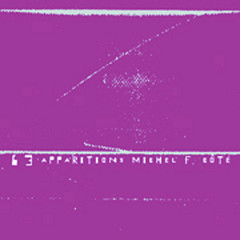
    63 apparitions, Michel F Côté in Altremusiche

    Michel F Côté. 63 apparizioni nel mondo dell’elettronica”, Michele Coralli, Altremusiche, November 1, 2004
    Monday, November 1, 2004 Press

    altremusiche: La & records, la vostra neonata etichetta canadese, esce con due lavori, entrambi molto ben curati ed entrambi ispirati a una costruzione del suono basata sulla ciclicità di strutture rumoristiche. In questi ultimi anni il rumore sembra definitivamente esploso in gran parte delle produzioni artistiche contemporanee. Quanto ha influito secondo te l’elettronica nel determinare un’estetica del continuum sonoro/rumoristico?

    Côté: Mi sembra che, in quest’ottica, la posizione di John Cage (e di qualcun’altro) sia centrale. Però, più che l’elettronica (in termini d’estetica musicale), penso che sia stata la tecnologia digitale ad aver contribuito all’integrazione definitiva del rumore nello spazio sonoro. Il medium stesso è il centro di questa rivoluzione musicale: “the medium is the message” diceva giustamente Marshall McLuhan. L’inizio degli anni ‘90 potrebbe essere il punto di partenza più probabile: il digitale — attraverso i cd, i primi laptop, studi portatili e altri utensili musicali non analogici — diventa rapidamente uno strumento audio accessibile e indispensabile. Questa innovazione tecnologica chiude definitivamente l’era analogica. L’elettronica, grazie alle sue risorse, diventa quindi un’estetica influente. Anzi, il digitale ci ha liberato da quell’ossessione tipicamente analogica nei confronti del rumore (cioè il rumore di fondo, il soffio, tutto quel rumore considerato come parassitario); il rumore non è più considerato come un tabù, non è più odiato, diventa potenzialmente estetico. I “room tones” e altri “buzz” elettrici assumono uno statuto di nobiltà, del tutto inaspettatamente, d’altra parte. Anche il “glitch”, quest’altro “errore sonoro involontario”, ha approfittato di questa liberazione digitale. La vecchia gerarchia dei suoni considerati come musicali, rispetto a quelli “non musicali”, è stata abolita. Cage trionfa.

    altremusiche: Non possiamo non considerare la vostra vicinanza estetica, ma anche fisica, con Ambiances Magnétiques. La & records risponde a un’esigenza più radicale rispetto quell’esperienza che sembra ampliare il campo a musiche di diversa estrazione? Ci parli della tua esperienza con AM?

    Côté: Non direi che ci sia un’esigenza radicalizzatrice dietro la creazione dell’etichetta. Essenzialmente si tratta d’un progetto artistico iniziato da Fabrizio Gilardino e me stesso. Un desiderio comune d’inventarci, con molta modestia, un nuovo spazio di creazione e diffusione. “Just what the world needs… Another record company”, scriveva Frank Zappa nel 1969, quando mise in piedi Bizarre Productions. Da qualche anno a questa parte il pianeta è infestato dal proliferare di nuove, piccole etichette che vedono la luce ogni giorno, senza sosta, in modo quasi esponenziale. Ciò mi piace… Mi sembra una proliferazione potenzialmente poetica. &records è uno spazio di ricerca, e la ricerca, la sua stessa ragion d’essere… Posso immaginarmi facilmente &records nella stessa genealogia familiare di Ambiances Magnétiques. Del resto, Fabrizio e io stesso, ne siamo ancora e sempre strettamente associati: Fabrizio continua a collaborare con loro come direttore artistico e grafico e io vi faccio ancora uscire dei dischi, com’è il caso per uno dei miei prossimi progetti, che ha per titolo Flat Fourgonnette (molto vagamente, musica country alla mescalina). Sono ancora, e lo sarò sempre, un membro del collettivo di Ambiances Magnétiques. Quest’etichetta è un ottimo esempio di “successo parallelo” e poi, senza Ambiances Magnétiques, qualche anno fa, probabilmente non sarei mai riuscito a pubblicare alcunché.

    altremusiche: Nella musica elettronica attuale, ma forse non solo in quella, uno dei principi plasmanti forse più determinanti è il concetto di spazio, sia reale che mentale. Esiste secondo te una musica in se stessa, libera dall’idea o dalla suggestione che può generare?

    Côté: Una musica che esistesse solo per se stessa dovrebbe comporsi in modo autonomo, senza intervento umano, e sarebbe al tempo stesso il suo solo fruitore e referente. Se una tal musica esistesse non potremmo mai ascoltarla. Peggio per noi. Il melomane e il critico inevitabilmente generano un’interpretazione. Le idee che s’associano abitualmente a una musica in particolare sono in genere proposte dall’ascoltatore, non dal compositore. La musica è, dal punto di vista semantico, piuttosto relativa, debole nei suoi enunciati, meno precisa del linguaggio visuale o delle parole stesse, ma resta comunque strettamente legata alle idee e suggestioni del compositore come alle diverse interpretazioni dell’ascoltatore. Per quanto riguarda il concetto di spazio, ti dirò che, essenzialmente, la musica è un’arte del tempo, ciò che gli uomini hanno inventato di meglio per contrastare l’ineluttabilità del tempo che trascorre. E tutto ciò funziona piuttosto bene: quest’arte infonde elasticità al tempo che passa. Nella musica, le questioni di spazializzazione sono sempre rimaste secondarie. Forse, grazie all’inarrestabile ottimizzazione delle tecniche di riproduzione sonora, le preoccupazioni legate alla spazializzazione, al concetto di spazio sonoro, aumenteranno. Questa non è che l’alba…

    altremusiche: Quanto influisce l’idea dello spazio sonoro nella tua musica? Sia quello in cui la tua musica vivrà, sia quello che la tua musica sarà in grado di evocare…

    Côté: Non ho alcun controllo su ciò che la mia musica potrebbe evocare. Ed è un’idea che mi piace molto. Sesso stellare? Pensieri immensamente stupidi? Chi lo sa? In quale spazio sonoro la mia musica vivrà? Spero che si tratti d’uno spazio frequentato da spiriti radicali liberi… Lo spazio sonoro si rifà a una logica di profondità e di campi: vicino, lontano, che ruolo può giocare il silenzio. E poi non si devono dimenticare le dinamiche d’ampiezza sonora: le nozioni di spazio ne sono dipendenti. L’ascolto attivo, insomma.

    altremusiche: Il tuo lavoro 63 apparitions è stato composto per una coreografia, quindi si tratta di una musica funzionale in qualche modo. Quanto cambia il tuo modo di lavorare in caso come questo?

    Côté: Tutta la musica è, a priori, funzionale. Assolutamente. La musica è un’arte funzionale: contribuisce al benessere dell’anima, funzione necessaria esercitata da almeno 60000 anni. L’arte per l’arte è una strana utopia. Però una musica composta per una coreografia fa parte del nostro quotidiano. Musica e danza sono due forme d’arte strettamente associate: la danza, spaziale, si nutre di musica; la musica, temporale, si libera a contatto della danza. Non conosco musicisti che non sorridano quando vedono gente ballare sulla loro musica e mi sembra una funzione assai nobile, quella di comporre per uno spazio coreografico. Comporre per una coreografia è naturalmente diverso che comporre per un matrimonio, una celebrazione militare o un corteo funebre. E’ decisamente più gaio… Ti dirò che l’interazione interdisciplinare mi pare molto stimolante, basta citare alcuni nomi, John Cage / Merce Cunningham, Tom Waits / Robert Wilson, Igor Stravinskij / Vaslav Nijinski, Nino Rota / Federico Fellini, Morton Feldman / Samuel Beckett… Cambia, il mio modo di lavorare in un caso come questo? Il mio lavoro di composizione cambia sempre e comunque…

    altremusiche: Nel disco vengono citati due autori come Cage e Satie, che sono sempre stati legati a qualcosa di esterno alla musica, ma così strettamente correlato alla loro musica. Perché loro due?

    Côté: Semplicemente perché mi sono essenziali. Al tempo stesso esteriormente e strettamente connessi…

    April 30, 2004: Labrosse and her Small Bestiary

    Monday, April 19, 2004 In concert

    Diane Labrosse invites you to “Petit bestiaire” (Small Bestiary), a serie of bruitist and absurd compositions based on wildlife. The concert is held at Montréal’s La Sala Rossa April 29 and 30, 2004 with musicians Michel F Côté (acoustic and electronic percussions), Lori Freedman (clarinets), Diane Labrosse (sampler), Frank Martel (theremin, electric guitar, voice) and Jocelyn Veilleux (french horn).

    August 3, 2003: 9th Fruits de Mhère

    Thursday, July 3, 2003 In concert

    Fruits de Mhère “les champs de l’improvisation” (fields of improvisation) is a small rural festival. Temporarily moved to Brassy (France), this 9th edition will present many artists from July 31 to August 3, 2003. Amongst others, Canadian vocal poet Paul Dutton; the Jean Derome and Alfred Spirli duo (flutes, percussions, small objects); finally, the trio of Kaffe Matthews (violin, digital manipulations), Martin Tétreault (turntable) and Michel F Côté (percussions, electronics).

  • 3
  • 4
  • 5
  • 6
  • 7
  • 8
  • 9
  • 10
  • 11