Focus on Fanfare Pourpour (in French); part 2 of 2
Wednesday, October 27, 2010
Podcast

When I was asked to dive into DAME’s catalog in search of intersecting points or recurring themes that would sketch discovery trails, the trad connection stood out immediately. Not only because of the importance of traditional folk music in the development of avant-garde music in Quebec, but also because the albums belonging to this line usually speak to us in a more immediate way and are easier to grasp.
It may seem a bit paradoxical, but tradition and innovation often go together hand in hand. When a culture’s avant-garde artists look for ways to overstep the rules of the music industry, they often turn their attention to roots — theirs and others — to find new paths to explore. Traditional folk music often holds at his core treasures of stylistic freedom and improvisation. Furthermore, its festive outlook can make it easier for an audience to accept and appreciate the introduction of new rhythmic, melodic or improvisational parameters. That’s what happened and continues to happen in Quebec. Here’s a listening trail in three parts, three original ways DAME artists approach the tradition
Revisited folk
Late 1970s
In Ambiances Magnétiques, René Lussier has continued to explore a rereading of Quebec’s music history. His discography is peppered with folk tunes stripped naked and dressed anew. On his three albums with Les Granules (a duo with Jean Derome) he exaggerates the Dionysian character of the music (
Reinvented folk
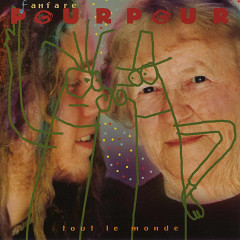
The folklore of a nation is not limited to a body of songs, it is also a state of mind, a substratum from which many artists in DAME’s catalog dig to reinvent our traditional folk music (and others too). On La Boulezaille, Pierre Tanguay and Pierre Langevin (masters of many European folk music in the group Strada) mix up traditional and modern instruments in search of a new, “actuel” folk freed from the cage in which all kinds of traditionalists would like to preserve it. Groups like Interférence Sardines and La Fanfare Pourpour shape their original pieces in ways that bring to mind the Devil’s fiddler or street fair music (music of the people, the prime definition of “folk” music). Joane Hétu’s Musique d’hiver doesn’t have that festive side to it, but it nevertheless redefines the folklore of our Quebec winters with much more precision and evocative strength then Nelligan’s famous poem.
Made-up folk
Traditional folk music refers to an instinctive form of music-making, music created outside the institutions and their codes, everyday music. And what if one wants to step out of the everyday
The Holidays are closing in. Are you wondering what gifts to buy this year
That good ol’ song
It may seem a bit easy, but everyone likes a good song. That said, we don’t all have the same definition of what a good song is. And the artists in DAME’s catalog take some liberties with this format — that’s what makes things exciting. But
You don’t understand French
Party time
A time for celebrating, letting off steam, and disobedience, the party when applied to music can give way to a distortion of admitted rules.
In a similar spirit, but adding an East-European flavor and an incredible dose of energy is the group
And to boldly go where few have gone before
Maybe you would like to go further and hook someone on a kind of “musique actuelle” that is more daring and abstract. Here are a few key albums from DAME’s catalogue in improvised and electronic music.
A pillar of the avant-garde music scene since the early ‘70s,
One of the first groups from the DAME stables to have explored electroacoustic improvisation, the
Finally, instead of sending out the usual Christmas cards, consider the sound post cards produced by the label Ouïe-Dire. These are regular post cards accompanied by 3” CDs from French experimental artists. And happy Holidays
Dire que la fanfare PourPour provient du plateau Mont-Royal c’est aussi définir le style de l’ensemble et de sa musique
Onze résidents du Plateau Mont-Royal, à Montréal, âgés de 18 à 63 ans, ont décidé de former la Fanfare Pourpour. Ces disciples du cabaret underground se révèlent d’excellents musiciens et font sortir du macadam du Plateau une musique branchée sur la vie, mon vieux, avec tout son spectre d’émotions vibrantes et diamétralement opposées. La poussière du rang 4, par exemple, avec ses harmonies vocales discrètes et sans prétention, est représentative du ton très agréable de l’ensemble.
Bernard Poirier, Luc Proulx et René Lussier participent à l’écriture du matériel.