actuellecd

Blog

276 results
  • 1
  • 2
  • 3
  • 4
  • 5
  • 6
  • 7
  • 8
  • 9
  • GO [Guitar Obsession] in SOCAN — Paroles & Musique

    “Critique”, Gilles Boisclair, SOCAN — Paroles & Musique, no. 13:4, December 1, 2006
    Friday, December 1, 2006 Press

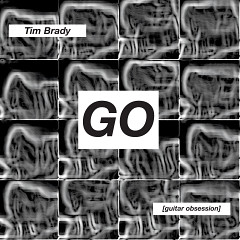
    Tim Brady est un des compositeurs et guitaristes les plus excitants que l’on puisse entendre aujourd’hui. Le magazine Guitar Player l’a classé parmi les 30 guitaristes les plus importants pour l’avenir de l’instrument. C’est donc avec un plaisir non dissimulé que nous accueillons son nouvel album, GO [Guitar Obsession]. Centré sur le jeu de guitare et sur l’écriture de Brady, il comprend huit pièces époustouflantes pour guitare électrique solo, électronique en direct, bande et ordinateur. Malgré l’attirail électronique, les sons et les textures, les accents jazz et blues, sont rendus avec clarté.

    … un des compositeurs et guitaristes les plus excitants que l’on puisse entendre aujourd’hui.

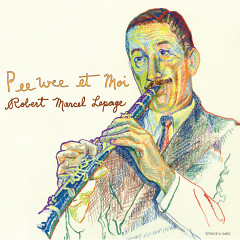
    Pee Wee et moi, Robert Marcel Lepage in Signal to Noise

    “Live Reviews: Guelph Jazz Festival”, Mike Chamberlain, Signal to Noise, no. 44, December 1, 2006
    Friday, December 1, 2006 Press

    […] Three free concerts at the Macdonald-Stewart Art Centre, headquarters for the festival’s colloquium, stood out. The acoustics and sightlines for those not in the first four or five rows at Mac-Stew are problematic. Happily, I was able to find a seat in the front for the concert by Robert Marcel Lepage’s Pee Wee et moi project, a genial tribute to the idiosyncratic clarinetist Pee Wee Russell by the Montréal clarinetist. François Houle, Lori Freedman, and René Lussier stood out, with Freedman — mainly on bass clarinet — sounding especially inspired. […]

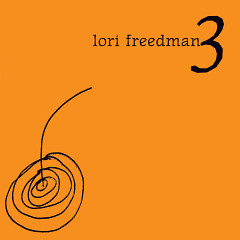
    3 in AllMusic

    “Review”, François Couture, AllMusic, December 1, 2006
    Friday, December 1, 2006 Press

    3 is the number of lineups featured on this album and the number of musicians in each lineup. In June 2005, Lori Freedman played three gigs at the Va-et-vient in Montréal, on three consecutive nights, each night featuring a different trio. All three shows are represented here in the form of short pieces (between one and six minutes) that are probably excerpted from longer improvisations but never sound like so. The first five tracks feature Freedman in the company of guitarist René Lussier and turntablist Martin Tétreault — a treat, as these two have not been heard together on record in a long time. The trio grinds and grits, looking for beauty in the tiniest, bumpiest noises, and occasionally succeeding. The second lineup features Rainer Wiens on prepared guitar and Jean Derome on saxophone (one track) and small objects — birdcalls, toys, etc. Fun interplay develops between Freedman and Derome in Chrysalis; Poussière de lune is dominated by Wiens’ textural drones. The final trio puts Freedman together with bassist Nicolas Caloia and percussionist Danielle Palardy Roger. After the two previous noise-driven sets, this trio sounds slightly more conventional, engaging in eventful yet highly controlled free improvisation. The Light of Night and Tigresse are highlights and this third set as a whole is a better showcase for Freedman’s unique clarinet circumvolutions. If one of these trios should record a full-length album, number 3 is it.

    3

    GO [Guitar Obsession] in AllMusic

    “Review”, François Couture, AllMusic, December 1, 2006
    Friday, December 1, 2006 Press

    After a number of ensemble projects for the Ambiances Magnétiques label, GO (the letters stand for Guitar Obsession) reasserts Tim Brady’s stature as a guitarist. The album is split into two halves. First, we have four pieces by Brady, among which the title track is the highlight. A multitracked piece with criss-crossing loops and a feverish pace, it has all the structural complexity and immediate virtuosity Brady has gotten us used to. Yellow, Add Green is also noteworthy for its unusual devolution from trashy pyrotechnics to soulful blues licks. Frame 22: Switch, for guitar and live electronics is less striking and surely not unique, despite some inspired passages. The second half of the album features guitar pieces written for Brady. Jean-François Laporte’s Le Chant des baleines calls for an electric guitar with metal extension and resonator, played with a bow, and accompanied by an electroacoustic tape part. It is a haunting piece, although it remains somewhat cold. Ironically, Alexandre Burton’s Unplugged is another story. In this piece, Brady plays a de-tuned, unplugged electric guitar linked to a computer running Max/MSP. The human component of the piece draws from all the possibilities left by the unamplified instrument, including its percussive potential, while the computer manipulates and multiplies his efforts, with surprising results. Laurence Crane’s Bobby J is a quiet, reflexive resonant piece, strongly reminiscent of Chas Smith’s works. For anyone who may have missed Tristan Murail’s Vampyr! (already recorded by Brady for 10 Collaborations), here it is again, recorded live, a flashy metalesque piece of serious music. GO is Brady’s first guitar-centric album since 20 Quarter-Inch Jacks and, just for that reason, deserves investigation.

    3 in The WholeNote

    “Discoveries / Pot Pourri”, Ken Waxman, The WholeNote, no. 12:4, December 1, 2006
    Friday, December 1, 2006 Press

    Recorded over three days, 3 showcases three sets of compositions interpreted by three dynamic trios, whose only constant is Montréal-based bass clarinettist Lori Freedman.

    Sounding arcing timbres, harsh spit tones, rhythmic tongue slaps, rotund chalumeau vibrations and moist glissandi, Freedman moulds her impressive technique to reflect each situation. However, only two parts of this triple header attain the highest score. Most memorable are her five interchanges with the off-kilter folksiness of René Lussier’s guitar and the pulsating crackles of Martin Tétreault’s turntables; as well as her chamber group-like interplay on four tracks with Nicolas Caloia’s thumping bass and Danielle Palardy Roger’s ever-shifting, understated percussion. Sweeping, twangy vibrations and kazoo-like squeaks from respectively, Rainer Wiens’ prepared guitar and Jean Derome’s alto saxophone upset the triangular game plan though. Too many reed buzzes and trills contrapuntally piled on top of one another relieved only by reverberating strums weaken those four selections.

    But two outta three ain’t bad, with the remaining threesomes superlative. Roger’s rattles and inventions plus Caloia’s blunt string-stopping and sawing deftly fuse with Freedman’s vibrated flutter tones to resolve compositions from atonally to connective, horizontal interaction. Most protuberant of the triptych meetings are those with Lussier-Tétreault. With the turntable’s shrill whistles, hissing static and metrical scratches bushing against the guitar’s chromatic snaps and rhythmically complex strums, the mood is definitely POMO. Utilizing this droll interaction, the clarinettist regularly knits the strands together with mellow vibrated pitches which succinctly complete the tripartite musical impulses.

    3

    GO [Guitar Obsession] in The WholeNote

    “Discoveries / Pot Pourri”, Andrew Timar, The WholeNote, no. 12:4, December 1, 2006
    Friday, December 1, 2006 Press

    Given its full title, Guitar Obsession, leading Montréal-based new music guitarist and composer Tim Brady’s new CD covers much of the musical ground the electric guitar has travelled in the past three generations. In fact much of the zeitgeist of our popular culture has been saturated with this mighty instrument. In guises as different as serving in a Big Band rhythm section, to Stairway to Heaven, to the African Guitar Summit, this essentially quiet acoustic plucked string instrument has become through the mediation of electronic amplification a global musical juggernaut.

    GO is really two CDs in one. While featuring the virtuoso cutting-edge guitar playing of Brady throughout, the first eight tracks are Brady originals, while the balance of compositions on the album are by others. Most notable of the other composers perhaps is the French Tristan Murail, known primarily for his “spectral” works. He is represented here in Brady’s ominous, ‘heavy metal’-sounding rendition of Vampyr! (1986), recorded live in a New York performance.

    For me the outstanding track is GO. Here, Brady shows himself to be a musical quick change artist. In places jazzy, bluesy, and jaggedly new music-y, his guitar and composer chops effortlessly merge in a happy marriage. As a composer, he avoids solo guitar monotony by multi-tracking and thus layering his guitar lines, and varies GO with a rich palette of solo lines, solo with accompaniment and ensemble textures. He pays close attention to structure, variety of densities, tension and release, lyrical melodies as well as bell-like string harmonics.

    If your personal musical obsessions include the extended electric guitar, then Tim Brady’s GO can certainly help scratch that itch.
    If your personal musical obsessions include the extended electric guitar, then Tim Brady’s GO can certainly help scratch that itch.
  • 1
  • 2
  • 3
  • 4
  • 5
  • 6
  • 7
  • 8
  • 9