actuellecd

Blog

258 results
  • 23
  • 24
  • 25
  • 26
  • 27
  • 28
  • 29
  • 30
  • 31
  • Veuillez procéder in Vital

    “Review”, Dolf Mulder, Vital, no. 471, April 20, 2005
    Wednesday, April 20, 2005 Press

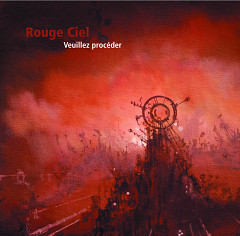
    In october 2004 Rouge Ciel recorded their second album that is now available through Monsieur Fauteux m’entendez-vous?. Their debut cd dates from 2001 and received a good press. The violin player of this group, Guido del Fabbro, released a solo album in 2003. Del Fabbro started Rouge Ciel in 1996 together with Antonin Provost. In the early years they were inspired by jazz-rock, ECM, etc. In more recent years they developed their own version of instrumental ‘chamber’ rock that brings to mind the artrock of earlier generations like Henry Cow, Debile Menthol, Conventum, Smala, etc. Not that Rouge Ciel is a retro band. Absolutely not, although there a few moments on the cd where the compositional form sounds is a little outdated. But the overall impression is that we have here a fresh new blend of folk, rock, jazz and other influences. Most pieces are heavily composed, but there are also a few short improv-like pieces (Bond précisionnel 1-4) on this album. But one could say that this band is an exponent of the resurrection of ‘art-rock’ who are developing it further into new directions. This makes Rouge Ciel, a quartet of young musicians, a promising band.

    The band consists of Guido del Fabbro (violin, acoustic and electric 5-string violin, prepaped violin, turntable, electonics, octave mandolin), Simon Lapointe (piano, keyboards, prepared piano), Antonin Provost (electric and acoustic piano), Némo Venba (drums, trumpet, flugelhorn, percussion). Because all of them are multi-instrumentalists the music is rich and diverse in sound. The playing is convincing and very enjoyable. Rouge Ciel delivers a very good follow up to their first one. I hope it will not take another three year for their third one.
    … music is rich and diverse in sound. The playing is convincing and very enjoyable.

    Douleur sourde in Vital

    “Review”, Dolf Mulder, Vital, no. 471, April 20, 2005
    Wednesday, April 20, 2005 Press

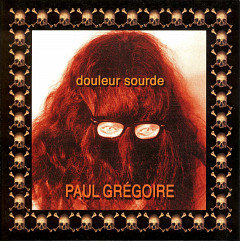
    Paul Grégoire is a multidisciplinary artist from Canada. Since 1970 he has been active in the fields of sculpture, music, literature, and performance. In the 90s he played saxophone in several groups in the bars and galleries of Québec. From 1996 till 1999 he was the sax-player and singer of Whisky Blanc. In 2004 he recorded some of the songs he played with this group for his first solo album Douleur Sourde. It’s an album of traditional songs. The music is slow and melodious, and often borrowed from a known repertoire. The album opens with Jardin d’ogives. It has a great solo by Jean Derome on sax. We hear more evergreens of this kind on this album. Not exactly my cup of tea. But I must say all the songs have been arranged with taste. Grégoire has the company of some reputated musicians like Jean Derome (sax), René Lussier (guitar, etc.) and Michel F. Coté (drums). Also lesser known musicians were invited like guitarist Drae Rival and drummer Jonas Slowenski. They do a good job, and give funny and interesting interpretations of the songs. Grégoire wrote all the lyrics that are sung by him in french, a language I do not speak. So I can’t tell you what the lyrics are about. But the information says they are “unique, occasionally anecdotal, always sensitive, and present a certain level of reflection on social matters and a touch of humor, while remaining dark”.

    … all the songs have been arranged with taste.

    Oralizations in Vital

    “Review”, Dolf Mulder, Vital, no. 471, April 20, 2005
    Wednesday, April 20, 2005 Press

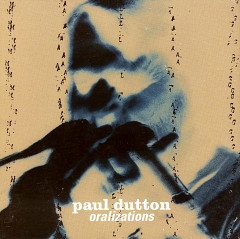
    Vocalist Paul Dutton strikes back with another solo-album now for Ambiances Magnétiques. A few years ago the Ohm/Avatar label released his Mouth Pieces-album. Paul Dutton belongs to the select company of vocal artists like Phil Minton, David Moss, Jaap Blonk, a.o. Together with these three artists plus Makigami Koichi, Paul Dutton performed as the Five Men Singing at the Victo Festival in Canada. But already in the early seventies he choose the path of sound poetry. From 1971 to 1989 he was member of The Four Horsemen, a famous canadian quartet specialized in sound poetry. From 1989 Dutton continued as a member of another famous canadian experimental outfit named CCMC (John Oswald a.o.). Also he published several books of his poems. The pieces on his new cd range from english spoken poems to pieces mixed of speech and sound, to pure soundpoetry. Verbal, non-verbal or anything in between, Dutton in all pieces is interested in the sound qualities of his voice performance. In verbal pieces like Else or Score for Tony — First Movement it is clear that however verbal and about meaning, the sound-qualities of the performance are of a same importance. Dutton himself defines the spectrum he covers as ranging from speech to music. So in his vision the border between literature and music is a gradual one. Sometimes he comes close to tuvanlike throat singing (in Sonorality). A piece like Wolf-chant brings some shamanistic ritual by some unknown tribe to my mind. Other pieces are just hilarious. Dutton tries once more to expand he technical and expressive potentials of his soundpoetry. Albums like this one make you astonished about the possibilities of the human voice. What an instrument! No electronic treatments or overdubs are used, except some overdubs in Sugar and T’ Her for Monk ’n’ Mabern, two poems where Dutton added some sound-singing. Its music that has to be seen to be believed!

    Albums like this one make you astonished about the possibilities of the human voice.

    Veuillez procéder in Ici Montréal

    “Compact!”, François Nadon, Ici Montréal, April 14, 2005
    Thursday, April 14, 2005 Press

    Guido del Fabbro, Simon Lapointe, Antonin Provost et Némo Venba nous reviennent avec un album entièrement instrumental. La musique de Rouge Ciel ne se laisse pas enfermer dans une case stylistique. On pige ici et là dans le rock progressif, l’improvisation libre, le jazz et la musique latine. L’oreille avertie retrouvera les influences de Miriodor et d’Univers Zéro disséminées au travers de l’album. Bien que les musiciens démontrent leur savoir faire dans de brillantes envolées, l’album manque d’un peu d’âme. Le foisonnement de styles peut être une lame à deux tranchants. À ce deuxième opus, elle enlève de la cohérence. Malgré quelques bémols, Rouge Ciel nous offre toujours une musique de qualité.(fN) 7,5

    … Rouge Ciel nous offre toujours une musique de qualité.
    7,5
  • 23
  • 24
  • 25
  • 26
  • 27
  • 28
  • 29
  • 30
  • 31