actuellecd

Blog

188 results
  • 16
  • 17
  • 18
  • 19
  • 20
  • 21
  • 22
  • 23
  • 24
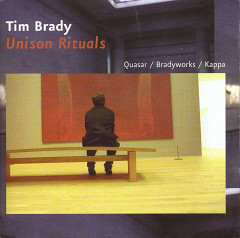
  • Unison Rituals in Outsight

    “Review”, Tom Schulte, Outsight, June 1, 2003
    Sunday, June 1, 2003 Press

    Tim Brady offers to bridge the past and the future through his exciting chamber works for saxophone and ensemble on Unison Ritual. The set of three works leads with two that are tightly constructed and fiercely demonstrated examples of post-classical modernism. The final piece is Sound Off which reconstructs with studio multi-tracking Brady’s 100-wind instrument live outdoor performance…

    … exciting chamber works for saxophone and ensemble…

    Asymétries in Outsight

    “Review”, Tom Schulte, Outsight, June 1, 2003
    Sunday, June 1, 2003 Press

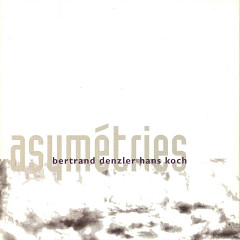
    On Asymémtries we have reeds this time being re-evaluated as to how to make sound with them. The Swiss pair behind this disc is Bertand Denzler (tenor sax; Günter Müller, Bob Ostertag) and Hans Koch (bass clarinet and soprano saxophone; Cecil Taylor, Elliott Sharp). The duo goes for a deconstruction that cuts so close to the bone that the pieces are often made up of merely amplified respiration and the sharp squeak of a breath cut in half by a reed… But it is not all about dismantling and rebuilding reeds.

    … a deconstruction that cuts so close to the bone…

    Grain in Outsight

    “Review”, Tom Schulte, Outsight, June 1, 2003
    Sunday, June 1, 2003 Press

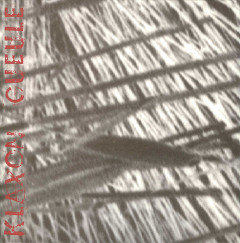
    It is this reverie induced by Grain from Klaxon Gueule. The album was recorded in a barn and the mostly electronic and homemade percussion sound mosaics offer a barnyard of impressions. In Fonte sur plomb I hear the ducks and roadside traffic of a suburban lake. Fer blanc sur frêne is the fast-paced chatter of an industry of metal-munching machines…

    … mostly electronic and homemade percussion sound mosaics…

    Soshin in Outsight

    “Review”, Tom Schulte, Outsight, June 1, 2003
    Sunday, June 1, 2003 Press

    Soshin is a modern guitar album from Antoine Berthiaume. The lead, title track is a solo piece that is a vague meandering but suggests that this guitar album is not about riffs and leads. The rest is duets with masters of the experimental guitar: Fred Frith and Derek Bailey. The pieces flow into each other as the sound architects twang, rub and groan their instruments with sustain only science can give. How was that done? One wonders with each moment. A moaning dog arises out of Wolf’s Wood before the disc disappears as subtly as it came in Aquathèque… Often, we find ourselves enjoying sounds that are not music, but put forward by our environment.

    … duets with masters of the experimental guitar…

    Studio — Analogique — Numérique in Outsight

    “Review”, Tom Schulte, Outsight, June 1, 2003
    Sunday, June 1, 2003 Press

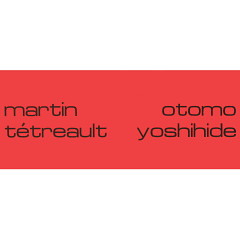
    A prolific label of fascinating albums, Ambiances Magnétiques is now working a bevy of new and current releases. From the duo of Martin Tétreault and Otomo Yoshihide comes the three-mini-CD box set Studio-Analogique-Numérique. The pair recorded “Studio” live in the studio, with no reprocessing, although the set was edited. Letting in chance and eschewing compositional form, this is an organic collage of turntables and electronics. Like a gathering storm this collection of monstrous sounds is ominous and almost unsettling. Then, each took the tapes “back to the lab” for lone reconstruction without input from the other. Tétreault opted for antique tape equipment on “Analogique,” which adds warmth and even charm to the sounds. Yoshihide went the opposite route and employed state-of-the-art digital reshaping on “an ultramodern computer” and a crisper, sharper piece emerges of low volume, high-pitched drones and alien, cybernetic ruminations… Instead of contrasting styles, personalities merge in the following case.

    … an organic collage of turntables and electronics.

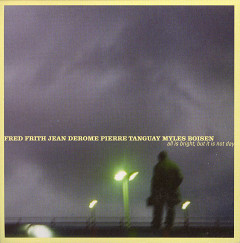
    All Is Bright, But It Is Not Day in Revue & Corrigée

    “Disques”, Pierre Durr, Revue & Corrigée, no. 56, June 1, 2003
    Sunday, June 1, 2003 Press

    Ces deux enregistrements [All is bright, but it is not day et Whisperings (Wintsch, Baumann, Frith, Trontin)] sembleraient presque jumeaux. A peu de choses près. Mais ce peu de choses est toutefois fondamental. Le lecteur de ces lignes a, sans doute, remarqué sur chacun la présence de Fred Frith. Par ailleurs, la formule instrumentale basique est — presque — identique: un batteur percussionniste (Pierre Tanguay dans le premier cas, Bernard Trontin dans le second; la flûte est tenue par Jean Derome dans All is bright… , par Franziska Baumann dans Whisperings; un environnement sonore à base d’échantillonnages et de claviers avec Michel Wintch ou le traitement sonore de Myles Boisen.

    Les deux productions — issues respectivement d’un enregistrement live à Oakland en février 2001 et d’un concert à Zurich en décembre 1999 — diffèrent toutefois par l’utilisation des séquences de traitements sonores. Dans le cas de All is bright… , c’est le travail du trio Frith, Derome, Tanguay qui est traité en temps reel par Boisen, et réintroduit dans la confrontation sonore, un peu comme le fit Bob Ostertag dans sa tétralogie say no more/Verbatim. Dans Whisperings, la modification électronique ne joue que sur l’instrument ou la voix de l’instrumentiste lui (elle)-même avant sa confrontation avec ses partenaires. Bref, deux démarches distinctes.

    Par ailleurs la palette sonore des partenaires québécois de Frith ne se limite pas à un ou deux instruments de base mais s’étoffe d’harmonicas, de guimbardes, d’appeaux et d’objets divers. Celle des musiciens suisses est plus sobre, Franziska Baumann utilise toutefois la voix et l’électronique. Du point de vue sonore, il y a donc bien deux réalisations différentes. Et chacune présente ses spécificités. Au-delà du traitement sonore de Myles Boisen sur All is bright, but it is not day, Fred Frith semble bien contrôler la trame d’ensemble, lui insufflant sa logique de composition, sur laquelle Derome greffe ses effets tantôt bruitistes, tantôt naïvement mélodiques et que Tanguay ponctue de ses propres interventions extra-rythmiques.
  • 16
  • 17
  • 18
  • 19
  • 20
  • 21
  • 22
  • 23
  • 24