Sauter au contenu principal
actuellecd

Blogue

188 résultats
  • 11
  • 12
  • 13
  • 14
  • 15
  • 16
  • 17
  • 18
  • 19
  • Soshin dans Splendid E-Zine

    «Review», Jennifer Kelly, Splendid E-Zine, 12 août 2003
    mardi 12 août 2003 Presse

    Say you’re 24 years old, you live in Montréal, you’re studying improvisational guitar, and someone asks you who, out of all the giants in the field, you’d like to duet with? You might, quite possibly, respond just as Antoine Berthiaume did, and say “How about Derek Bailey and Fred Frith?Bailey, after all, is the grand old man of the collective improvisatory movement, known for eliciting an extraordinary array of unguitarlike sounds from his instrument. Frith was a founder of semi-mythical prog pioneers Henry Cow and has since moved on to a whole range of experimental ensembles, including, most recently, the Fred Frith Guitar Quartet. If your fairy godmother was working that day, you might even fulfill your wish in something like Soshin, wherein Berthiaume trades odd sounds, lyrical flights of fancy, strange distortions and generally gorgeous not-quite-conventionally-musical excursions with these two elder statesmen.

    The album opens with its title track, the only cut to feature Berthiaume alone and by far the quietest, most meditative piece on the album. Soshin is clearly a layered multi-track affair; Berthiaume interacts with himself, bowing, plucking, scratching and pounding on his guitar to produce a free-floating sculpture of sound. There are points during this track (about five minutes in) where he sounds like an entire string section, augmented by drums, and others where the unvarnished sound of guitar seems almost nakedly natural. This is also the only track based on any sort of written composition, a collaboration between Berthiaume and Denis Gougeron, yet like the others it captures an unrepeatable, self-evolving moment in time.

    The title track is followed by two very different duets with Frith. Morning Froth layers plaintive, pitch-changing bowed notes with nearly conventional sprays of flamenco-esque plucking. The experimental moan flits through the piece like an apparition, along with spectral knockings and overtones, introducing a ghostly spiritual tone. Then the louder plucked guitar takes on an Eastern coloring, spinning fast world-leaning threads of sound into an echoing void. The effect, as a whole, is mysterious and electric, just a half shade off from the familiar. The much longer Indicateur d’assiette is, by contrast, more agitated and driven. Again, you have many, many sounds that don’t sound like they should be coming from guitar: a shuffling, frictive percussion, the swoop of viola, the building patter of helicopter rotors, the rasp of wires against each other, the electric buzz of machinery. There’s nothing here that resembles traditional chord structure, melody or even repetitive motifs — just a complex, free-flowing exchange of sounds, sometimes distinct and sometimes affecting each other in unexpected ways. The use of silence is also interesting here, setting off the musical equivalent of sentences and paragraphs, signalling the advent of something new. It makes you wonder how improvisers coordinate silences, which must in some ways be more difficult than merging sounds.

    The final Frith duet, Wolf’s Wood, uses a similar palette of unusual sounds — the growl and twitter of finger stretching strings, a curious muted sawing and the insistent drumming of fingers on wood. It’s an extremely rhythmic track, anxious and somewhat claustrophobic. You realize several minutes in, when an echoing, chiming sound breaks through, that up to this point almost none of the guitar strings have been allowed to vibrate freely.

    The Bailey/Berthiaume pieces are somewhat more tonal, but equally interesting. Afternoon Tea builds tension by layering long, sustained notes over their more staccato, plucked counterparts. The result is far more lyrical, more like music as we expect to hear it, but with the added edge that comes from a collaborative effort. Aquathèque, the album’s last and shortest cut, blends an interesting bubbling noise with the pizzicato tones of guitar strings choked up about as far as they will go. Again, there are tones that sound just like violin or viola, and others that evoke the no-human-hand tones of the synthesizer. It all blends in a calming musical meditation — a restrained melding of the two musicians’ thoughts and sensations.

    Soshin requires your whole attention. It won’t work as car music or cooking music or any sort of background. To appreciate it, you’ll need a dark room, a soft floor and plenty of unhurried time to think. You may find, as I did, that it’s hard to put all of these elements together, but believe me, it’s worth it.

    … believe me, it’s worth it.

    Grain dans Splendid E-Zine

    «Review», Andrew Magilow, Splendid E-Zine, 9 août 2003
    samedi 9 août 2003 Presse

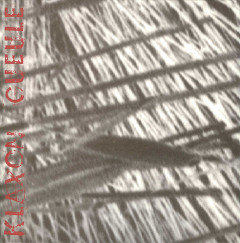
    Montréal-based Klaxon Gueule began their radical transformation from free-jazz improvisation troupe to free-form electroacoustic manipulators with 1999’s release of Muets. Grain journeys even deeper into the strange world of Canadian avant-garde, presenting another round of enticing sonic arrangements far removed from conventional music’s standard structures and tempos.

    The Klaxon crew chose the unusual surroundings of a Québecan barn in which to record their third release. This organic environment adds a unique element to the music; just as the humble barnyard surroundings seem to contradict Klaxon’s complex music, so too do each member’s particular choices of instruments. Côté, Falaise and St-Onge aren’t huddled around computers and keyboards, creating these strange crackles and eerie hums; rather, the trio employs a traditional ensemble of percussion, guitar and bass to create its electroacoustical pieces. Guests Sam Shalabi and Christof Migone add tastes of true electronics, but they only appear on a few tracks, leaving the ensemble’s core members to create some truly amazing and inspiring sounds with analog instruments we thought we knew.

    Gently cascading pieces make up the majority of Grain. Klaxon relies on subtle changes and false security to convey its colorful moods and unique perspectives. In Orme sans enduit’s shimmering opening, a tweaked guitar sets a casual rhythm as ghoulish gasps peek in from behind the high-pitched notes. Close the blinds, turn off the lights and let your mind roam. Orme…’s horror-movie soundtrack sound will leave you at the mercy of your own imagination; try not to freak yourself out too badly.

    Fonte sur plomb’s metallic title filters into the music. Sporadic percussion bumps and skronks like a dilapidated subway car crawling down the tracks. Giggling guitar notes are unexpectedly replaced by angry chords, only to rapidly dissipate as the car makes its way into the next tunnel. Like Fonte sur plomb, Fer sur plomb continues the metal motif with a linear progression of rattled percussion, warbling guitar and harrowing crackles. It’s almost impossible to tell what sort of instruments are generating these incredible sounds, which makes the track as much an academic exercise as it is an intriguing manifestation of musical innovation.

    Shalabi and Migone make their first appearance on Fer blanc sur frêne, roaring to the forefront with a haywire blast of computer buzzing. Klaxon Gueule is at its most unbalanced and frenetic here, rapidly injecting simultaneous aural stimuli between the bleeping machines. An abrupt stop is met with another round of noisy pollution that spirals the tune toward an explosive ending. The electronic interjections on Fer pour bronze (are you recognizing a pattern to the song titles yet?) are more controlled, suggesting what Current 93 could have become with a more liberal exploration of sound. Migone relies less on abrupt discharges, preferring a more methodical approach that employs some unusual gadgetry to create a post-apocalyptic soundscape. Droning notes slither between snaking guitar lines, eventually coming together into a chaotic climax. Analog and electronic have indeed found a common ground.

    Listening to Grain in its entirety is flabbergasting; Klaxon Gueule’s stimulating sounds can be truly inexplicable. The group is adept at gracefully enticing the listener, gently leading the curiosity seeker into the electroacoustic stables. Forget your preconceptions about avant-garde music and shrug off your need for simple rock rhythms; Klaxon Gueule has just the right combination of quirkiness and meticulous song-sculpting chops to create a remarkable aural treat, impressive to musicians and music fans alike.

    … just the right combination of quirkiness and meticulous song-sculpting chops to create a remarkable aural treat, impressive to musicians and music fans alike.

    Soshin, Antoine Berthiaume dans Voir

    «Aller au-devant», Réjean Beaucage, Voir, 7 août 2003
    jeudi 7 août 2003 Presse

    Jusqu’à tout récemment, Antoine Berthiaume était connu surtout des amateurs de jazz de Montréal. Catapulté à l’avant-scène par un disque enregistré avec deux grandes figures de la musique actuelle, il nous explique son parcours.

    Antoine Berthiaume a 25 ans et joue de la guitare. Comme beaucoup de monde, sans doute. Cependant, celui-ci apparaît dans notre paysage musical avec un atout majeur en main: un disque enregistré avec deux grands maîtres de l’instrument, qui sont à la source de ce que l’on appelle communément la «musique actuelle», à savoir les Britanniques Derek Bailey et Fred Frith. J’ai discuté avec lui afin de connaître les origines de cette surprenante rencontre.

    Ça commence assez simplement: «J’ai fini un DEC en guitare jazz il y a cinq ans, explique Berthiaume, puis, durant trois ans, j’ai essayé de jouer avec tout le monde à Montréal: le batteur Magella Cormier, le saxophoniste Rémi Bolduc; bref, j’ai évolué du côté du jazz jusqu’à ce que je rencontre le percussionniste Pierre Tanguay, qui est très à l’aise dans le jazz, mais qui m’a fait découvrir d’autres facettes de l’univers musical. Enfin, il y a eu une bourse qui m’a permis d’aller étudier quelque temps à New York, puis j’ai eu envie de revenir faire un bac en littérature et philosophie.» Mais à l’Université de Montréal, on a eu la bonne idée de diriger ce drôle d’oiseau vers la maîtrise en composition, où il a d’abord travaillé avec Michel Longtin avant d’aboutir dans la classe de Denis Gougeon. La pièce-titre du disque qui vient de paraître chez Ambiances Magnétiques, Soshin, a d’ailleurs été composée avec les conseils de ce dernier. «C’est un peu une étude de musique sérielle où je travaille à partir de 12 textures différentes, jumelées à 12 hauteurs de son et 12 nuances, du plus extrême pianissimo au triple forte. Ç’a été un travail de construction assez long, parce que nous avons enregistré chacun des sons séparément pour les monter par la suite.»

    Mais comment s’expliquent les participations sur le disque de Derek Bailey et Fred Frith, des maîtres de la guitare et de l’improvisation qui ont largement contribué à ouvrir de nouvelles directions en musique depuis la fin des années 60? «Je ne le sais pas très bien! avoue Berthiaume. Dans le cas de Bailey, j’avais lu son livre Improvisation, et Pierre Tanguay m’en avait parlé, alors avec les sous restants de ma bourse d’études à New York, j’ai fait un détour par Londres en février 2001 pour le rencontrer. Nous avons seulement discuté, mais ça été pour moi un voyage extrêmement révélateur, et, de retour à Montréal, j’ai demandé une bourse pour y retourner et enregistrer quelque chose avec lui. Au début, il n’était pas question de sortir ça sur disque, mais au moment où j’ai décidé de le contacter pour lui demander la permission de le faire, il voulait m’écrire pour faire la même chose! Alors d’autres extraits de notre session d’improvisation se retrouvent sur son propre disque, Visitors Book (étiquette Incus). Dans le cas de Fred Frith, j’ai eu la chance de profiter d’un de ses passages à Montréal, durant lequel nous avons pu faire une session d’enregistrement. Le fait que j’aie déjà enregistré avec Bailey n’a certes pas été étranger à sa décision d’accepter de travailler avec un jeune guitariste inconnu!»

    On pourra voir Antoine Berthiaume en duo avec un autre guitariste de haut vol, Tim Brady, lors d’un concert de la série Jusqu’aux oreilles. Ah oui, le titre du disque, Soshin, provient d’un proverbe japonais: Soshin o wasureru bekarazu ou, si vous préférez: «Dans votre pratique, n’oubliez jamais l’esprit et l’humilité du débutant.»

    Soshin, provient d’un proverbe japonais: Soshin o wasureru bekarazu ou, si vous préférez: «Dans votre pratique, n’oubliez jamais l’esprit et l’humilité du débutant.»

    Unison Rituals dans Splendid E-Zine

    «Review», Dave Madden, Splendid E-Zine, 4 août 2003
    lundi 4 août 2003 Presse

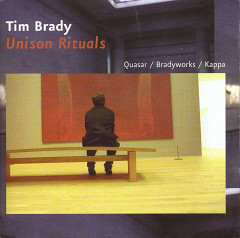
    When you work in the Neo-Classical/Avant-Classical/Contemporary Classical field (or whatever it’s called this week), it’s difficult to find a niche — but even more arduous to dig your way out. Sure, Phillip Glass made a statement with minimalism, and indeed made a career of it, but how difficult would it be for him to sway his audience if he were to veer radically away from his signature sound? Stravinsky, though celebrated for his early ballets and “middle” period, pretty much lost everyone once he turned to atonality and twelve-tone serialism. Tim Brady understands this danger, as his music, for better or worse (I say better), is seldom allied to a particular style or mold; call him a musical chameleon with a talent for creating unique compositions. Though he demonstrates techniques employed by composers who work primarily in the chamber and symphonic realm, he never uses any gimmick long enough for it to become a label.

    Unison Rituals is a case in point. The title track explores the deepest reaches of a saxophone quartet (soprano, alto, tenor, baritone with soprano doubling alto and alto doubling on soprano). What begins as a slightly slurred work, reminiscent of Lutoslawski’s Chain 1, slips into a homophony of deep sforzandos in an ostinato, changing textures with every repeat, but coming only in short bursts as the instruments recline into subtle drones and key-clacks. As alluded to in the title, Brady focuses the last few minutes on unison lines for two soprano saxes, creating an energetic ending that’s more explosion than conclusion.

    For Double Helix, Brady adds a new dynamic, bringing in skinned and metal percussion, piano and cello, soaring into the realm of Steve Reich and other so-called “downtown” composers. However, Brady is never content with simple repeating phrases; he favors constant tempo shifts, often dropping out the entire ensemble and interjecting dramatic bass drum rolls and rubato cello melodies. Without warning, Brady shifts gears with Two Chords Less Than a Blues, an intimate exploration of color and texture: bowed cymbals, tenor sax trills, deepest piano rumbles and what sounds like a Chinese funeral procession (or James Brown tune) of crash cymbals and bass drum.

    Escapement finds Brady performing on his weapon of choice — guitar — though it never sounds guitar-ish, as he either plays trills or percussive runs that double vibes, xylophones and soprano sax. The finale, Sound Off, is a scaled-down interpretation of Brady’s original 45-minute version, first performed in 1983 and scored for 100 wind instruments and eight bass drums. It’s a unique ensemble piece that yields equally distinctive results: long breathy hisses, extensive counterpoint and huge brass blasts, bouncing between Lígeti-esque clusters and jazz-band slinkiness.

    Only time will tell if Brady’s eclecticism and his absorption of several traditions will provide him with enough mileage for a decade-spanning career, but he’s doing fine so far. This exciting collection demonstrates the composer’s talent for genre cross-pollination and highlights his ability to pen inventive, engaging works for unusual ensembles. Listeners seeking easily-labeled artists should look elsewhere!

    This exciting collection demonstrates the composer’s talent for genre cross-pollination and highlights his ability to pen inventive, engaging works…

    Montréal Free dans JazzoSphère

    «Critique», Éric Normand, JazzoSphère, no 19, 1 août 2003
    vendredi 1 août 2003 Presse

    Pour l’arrivée du beau temps, le jeune label Montréalais No Type tape fort avec la parution d’un coffret de quatre CDs (au prix de deux) documentant la scène d’improvisation libre qui gravite autour de la Casa del Popolo, nouvelle plaque tournante de la musique fraîche à Montréal. Si le coffret, magnifiquement illustré par l’artiste-percussionniste John Heward, regroupe principalement des musiciens appartenant à une nouvelle génération d’improvisateurs, on y retrouve aussi quelques vétérans: le spécialiste de la guitare préparée, Rainer Wiens, et, bien sûr. John Heward, qui fait preuve ici d’une incroyable sensibilité aux textures. Une des grandes qualité du coffret est qu’on y retrouve une liberté synonyme de personnalité et que les quatre disques ont chacun leur identité. L’ensemble d’ailleurs offre une grande diversité de registres et de tons. D’abord deux disques de guitares; celles de Wiens, toujours aussi intrigante, et du terrible Sam Shalabi qui, avec Alexandre St-Onge à la contrebasse et John Heward à la batterie, jouent en frottements et en textures au sein de l’ensemble PO; et puis le jeu risqué, jazzy et «fêlé du cerveau» de Chris Burns en trio avec Nicolas Caloia (cb) et Heward toujours à la batterie. L’égarement prend ici une valeur positive.

    Sur les deux autres disques arrivent les instruments à vent dans un déferlement de solistes multiples et de polyphonie. D’abord le dangereux et aventureux dno ‘Gypt Gore, où Philémon (sax alto) et Sam Shalabi (guitare) — deux membres trés actifs de la nouvelle scène improvisée — mettent en commun leur frénésie et leur exubérance pour une aventure des plus enlevantes. Le duo plaira aux agités. Pour le quatrième et dernier disque nous retrouvons les deux ‘Gypt Gore accompagnés de leur bataillon de «mauvais chats» Balai Mécanique (Thierry Amar, cb; Jesse Levine, p; Jacques Gravel, trb et Will Glass, perc.) pour une improvisation collective qui rappelle d’avantage une certaine tradition du free jazz, mais qui garde une grande fraîcheur et qui réjouira les mordus du genre. Beaucoup de fougue. de risques, quelques accrochages font du coffret un véritable manifeste de la liberté. Au total 228 minutes de déroutes, de défonce et de plaisir pour les oreilles assoiffées. Ce coffret, portrait d’une scène active, risque de passer à l’histoire.

    Ce coffret, portrait d’une scène active, risque de passer à l’histoire.

    Asymétries dans Vital

    «Review», Dolf Mulder, Vital, no 382, 1 août 2003
    vendredi 1 août 2003 Presse

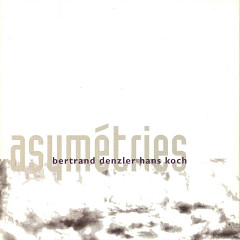
    This cd is a collection of 4 pieces for tenor saxophone (Denzler) and bass clarinet & soprano saxophone (Koch). Both musicians create a series of non linear encounters exploring extended techniques on their chosen instruments. Traditional notes and tonalities are ignored altogether in favor of textures created by breath, tongue, lip modulations resulting in percussive attacks, faint whispers, and loving kisses. The CD is appropriately titled: both players come together and then withdrawl as things move in and of sync. But the music is never random as Denzler & Koch make each sound with precision, utilizing space and silence as additional sonic material for exploration. I believe this CD will appeal to fans of microsound and field recordings, as the music avoids the beaten paths of free improv. All in all a very cool cd.

    … the music avoids the beaten paths of free improv.
  • 11
  • 12
  • 13
  • 14
  • 15
  • 16
  • 17
  • 18
  • 19