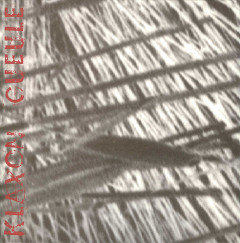
Montréal-based Klaxon Gueule began their radical transformation from free-jazz improvisation troupe to free-form electroacoustic manipulators with 1999’s release of Muets. Grain journeys even deeper into the strange world of Canadian avant-garde, presenting another round of enticing sonic arrangements far removed from conventional music’s standard structures and tempos.
The Klaxon crew chose the unusual surroundings of a Québecan barn in which to record their third release. This organic environment adds a unique element to the music; just as the humble barnyard surroundings seem to contradict Klaxon’s complex music, so too do each member’s particular choices of instruments. Côté, Falaise and St-Onge aren’t huddled around computers and keyboards, creating these strange crackles and eerie hums; rather, the trio employs a traditional ensemble of percussion, guitar and bass to create its electroacoustical pieces. Guests Sam Shalabi and Christof Migone add tastes of true electronics, but they only appear on a few tracks, leaving the ensemble’s core members to create some truly amazing and inspiring sounds with analog instruments we thought we knew.
Gently cascading pieces make up the majority of Grain. Klaxon relies on subtle changes and false security to convey its colorful moods and unique perspectives. In Orme sans enduit’s shimmering opening, a tweaked guitar sets a casual rhythm as ghoulish gasps peek in from behind the high-pitched notes. Close the blinds, turn off the lights and let your mind roam. Orme…’s horror-movie soundtrack sound will leave you at the mercy of your own imagination; try not to freak yourself out too badly.
Fonte sur plomb’s metallic title filters into the music. Sporadic percussion bumps and skronks like a dilapidated subway car crawling down the tracks. Giggling guitar notes are unexpectedly replaced by angry chords, only to rapidly dissipate as the car makes its way into the next tunnel. Like Fonte sur plomb, Fer sur plomb continues the metal motif with a linear progression of rattled percussion, warbling guitar and harrowing crackles. It’s almost impossible to tell what sort of instruments are generating these incredible sounds, which makes the track as much an academic exercise as it is an intriguing manifestation of musical innovation.
Shalabi and Migone make their first appearance on Fer blanc sur frêne, roaring to the forefront with a haywire blast of computer buzzing. Klaxon Gueule is at its most unbalanced and frenetic here, rapidly injecting simultaneous aural stimuli between the bleeping machines. An abrupt stop is met with another round of noisy pollution that spirals the tune toward an explosive ending. The electronic interjections on Fer pour bronze (are you recognizing a pattern to the song titles yet?) are more controlled, suggesting what Current 93 could have become with a more liberal exploration of sound. Migone relies less on abrupt discharges, preferring a more methodical approach that employs some unusual gadgetry to create a post-apocalyptic soundscape. Droning notes slither between snaking guitar lines, eventually coming together into a chaotic climax. Analog and electronic have indeed found a common ground.
Listening to Grain in its entirety is flabbergasting; Klaxon Gueule’s stimulating sounds can be truly inexplicable. The group is adept at gracefully enticing the listener, gently leading the curiosity seeker into the electroacoustic stables. Forget your preconceptions about avant-garde music and shrug off your need for simple rock rhythms; Klaxon Gueule has just the right combination of quirkiness and meticulous song-sculpting chops to create a remarkable aural treat, impressive to musicians and music fans alike.