Sauter au contenu principal
actuellecd

René Lussier

26 résultats
  • 1
  • 2
  • 3
  • 4
  • 5
  • 21 juin – 5 juillet 2002: Musiciens DAME en spectacle

    jeudi 13 juin 2002 En concert

    Plusieurs musiciens de DAME sont en spectacle cet été. Premièrement, la Fanfare Pourpour sera au festival international de musique incroyable de Saint-Fortunat, les 21 et 22 juin 2002. Ensuite, au Festival international de jazz de Montréal, L’Orkestre des pas perdus sera présente à l’extérieur du 3 au 7 juillet. Également en spectacle au Musée d’art contemporain, Les Projectionnistes le 3 juillet et le guitariste René Lussier le 6 juillet. Cette édition du L’OFF Festival de Jazz de Montréal propose aussi beaucoup de musiciens DAME. Jean Derome sera au Lion d’Or le 27 juin, 3 et 5 juillet. Pierre St-Jak le 27 juin. Rouge ciel le 29 juin 2002. Normand Guilbeault en hommage à Mingus le 1er juillet. Martin Tétreault et Pierre Cartier le 3 juillet. Lee Pui Ming en duo avec Joane Hétu ainsi que le trio {nbio:derome_je}-{nbio:guilbeault_no}-{nbio:tanguay_pi} le 5 juillet. Allez les voir tous!

    René Lussier, Ambiances Magnétiques dans AllMusic

    «Portrait: René Lussier», François Couture, AllMusic, 6 juin 2002
    jeudi 6 juin 2002 Presse

    Throughout the 1980s and most of the ’90s, René Lussier was the prime mover on Montréal’s new music scene. His guitar work has been compared to Fred Frith, with whom he has often toured and recorded. Spread between solo work, duos and large ensemble pieces, between studio compositions, structured improvisation, free improv and film music, his impressive body of work represents a full course in “musique actuelle,” a term he helped to peg down. His masterpiece remains the speech-music collage Le trésor de la langue which earned him the Paul Gilson Award in 1989. He also received the Freddy Stone Award in 1996 for his contribution to Canadian new music.

    Lussier began to play guitar in high school bands. He started to develop his own brand of jazz-meets-folk-meets-freak in the collective Conventum. This group included guitarist André Duchesne with whom he stroke a lasting friendship. He recorded two albums with Conventum and a handful of film scores, the first of what would become an endless list (over 50 by 2001). After the group’s disbanding, Lussier enrolled in the Grand Orchestre de Montréal, an experimental fanfare of sorts where he met Nébu saxophonist Jean Derome. Together they recorded music for the National Film Board of Canada and got involved in many projects, some of which included Duchesne and clarinetist Robert Marcel Lepage.

    The four of them founded the collective and record label Ambiances Magnétiques in 1983. That year Lussier released his first solo album, Fin du travail (Version 1), the title of which (“Finished work [1st version]”) already displayed his uncanny sense of humor. His big break came in 1986 when Michel Levasseur, artistic director of the Festival International de Musique Actuelle de Victoriaville (FIMAV), proposed a duo concert with Fred Frith. Henry Cow and the whole Rock-in-Opposition movement had been a big influence on Lussier — this was his chance. The resulting album Nous Autres introduced him to an international audience. In 1988 Frith invited him and Derome to join Keep the Dog.

    In 1989, with the help of Frith and a cast of Ambiances Magnétiques players, Lussier recorded Le trésor de la langue. Pushed by its political resonances, the album became the label’s biggest seller and the first classic item in the history of musique actuelle. Further albums, solo and with Les Granules, established him as a highly creative and witty composer and improviser. But as years passed Lussier felt the collective weight more and more on his shoulders. The mid-to-late ’90s saw him experimenting with more abstract forms of improvisation with mixed results and severing links with old friends, including Derome when he left his band Les Dangereux Zhoms. In 2001 he resolutely stepped away from the collective and released CDs on Ohm Editions and La Tribu. The album Tombola Rasa and a country-folk project with American maverick Eugene Chadbourne indicated a return to earlier pleasures at the start of the new decade.

    … his impressive body of work represents a full course in “musique actuelle”…

    Déboutonné, Solos de guitare électrique, René Lussier dans Hour

    «Spins», Mike Chamberlain, Hour, 11 octobre 2001
    jeudi 11 octobre 2001 Presse

    This isn’t some guy sitting down with his guitar and playing a few tunes. Lussier’s approach to the guitar is visceral — he hammers and plucks at the strings, sending shards of notes careening off in all directions. A cluster of notes is punctuated by seconds of silence; the music pulses and fades away, existing in a state between realization and decay. It seems that there are no beginnings and no endings, or perhaps all beginning and ending at the same time. Though there are no overdubs on either of these recordings, depth is achieved by recording with eight stratogically placed microphones, so that the sounds ricochet from hack to front and side to side. Not exactly toetapping stuff, but Lussier throws in a few foot stomps for good measure.

    Lussier’s approach to the guitar is visceral…

    Qu’ouïs-je?, René Lussier dans The Wire

    «Soundcheck Review», Phil England, The Wire, no 207, 1 mai 2001
    mardi 1 mai 2001 Presse

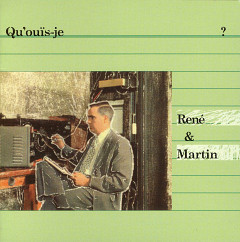
    The duo with Martin Tétreault is, unsurprisingly, a whole other saucepan of reptiles, and follows their widely acclaimed duo Dur noyau dur (1998). The latter consisted of turntable and guitar improvisations, whereas Qu’ouis-je? is a studio constructed piece of musique concrete informed by Surrealism, Dada and art brut. Here Tétreault exchanges turntables for “synthétiseur, pick-up et boite 3 rhythme” and Lussier trades in his electric guitar for a daxophone — the bowed wooden instrument invented by German guitarist Hans Reichel (Lussier played in Reichel’s dexophone quartet).

    The uncanny ability of the daxophone to produce voice-like timbres and intonations is used here to create fantastical landscapes populated by strange, exotic creatures whose wild screechings, calls, conversations, arguments and acts of aggression happen in a rather bleak landscape somewhere in deep space (or is it just post-industrial Earth?). Tétreault creates the crackling, distorted ambiences around the action in a compelling and accomplished work that has been executed with a serious sense of humour.

    … fantastical landscapes populated by strange, exotic creatures… a compelling and accomplished work…

    Dur Noyau Dur, René Lussier, Martin Tétreault dans Fear Drop

    «Critique», Jérôme Langlais, Fear Drop, no 7, 1 avril 2001
    dimanche 1 avril 2001 Presse

    Improvisateurs québécois astucieux, Lussier et Tétreault — respectivement guitariste et platiniste — n’en sont pas à leur première collaboration et officient depuis de longues années au sein du collectif Ambiances magnétiques. Issues de sessions prises live en 97, ces pièces dures évoquent une rencontre totalement libre et saccadée des cordes et de (souvent courtes) séquences sonores issues des platines et radios de Tétreault. Lussier utilise tous les détails de ses instruments, du grattage ludique au récurage nerveux tandis que Tétreault pique son interlocuteur d’assauts fourbes (la fausse politesse dans Enrayure) et racleurs qui provoquent des demangeaisons dans le conduit auditif. Les accalmies arrivent à point nomme pour souffer un peu (le gris et bien nomme Sépulture) avant les nouveaux craquements, les nouvelles nodosités et un final dissonant. Si l’on n’avait conscience du tout joue sans fioritures de ces 21 morsures, on jurerait parfois (surtout sur la partie Prise de terre) d’un travail électroacoustique d’exception. Tous les mots choisis dans le livret définissent parfaitement ce disque en Ure. Lire l’excellente interview de Tétreault dans Revue & Corrigée n40
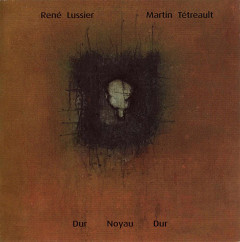
    on jurerait parfois d’un travail électroacoustique d’exception.

    Solos de guitare électrique, René Lussier dans Incursion Music Review

    «Review», Richard di Santo, Incursion Music Review, 31 juillet 2000
    lundi 31 juillet 2000 Presse

    The solo disc by René Lussier presents fourteen improvisations for electric guitar as they were recorded in 1998, without any sort of montage or overdubbing. Lussier utilised eight microphones for the recording, giving these improvisations the appearance of a more elaborate montage. A diagram shows where the microphones were placed. Most of them are placed at various points in the room, some mono and some stereo, but the eighth microphone was placed outside of the recording room! Improvisations for guitar are by no means a rare commodity in the musique actuelle scene these days, and it has taken me some time to be able to listen to this record and approach it with some degree of objectivity. That being said, at first I didn’t find much that was very intriguing when I first listened to this disc. A certain playfulness in the performance and the interesting use of the 8 channels were all that I could see. But when I approached this disc again, it suddenly opened up (or, perhaps it was I who suddenly opened up) revealing much more than the mere playfulness I had suspected. Only then was I able to perceive a more deliberate method in Lussier’s playing and a certain richness in the wide range of sounds that issue forth from his axe. Lussier is an accomplished innovator in dreaming up new methods and techniques for guitar improvisations, and, though not particularly to my taste, these 14 tracks are certainly food for thought.

    Lussier is an accomplished innovator in dreaming up new methods and techniques for guitar improvisations, and, though not particularly to my taste, these 14 tracks are certainly food for thought.
  • 1
  • 2
  • 3
  • 4
  • 5