Sauter au contenu principal
actuellecd

Aussi dans le blogue

13 résultats
  • 1
  • 2
  • 3
  • «Dis, Blaise…» chanson du Transsibérien, Chansons de Douve, Chansons de la belle espérance, Dirigeable, Les fleurs du tapis dans Wonderous Stories

    «Canzoni per sperare: la crepuscolare francesità di Pierre Cartier», Vincenzo Giorgio, Wonderous Stories, no 12:35, 1 mars 2008
    samedi 1 mars 2008 Presse

    Una voce evanescente e calda. Sontuosi panneggi bassistici. Jazz crepuscolare. Insomma, quando ascoltai per la prima volta Pierre Cartier fu la classica Rivelazione e, da qui, l’imperativo (kantianamente) categorico di ascoltare il più possibile del musicista/cantante/bassista del Canada francofono e membro degli ottimi Dangereux Zhoms di Jean Derome.

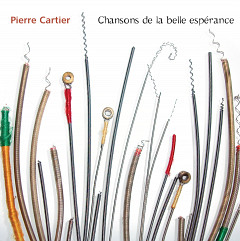
    Già perché Pierre Cartier Chansons de la belle espérance — Ambiances Magnétiques 2006 63:43 è davvero un disco affascinante grazie a quell’impasto ostinatamente melodico che Pierre riesce ad estrarre da sei testi poetici, uno dei quali firmato niente di meno che da Guillaume Apollinaire. Fin dall’iniziale Dédicace de la belle espérance si può godere della capacità di Pierre di saper declinare la forma canzone in contesto avant-jazz: undici minuti di poesia purissima dove il sax di Jean Derome disegna ampie parabole assecondato dal delicato interplay tra il trombone di Tom Walsh e la viola di Jean René. Un’atmosfera che può essere facilmente rintracciata anche nelle tracce successive: dalla quiete di Plus belle que les larmes guidata dalle percussioni arabescate di Pierre Tanguay e dagli arpeggi armonici della chitarra di Bernard Falaise fino all’ammiccante deja-vu di Il nous aurait fallu (unico brano in cui Cartier scrive anche il testo). E così La chanson de Marie dalle arcane cadenze di danza etnica, l’incontaminata fragranza di Portrait, la sinuosa Figure d’éternité e, per finire, l’intricato tessuto armonico di Mirabeau.

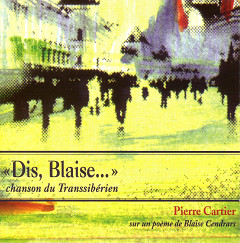
    Risalendo il Fiume del Tempo mi sono poi imbattuto nel più ambizioso Pierre Cartier «Dis, Blaise…» chanson du Transsibérien cd1 49:38, cd2 37:54 AM 2002 dove il musicista di Montréal si confronta con La Prose du transsibérien et de la petite Jehanne de France, poema composto da Blaise Cendrars nel 1913. L’opera presenta tutti gli elementi della poetica cartierana anche se l’elemento jazz appare più in sottofondo a favore di un’opzione oscillante tra il lied e la musica da camera di stampo tonale/novecentesco. Il risultato è, comunque, ragguardevole con le uniche riserve di una certa prolissità e qualche forzatura nella resa melodica dei testi di Cendrars. Di grande impatto il prologo En ce temps-là con quella sua repentina mutazione da sofferto lied a jazz elettrico di vago sapore post-davisiano così come le timbriche sospese di Si j’étais peintre.

    Continuando ad assecondare le sue “ansie letterarie”, esattamente un decennio fa, il bassista canadese pubblica Pierre Cartier Chansons de Douve cd1 55:48 cd2 43:10 AM 1998 su testi di Yves Bonnefoy. Per il sottoscritto è stata una piacevole sorpresa scoprire inaspettate contiguità zehuliane nell’inaugurale Je te voyais, quasi quindici minuti di inquietanti cromatismi para-magmatici giocati su di una sincopata sezione ritmica dove l’impasto vocale di Angèle Trudeau e Noëlla Huet (rispettivamente soprano e mezzo-soprano) e le cadenze da big band impresse dai fiati di Jean Denis Levasseur, Ivanhoe Jolicœur, Jean Derome, Sylvain Jacob e Tom Walsh trovano una base sicura. Ma il resto dell’opera non è da meno puntando su di una musicalità rarefatta ed essenziale (Présence exacte, Vrai corps, Mais que se taise) non scevra da certi riferimenti minimalisti (Le seul témoin 1) e pre-barocchi (Vrai corps, Douve parle (passacaille)).

    L’ultima speranza è che ci sia un tempo per poter ascoltare le sue tre opere più lontane nel tempo: Les fleurs du tapis (1996), Chanson du fil (1989) e Dirigeable (1987).

    Una voce evanescente e calda. Sontuosi panneggi bassistici. Jazz crepuscolare. Insomma, quando ascoltai per la prima volta Pierre Cartier fu la classica Rivelazione…

    Chansons de la belle espérance dans Downtown Music Gallery

    «Review», BLG, Downtown Music Gallery, 1 juin 2007
    vendredi 1 juin 2007 Presse

    Inspired by jazz standards, Pierre Cartier tackles the theme of love. With all the lyricism such a quest deserves, he combines the voice of Quebec’s poets with the energy of new jazz. […] I caught Pierre Cartier’s ensemble performing this music on two occasions, once at Guelph and more recently at the Victo Fest. I liked it the first time, but found it even better the second time around. I was pleasantly surprised to hear Mr. Cartier singing on all of these pieces, something I didn’t know he did, after hearing him play some great electric jazz bass with Jean Derome in the past. For this disc, he has put together a truly fine Canadian sextet, all either leaders or at least great veteran players on their own. It is a unique frontline with alto sax or flute, trombone, viola and electric guitar with Cartier’s charming voice at the center. There is something quite lovely, melancholy and touching about the sound of Cartier’s voice, as well as the music surrounding his voice. Although I only know a small amount of French, there is still a universal feeling that reverberates at the center of these songs. What stands out is the various solos from Jean Derome (alto sax), Tom Walsh (trombone), Jean Rene (viola) and Bernard Falaise (guitar), that are an extension of the feeling generated within each song. It is the most lyrical playing I’ve heard these men, who are often associated with more “progressive” types of music. At times, the arrangements are quite crafty and rather progressive in more subtle ways. No doubt that some folks will complain of having to listen to Cartier’s most affective and often forlorn voice, yet I find that it often rings true and touches something quite human in all of us who can still be moved by the sound of the human voice reaching inside and touching our hearts. Whenever I get close to cringing at the occasional corniness, one of those cats takes a solo that makes me smile and feel good to be alive.

    I caught Pierre Cartier’s ensemble performing this music on two occasions, once at Guelph and more recently at the Victo Fest. I liked it the first time, but found it even better the second time around.

    Nominations DAME aux Prix Opus

    mercredi 20 décembre 2006 Général

    Quatre productions discographiques DAME sont en nomination au Prix Opus 2006. Dans la catégorie «Disque de l’année — musiques moderne, contemporaine», on retrouve Steve Reich: Different Trains du Quatuor Bozzini et Three Cities in the Life of Dr Norman Bethune de Tim Brady. Dans la catégorie «Disque de l’année — jazz, musiques du monde», on retrouve Chansons de la belle espérance de Pierre Cartier et The Feeling of Jazz du Trio Derome Guilbeault Tanguay. Aussi, la pièce Filature de Joane Hétu a été retenue dans la catégorie «Création de l’année». Le 10e Gala des Prix Opus aura lieu le 28 janvier 2006 à la Salle Claude-Champagne, Université de Montréal.

    Chansons de la belle espérance dans Blow Up

    «Recensione», Dionisio Capuano, Blow Up, no 101, 1 octobre 2006
    dimanche 1 octobre 2006 Presse

    Cartier canta l’amore, nelle sue ramificazioni incarnite. Tra gli autori: Apollinaire, Pierre Perrault, Gaston Miron. Si ispira agli standard del jazz, alle Broadway love songs, ad Autumn Leaves, ma soprattutto alla malincolia della canzone di Jacques Prévert, Les feuilles mortes. Sceglie autori e lingua francese; e chissà, sarà pure una scelta politica, un corollario emotivo a Le trésor de la langue. Il gruppo di musicisti che lo accompagna è straordinario: Jean Derome, Pierre Tanguay, Bernard Falaise, Jean René, Tom Walsh. Se Il nous aurait fallu, attraversata dallo struggente trombone di Walsh, ha l’appeal del classico “amore perduto” e s’appiccica addosso, ancor più sconvolgente è la capacità di Cartier di penetrare i testi con musica e voce, facendo germinare melodie che si diramano attraverso lo splendore esecutivo del quintetto (sic). Sia quando la metrica e la struttura sono propriamente jazz (Dédicace de la belle sspérance), sia quando fanno eco alla ballata arcaizzante, nelle cadenze della viola di René e del flauto di Derome (La chanson de Marie). Ampiezza di respiro e ricchezza interpretativa della musica, che non vedono soluzione di continuità tra il canto di Cartier e il solo di chitarra di Falaise (Portrait), tra l’impasto orchestrale e il passaggio solistico. È un dilagare sentimentale, come nei dodici minuti di Mirabeau: languoroso tema quasi intessuto di sublime saudade da inconscio collettivo. (7,8/10)

    7,8

    Chansons de la belle espérance dans The WholeNote

    «Review», Tiina Kiik, The WholeNote, no 12:2, 1 octobre 2006
    dimanche 1 octobre 2006 Presse

    “Now that was good!” These are my first thoughts after listening to Pierre Cartier’s release of self-described “French love songs”. Cartier’s compositions set to Quebec poetry, his bass playing, his own lyrics, and his singing (especially the endearing way he struggles to capture some of the high notes) combine to make this musically intriguing disc fun to behold. The excellent band is comprised of some of Montréal’s finest jazz performers — Jean Derome on alto sax and flutes, Jean René on viola, Tom Walsh on trombone, Bernard Falaise on guitar and Pierre Tanguay on drums.

    The seven selections have elements of both jazz and musique actuelle but also encompass a variety of musical styles. An almost Las Vegas style sentiment surfaces in Il nous aurait fallu while La chanson de Marie is almost simultaneously an Irish jig and an Eastern European dance. My favourite, Mirabeau, using a text of Guillaume Apollinaire, begins in a fugal manner, then moves more upbeat, and closer to the end almost becomes a 1970s rock anthem with its screeching guitar solo. Cartier’s vocals are the glue that holds the works together throughout.

    The bilingual French and English liner notes describe Cartier’s ideas behind each piece, though my high school French leads me to wish the lyrics also had an English translation. This is a moot point however — the music would be a welcome backdrop to any drive in the country or dinner affair. I’ll leave the final words to Pierre Cartier — “And if we may say that sometimes love is blind, how could we ever imagine love being deaf?” Touché!

    Now that was good!
  • 1
  • 2
  • 3