Sauter au contenu principal
actuellecd

Aussi dans le blogue

13 résultats
  • 1
  • 2
  • 3
  • Castor et compagnie: Mets ta langue dans Splendid E-Zine

    «Review», George Zahora, Splendid E-Zine, 11 janvier 1999
    lundi 11 janvier 1999 Presse

    Compared to many other Ambiances Magnétiques releases, there’s a good deal more content on Mets ta langue that could fall under the mainstream definition of “music” — this is an ensemble (which counts Jean Derome, Diane Labrosse and Pierre Tanguay among its other members) that creates songs. It might also surprise listeners that rather than being, let’s say, complex aural meditations on the sonic interactions between certain rare gases that meet every few hundred years during odd phases of planetary orbits, the lyrics (they’re more poems, really, but who’s counting?) here are about love, sex and human interaction — they’re earthy and passionate, sometimes almost explicit, full of life and love and lust and human energy. Those of you who read enough French to realize that the title translates as “Put your tongue” might get some advance notice of this — otherwise, it’ll have to be a pleasant surprise. There’s still a lot of non-traditional soundplay — dischordant wind instruments, for instance, in the three movements of Beauté, an assortment of imitated animal sounds on Le travail des animaux, all manner of oddities on the exceptionally evocative Mes odeurs préférées — but likewise witness the more musical, thoroughly rousing Un bout de papier, which sounds like it was torn directly from a Brecht/Weill performance. After a few listens — especially when armed with the translated liner notes — you’ll not only appreciate Mets ta langue, but become increasingly immersed in the warmly human sensory aura it creates. In other words, this is a good recording to connect to.

    … a good recording to connect to.

    Castor et compagnie: Mets ta langue dans Studium

    «Muzyka godna polecenia», Ireneusz Socha, Studium, no 15-16, 1 janvier 1999
    vendredi 1 janvier 1999 Presse

    Joane Hétu is a woman who fulfills herself in various ways: as a mother (two daughters), as a manager (she directs the independent label) and as an artist (composer, librettist, saxophone player and singer). Consequently, whatever she does has a lot of positive energy in it — influxing from the self-realization and self-confidence in a good sense. Her overall message is positive and well balanced: woman’s (over-) sensibility and man’s strength in equal amounts. In her home Montréal Joane belongs to the globally unique community of musicians who have joined forces in pursue of a non-commercial artistic music. Joane’s label gives them a chance to earn a living by playing what they like.

    This is her second solo album. As previously, we can hear all musical obsessions of hers thriving on the crossroads between strict composition and free improvisation. Hétu seems to treat her favorite musical styles just like attires and decorates them with her special patches and scraps. And every little thing she is wearing suits her. Joane can persuade us that her setting of the ritual music of Native Canadians, experimental rock, shanties, ballads, sound explorations and non-idiomatic improvisation is intelligent and beautiful. It is worth mentioning that Hétu perceives beauty quite differently than, let us say, Céline Dion. When you are always pleasant and meek you are lying. Beauty has something to do with your life courage and the drive for improving your sensibility and knowledge. Joane also sings of her love experiences, but again uniquely and contrary to our presumptions. No pseudo-inspired let-us-make-love-now easy atmosphere here. No cheap pornography either. Hétu is a mature woman and she opts for the immediate and (some hypocrites would even say–shocking) lyrical description of erotic loving. However, she always manages to control the whole thing within the good taste. Her voice also tells us stories of some moving emotions, friendship, bringing up kids, getting together to overcome everyday problems. No censorship, but no assault either.

    This is music for listeners who like to express and receive strong feelings. It is full of fervor. The passion reflects itself in the cover design of wooden sculptures styled after Native American housewares.

    Compared to the continually dehumanized and stupid music of recent years, every sound of Joane Hétu seems as a touch of somebody close and beloved. A must at any price.

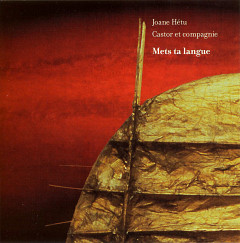
    This is music for listeners who like to express and receive strong feelings. It is full of fervor. …every sound of Joane Hétu seems as a touch of somebody close and beloved. A must at any price.

    Castor et compagnie: Mets ta langue dans Ici Montréal

    «Compact», Vincent Collard, Ici Montréal, 29 octobre 1998
    jeudi 29 octobre 1998 Presse

    Joane Hétu et son band continuent là où ils avaient laissé. Une musique polymorphe, anarchique, festive, où tous les styles se mélangent pour former un amalgame toujours organique. On y raconte l’amour, la sensualité, le sexe, parfois crûment, parfois en laissant mijoter un peu… mais avec une originalité et une sincérité dans le propos qui touchent souvent la cible. Par rapport au premier album, on note un net progrès sur le plan musical: l’ensemble se tient, a une direction, une cohérence qui manquaient parfois. À suivre.

    Une musique polymorphe, anarchique, festive…

    Castor et compagnie: Mets ta langue, Joane Hétu dans Montréal Campus

    «Hétu, Derome et ses Zhoms», Mathieu Fournier, Montréal Campus, 21 octobre 1998
    mercredi 21 octobre 1998 Presse

    Sur Mets ta langue, Joane Hétu, accompagnée de son collectif, Castor et Compagnie, impressionne par ses compositions plus personnelles. Loin d’être naïves, les 11 chansons d’amour qu’elle propose dépeignent un univers sensuel et corrosif à la fois, comme toutes les grandes passions.

    … un univers sensuel et corrosif à la fois, comme toutes les grandes passions.

    Castor et compagnie: Mets ta langue dans Le Devoir

    «Jours fastes!», Serge Truffaut, Le Devoir, 10 octobre 1998
    samedi 10 octobre 1998 Presse

    Joane Hétu est saxophoniste. Elle joue de l’alto. Elle chante ses mots. Et elle compose. Elle est également la patronne… C’est mal dit, ça! Mettons que Joane Hétu est l’animatrice du groupe Castor et compagnie. Castor, c’est elle et Derome aux saxos et aux voix, c’est également Diane Labrosse à l’accordéon, l’échantillonneur et les voix, ainsi que Pierre Tanguay à la batterie et aux voix. Tous ensemble, ils ont joué et chanté les compositions de Hétu d’abord, de Derome ensuite. Le résultat s’intitule Mets ta langue, comme dans métalangage. Mettons que c’est la métaphysique de l’amour brut. De-que-cé? On n’en sait rien.

    Bon. Joane Hétu… Jean Derome… Les deux sont donc saxophonistes, auteurs,compositeurs.

    Castor et compagnie: Mets ta langue dans Voir

    «Critique», Nicolas Tittley, Voir, 8 octobre 1998
    jeudi 8 octobre 1998 Presse

    Joane Hétu se montre beaucoup plus pertinente dans les chansons qu’elle élabore pour Castor et Compagnie, quatuor au sein duquel travaillent egalement Derome, la «sampleuse» Diane Labrosse et le batteur Pierre Tanguay. Mets ta langue (au propre et au figuré), c’est onze chansons d’amour et de cul qui caressent et griffent, pleurent et suent, crient et susurrent. L’esprit du disque est admirablement résumé dans la superbe trilogie Beauté, où l’on peut entendre Jean et Joane chanter «La Beauté, c’est pas c’qu’y’a de plus beau. C’est un mélange d’imperfections […] de gestes, de hasards. 3,5/4

  • 1
  • 2
  • 3