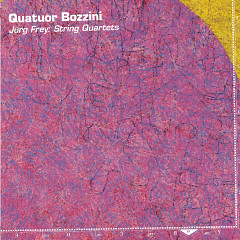
A notable composer of contemporary music, an equally notable classical quartet from Canada and five compositions dating back to the previous century, performed at the beginning of the next and now re-edited. The first two last a dozen minutes each, the next two are miniatures of a few tens of seconds, while the last is almost half an hour long, a uniquely beautiful epic of fading sounds.
The first story is a kind of painful trepidation, a tearful, joyless lullaby, in the form of constant repetition built up by oppositions, both in terms of sound and drama. The narrative undulates, adhering with full determination to the idea of minimalism and sometimes constitutive reductionism. Silence plays an important role here, which from time to time smuggles in scraps of fading melody. The second track seems to reach for the aesthetics of early music, is more brooding, and is definitely the most classical in the album set. The seemingly straightforward narrative undergoes a systematic breakdown here, but it does not lose the mark of a mellow exposition. It often takes one step forward and then two back. It swallows small portions of melody, chews on them and then puts them back. The very ending seems to carry a note of mysterious optimism. Of the annotated miniatures, the first seeks a bottom, the second shines with a screeching post-baroque. The fifth track occupies half the album and definitively constitutes its quality. It flows from the very bottom of the dark crypt, straining through clenched teeth, reminiscent of a procession of the dead. It is unspeakably beautiful, although built with extremely reductionist methods. A great omission that moves mountains. A life that has long borne the mark of an irretrievable death. It smells of early music, the perfect soundtrack to an exceptionally slow dying.
Translated from Polish.
Original text
Znamienity kompozytor muzyki współczesnej, równie znamienity, klasyczny kwartet z Kanady i pięć kompozycji pochodzących jeszcze z poprzedniego wieku, wykonanych na początku kolejnego, a obecnie reedytowanych. Dwie pierwsze trwają po kilkanaście minut, dwie kolejne, to kilkudziesięciosekundowe miniatury, ta ostatnia zaś, to prawie półgodzinna, wyjątkowa piękna epopea zanikających dźwięków.
Pierwsza opowieść, to rodzaj bolesnej trwogi, rzewnej, nieradosnej kołysanki, w formie nieustannej repetycji budowanej przeciwieństwami, tak brzmieniowymi, jak i dramaturgicznymi. Narracja faluje, z pełną determinacją trzyma się idei minimalizmu i niekiedy konstytutywnego redukcjonizmu. Ważną rolę odgrywa tu cisza, która from time to time przemyca ochłapy gasnącej melodii. Drugi utwór zdaje się sięgać po estetykę muzyki dawnej, jest bardziej rozśpiewany, definitywnie najbardziej klasyczny w albumowym zestawie. Pozornie prosta narracja ulega tu systematycznemu rozkładowi, ale nie gubi znamion ekspozycji łagodnej dla ucha. Często robi krok do przodu, a potem dwa do tył. Łyka drobne porcje melodii, przeżuwa je, a potem odkłada na miejsce. Samo zakończenie zdaje się nieść nutę tajemniczego optymizmu. Z anonsowanych miniatur, pierwsza szuka dna, druga błyszczy piskliwym post-barokiem. Piąty utwór zajmuje połowę albumu i definitywnie konstytuuje jego jakość. Płynie z samego dna mrocznej krypty, cedzony przez zaciśnięte zęby, przypomina pochód umarlaków. Jest niewymownie piękny, choć budowany wyjątkowo redukcjonistycznymi metodami. Wielkie zaniechanie, które przenosi góry. Dogorywające życie, które od dawna nosi znamiona bezpowrotnej śmierci. Pachnie muzyka dawną, idealny soundtrack do wyjątkowo powolnego umierania.