actuellecd

Blog

3585 results
  • 61
  • 62
  • 63
  • 64
  • 65
  • 66
  • 67
  • 68
  • 69
  • Coco Swirl in Avant Scena

    “Review”, Avant Scena, April 29, 2019
    Tuesday, April 30, 2019 Press

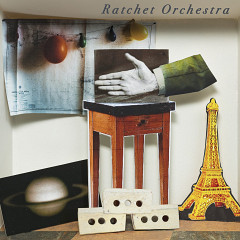
    Coco Swirl is out now on “Ambiances Magnetiques”. The Ratchet Orchestra had recorded all the music. The orchestra is formed from great and famous musicians of avant-garde jazz and contemporary academical music scene — here together plays Lori Freedman (clarinets), Jean Derome (flutes, baritone saxophone), Yves Charuest (alto saxophone), Aaron Leaney (tenor saxophone), Jason Sharp (bass saxophone), Ellwood Epps (trumpet), Craig Pedersen (trumpet), Scott Thomson (trombone), Jacques Gravel (contrabass trombone), Julie Richard (tuba), Joshua Zubot (violin), James Annett (viola), Jean René (viola), Guillaume Dostaler (piano), Ken Doolittle (percussion), Isaiah Ceccarelli (drum set) and Nicolas Caloia (double bass, conductor). The compositions by Nicolas Caloia are performed here. The Ratchet Orchestra is famous for extraordinary and innovative interpretations, bright and expressive style, unique sound and enchanting musical language. Musicians are fusing together dozens of styles, expressions and sounds — they get a fantastic result.

    Coco Swirl is filled with original and bright ideas. The music is filled with concepts and modern ideas. Each musician has its own way of improvising and playing — all of them are marvelous improvisers. The music is always somewhere between arranged composition and improvising. Solid, evocative and academical pieces gently fit together with sparkling, furious, bright, expressive or moving free improvisations. Vivid, many-layed, wide and colorful musical pattern is created. It contains dozens of expressions, styles, timbres, sounds and other elements. The wide variety of styles is created — the compositions are an organic place to mix up together absolutely different music styles. Contemporary academical music, the ideas of modernism and post-modernism, electronics and experimental music, academic avant-garde are mixed up with free improvisation, experimental and avant-garde jazz, the streams of Canadian, American and European jazz. The soft intonations of bebop, post bop, hard bop and other modern jazz styles also are heard in the compositions. This huge variety of styles, rhythms and sounds makes colorful, enchanting and bright sound. The music is moving and vivid. Melody line is kept by saxophones, clarinets, flutes and trumpets. All kinds of reeds create marvelous melody line. Soft and whistling flutes have romantic, tight and calm mood who sometimes burst on furious, dramatic or passionate culminations. Vivid and expressive saxophones are full of impressive blow outs, tremendous culminations, passionate, moving and trembling excerpts, incredible riffs, strange timbres and special effects. Flowing, light and expressive melodies by clarinets are filled with energy and drive. The melodies are contrasting with deep, dark and solemn tunes of bass line. Vigilante, thrilling and growling trumpets certainly bring the energy and drive to the compositions. Stitching, sharp, aggressive, thrilling, furious, roaring and wild improvisations are accompagnied by fabulous ornaments, gorgeous textures, dizzy passages, weird timbres and special effects. Woodwinds and trumpets make a great combo — all kinds of colors, textures and sounds are mixed up to one place and make solid and independent melody line. Breaking sessions, enchanting solos, wild fast and furious culminations, sharp and vigilante sequences of chords — these elements are the main compounds of piano music. Piano gently fit together with all kinds of instruments — it’s the source of life, joy and inventive musical decisions. The strings bring in the compositions the academical sound. Sharp and dramatic culminations,shrieky tunes, stitching and aggressive sounds who are contrasting with soft pizzicatto, deep solos, calm and lyrical contemplations and other elements. The sounds of trombones and tuba keep deep, tight and solid bass line along with double bass. Musicians also don’t hesitate to get on research of strange timbres and weird sounds. Drums and percussion contain great rhythmic section. Modern, extravagant and passionate rhythmic sessions meet minimalistic, repetitive and ascetic series, breaking and wild improvisations and typical rhythmic forms of various jazz styles. There’s no line between academic avant-garde and avant-garde jazz — musicians fuse these styles together in organic and natural way. They manage to make a fantastic interpretations of Nicolas Caloia music. Nicolas Caloia demonstrates his own, driving and unique composing style — here meets innovative ideas, expressive decisions, driving solos, solemn, deep and evocative academical music, sound experiments, the newest tendencies of modernism, incredible and universal instrumentation, composing and improvising and the roots of avant-garde jazz. The music has inspiring, vivid and bright sound.
    Musicians are fusing together dozens of styles, expressions and sounds — they get a fantastic result.

    Spine, Le way qu’a do, Arthur Bull in The WholeNote

    “Review”, Stuart Broomer, The WholeNote, no. 24:8, May 1, 2019
    Monday, April 29, 2019 Press

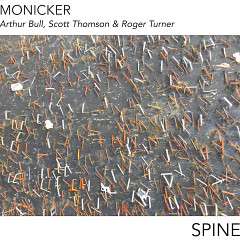
    Guitarist and poet, Toronto-born and Nova-Scotia resident, Arthur Bull enjoys a compound musical identity. He has been a part of the Canadian improvising community for decades, developing a personal idiom that draws in equal parts from the extended techniques of free improvisation and the slide and finger-style traditions of blues and folk idioms. These two CDs, from Spring 2018, present Bull in radically different, if equally radical settings.

    The Surruralists is essentially a duo of Bull and electric bassist Éric Normand, though guests sometimes contribute to a music that’s at once timeless and timely. The two (sometimes subtly, sometimes not) merge free improvisation with folk singing, mixing French and English traditions to craft a primal music in which country tunes and proto-rhythm ‘n’ blues collide with flashes of an unearthly sound art. Bull’s raw baritone and slide guitar drive Jack o’ Diamonds and Frankie (and Johnny), while his gift for epigram emerges on the spoken Skidmarks: “I couldn’t count how many ways the woodpecker could divide the beat.” Normand adds weird electronic burbles to condition familiar themes, and he’s eloquent on the dirge La courtisane brûlée, with Bull adding plaintive harmonica and Ben Grossman a funereal vielle à roue (or hurdy gurdy).

    Among Bull’s international associations is one formed in 2002 with drummer Roger Turner, a charter member of the British school of free improvisation. Turner’s sometimes machine-like approach can be traced directly to an early appreciation of the brilliant precision of Dave Tough, the drummer who propelled the rise of Chicago jazz over ninety years ago. Anyone who imagines free improvisation to be somehow vague in its contours simply hasn’t heard Roger Turner. In 2018 Bull and Turner expanded their duo with the addition of trombonist Scott Thomson for a tour (as Monicker) that stretched from Southern Ontario to Nova Scotia.

    No blow by blow description could do justice to Spine: the music is mercurial, each of the CD’s six tracks a continuum of shifting, permutating relationships and voices, much of it conducted at incredible speed, from Thomson’s burbling register leaps and runs, squeezed through a metal mute, to Turner’s high-pitched clatter. Bull’s voices range from long, wandering bass glissandi to high-speed flurries of metallic scatter-shot, liable to be confused with some of Thomson and Turner’s own voicings, but the very determination with which the three proceed soon destroys any identikit game of “he said, he said” with a conclusive “When was that?” It’s a high-water mark in Canadian free improvisation.

    It’s a high-water mark in Canadian free improvisation.

    Fleur de chaos in The Squid’s Ear

    “Review”, Dave Madden, The Squid’s Ear, April 24, 2019
    Wednesday, April 24, 2019 Press

    Recall if you will music with gestures that are, by your standards, “expressive” (anger, sadness, intense joy — any non-neutral sentiment). Here are some of mine:

    • Jimi Hendrix’s Spanish Castle Magic
    • Neil Young’s single pitch solo on Cinnamon Girl
    • Akio Suzuki performing with a whisky bottle in a sock
    • The busy middle passages of Penderecki’s String Quartet No. 2
    • 4’33”

    Within these dear-and-near-to-me examples, there is a demonstration of the thing people call “heart” and “je ne sais quoi” and “they have it” and “spirit”. Despite a divisive spectrum of technical effort and complexity to modesty and simplicity, there are works that override genre, culture, race, etc. to pierce your soul in an equal way.

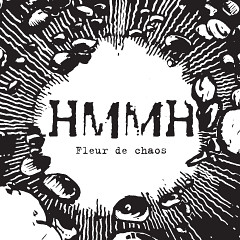
    Though being moderately economic with notes, effects, and quantity of performance, Hmmh says and emotes a great deal. Joane Hétu (voice, numerous objects), Pierre-Yves Martel (on his usual viola da gamba plus harmonica and zither), Émilie Mouchous (a DYI electronics guru on Korg synthesizer), and Carl Ludwig Hübsch (tuba and also numerous objects) play on the physicality and length of breath to create a tense, confining, intimate ecosphere.

    Hétu and Martel begin in the right channel with a duet of faint hums and gentle palmed strokes. On the other side, Mouchous conjures placid warbles, chirps, hiss, and Theremin-like bursts and glissandi. The trio often recesses and then resumes with relatively more momentum; near three minutes, they’re joined by Hubsch engaging in a low, fluttering twin to Mouchous, and the quartet begins to unravel with a small cloud of tapping, scratching, and other micro-detritus twirling about. All players lean back half-way through the work and unleash a lung emptying (or filling, like inhaling as much as possible to nearly induce a dead faint) that realizes as a great deal of shrill dragging across strings, mechanical screams and tuba emulating a volatile steam engine. It is literally the sound of screeching brakes and extreme acceleration (bonkers, I know). Effortlessly, the group slinks back into a purring drone before adopting a more percussive aesthetic on Pause innocente. Mouchous’s sine wave persists, but Hétu rattles off long series of sibilant, lippy whispers beside a shuffle of metallic objects and harmonica flare-ups. This doesn’t last long before the ensemble unites again in a lugubrious, slinking texture, though one less exuberant than the previous, and ending with a calming “wind.

    Haiku with Bells and Se frotter à Brabylon are the most active of the six pieces, though they still remain more sound art than “music”; you’re more likely to hear staccato pings from items clunking around in a mixing bowl fitted as a tuba mute than melodic themes and development. From a tiny pulse of wood flicks, faint tinkling bells, creative key clacks, and blown hiccups to synthetic opera soprano to dialog between a multiple personalities sufferer to something that sounds similar to simulated engine troubles to erasing so hard your paper test is in tatters, Hmmh makes extended techniques its business.

    The virtuosity of Fleur de chaos is in the creativity and collaborative meld the four musicians forge across this disc, the latter giving the impression that the recording was rehearsed, not improvised; ideas flourish and stifle and regrow and die without anyone’s ego attempting to stick out and destroy this new creature.

    The virtuosity of Fleur de chaos is in the creativity and collaborative meld the four musicians forge across this disc…

    Mistpouffers in The Sound Projector

    “Review”, Ed Pinsent, The Sound Projector, April 17, 2019
    Thursday, April 18, 2019 Press

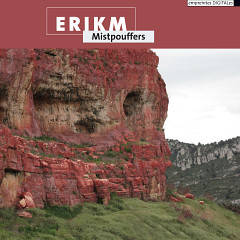
    French musician eRikm has certainly moved far beyond being simply labelled as a “turntabler”. We heard one of his serious compositions Doubse hysterie in 2016, released on Monotype Records; now here are three recent-ish works, published on the Canadian electroacoustic label empreintes DIGITALes. Of these, Draugalimur scores high for ambition, criss-crossing themes of fantasy story-telling, epic science fiction cinema, and landscape audio-painting of the wilds of Iceland, all the above underpinned with whispered texts drawn from traditional Nordic sagas. Erik’s aiming for a huge sense of scale, a panorama that can include old whale-slaughtering quays in its sweep, yet he never loses sight of the tiny details that give it all substance. Despite the rather grim tone, this piece does indeed convey the intended “journey” sensations that are the goal of so many composers in this area.

    Poudre contains field recordings of fireworks, a topic which has been used by so many phonographers in the past I often wonder what mileage is left in it. 17 minutes of explosions, treated with studio processing, are combined with the happy whoops of Berliners who set off fireworks on New Year’s Eve; eRikm takes a pessimistic quasi-philosophical view of the entire episode, and sees it all as an indicator of alienation in society. Not much listening pleasure in the piece either.

    More successful, and another with grand ambitions, is L’aire de la Moure 2, another semi-fantastic piece that combines a survey of an area of natural beauty with dreams of flying. The area in question may be in Australia, since he refers in his notes to the sacred rock of Uluru (more popularly known as Ayers Rock). The site may be under threat in some way; there are vague allusions to risk management and natural disasters, but clearly the monumental scale of the place has stirred the composer’s imagination. He drew further textual ideas from Bruce Chatwin, Paul Virilio, and the writings of Paul Eluard, and his own childhood dreams of flight. A heady mix, then, of fantasy, dreams, sacred sites, and even magic — all bubbling away in the forge of his imagination. The extremely dynamic and textural electroacoustic sheets of sound are mixed with planes flying overhead, and texts in French read by insistent male and female voices. L’aire de la Moure 2 thus succeeds in connecting with the “greats” of musique concrète composition, with its strong resemblance to works by Parmegiani, Luc Ferrari, and Pierre Henry.

    A fairly ponderous release, with its weighty ideas embedded in the music and the printed text, but a solid and rewarding listen.

    … a solid and rewarding listen.

    Coco Swirl in SilenceAndSound

    “Critique”, Roland Torres, SilenceAndSound, April 15, 2019
    Tuesday, April 16, 2019 Press

    Composé par le contrebassiste et chef-d’orchestre Nicolas Caloia, Coco Swirl mélange les forces de l’avant-garde pour offrir un instantané de la musique contemporaine, où free jazz et expérimentale rentrent en collision pour donner naissance à un cosmos délirant.

    Les instrumentistes présents, ont la place de donner libre-court à des salves d’improvisation, conférant à Coco Swirl un goût d’expérience auditive à la croisée des genres, faisant se percuter cuivres, cordes, xylophones, piano électrique et rythmiques sur des murs du son aux avancées mélodiques en mode hors-cadre.

    L’autre grande force de Ratchet Orchestra, est de conjuguer les pistes et de donner à chacun un espace qui lui est propre, capable de s’isoler ou d’appuyer musicalement le reste de l’ensemble, permettant à la narration de gagner en énergie et en densité.

    La richesse de Coco Swirl réside dans son approche très accessible pour un néophyte curieux, tout en développant une écriture pointue à la recherche musicale intense, qui sait puiser intelligemment dans le passé pour catapulter le tout dans un rétro-futurisme en constant mouvement. Très fortement recommandé.

    Très fortement recommandé.
  • 61
  • 62
  • 63
  • 64
  • 65
  • 66
  • 67
  • 68
  • 69