actuellecd
  • This website is also available in English.

Blog

3585 results
  • 342
  • 343
  • 344
  • 345
  • 346
  • 347
  • 348
  • 349
  • 350
  • July 5th, 1961 in Babysue

    “Review”, Babysue, May 1, 2006
    Monday, May 1, 2006 Press

    The Eastern Stars is the duo consisting of Rob Corradetti and Kaia Wong, better known for their work in the band Mixel Pixel. Rob and Kaia recorded this album on an analogue 8-track recorder in 2004… but the results of those recording sessions are only now seeing the light of day. July 5th, 1961 features eleven tracks, most of which are soft and subtle pop compositions. The duo names a wild variety of influences including The Mamas and the Papas, Galaxie 500, Heavenly, The Shaggs, and Pink Floyd (!). Obviously an artistic project created purely out of the joy of making music, this album is simultaneously peculiar and soothing. Top picks: They Know What To Do, Money Money We Want Yours, In Russian Blue, Jail Bait Baby. (Rating: very good)

    … soft and subtle pop compositions.

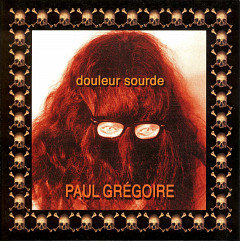
    Douleur sourde in ImproJazz

    “Critique”, Luc Bouquet, ImproJazz, no. 125, May 1, 2006
    Monday, May 1, 2006 Press

    Paul Grégoire est un drôle d’oiseau; un de ces durs à cuire que, jamais, l’on ne mettra en cage. Fuyant comme la peste les itinéraires fléchés, et brûlant à grand renfort de rires carnassiers tous les feux rouges de la création, Paul Grégoire est un ovni décapant. Chanteur dégingandé, amateur d’alcools forts et trébuchants, saxophoniste hasardeux (à côté James Chance c’est du Mozart!), doté d’un humour féroce et d’une tendresse voilée, il y a du Bobby Lapointe dans ses histoires absurdes et dérapantes, du Red dans sa voix éraillée et du jazz dans ses reprises hilarantes de standards (Les feuilles mortes, Only You, Every Time We Say Goodbye…). Bref, un joyeux bordel organisé par quelques musiciens amis et familiers du collectif Ambiances Magnétiques (Michel F Côté, Jean Derome, Robert Langlois, René Lussier). Et comme chaque torchon trouve sa guenille, comme le chante si bien Grégoire, nul doute que de ce côté de l’Atlantique, quelques hurluberlus notoires sauront s’amouracher de la poésie lunaire et absurde de notre barde québécois. Hic hic hic hourra!

    Fuyant comme la peste les itinéraires fléchés, et brûlant à grand renfort de rires carnassiers tous les feux rouges de la création, Paul Grégoire est un ovni décapant.

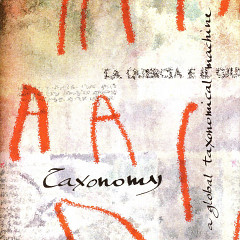
    A Global Taxonomical Machine in ImproJazz

    “Critique”, Luc Bouquet, ImproJazz, no. 125, May 1, 2006
    Monday, May 1, 2006 Press

    Voici une musique sans querelle, sans parti pris agressif. Qu’elle soit élaborée électroniquement (une guitare par ci, une clarinette samplée par là) ne change rien à l’affaire; rien ne se désarticule ici, tout se distille avec gourmandise, élégance et évidence. Les balayages se construisent par petites touches et s’ils envahissent l’espace, ce n’est pas par orgueil ou par désir de marquer un territoire mais parce que la musique devaint en passer par là pour atteindre (attendre) le silence. Le voici, ce silence, dense, constructif, troué de quelques imperceptibles soubresauts. Il reviendra plus tard, s’ouvrant alors à des soleils bienveillants, des astres filtrants.

    Cette musique possède son rhytme, sa navigation. Je ne saurais dire si elle est lente, hypnotique ou cabossée. Ce que je sais, c’est qu’elle s’engage avec sincérité dans des bras de fleuve aux destinées secrètes et protectrices. A mettre entre toutes les oreilles.

    rien ne se désarticule ici, tout se distille avec gourmandise, élégance et évidence.

    Bozzini Quartet in Positionen

    “Review”, Matthias R Entreß, Positionen, no. 66, May 1, 2006
    Monday, May 1, 2006 Press

    […] Luckily, in the rest of the [Festival] program, aside from some pieces which were merely well-crafted and were more appropriate compulsory “New Music” exercises for a subscription-series concert than for a new music festival, there were also some overwhelming moments. One of them was the string quartet Gradients of Detail by the Berlin-based Canadian Chiyoko Szlavnics, performed by the outstanding Bozzini Quartet from Quebec, who successfully realised the rather simple glissando-processes as free flowing moments musicaux, which are not apparent when referring to the conceptual idea, but which have been intensively developed from graphically-notated progressions by the composer. A twenty-minute enigma for the ears, one which never allowed our attention to slacken.

    There were also some overwhelming moments. One of them was the string quartet Gradients of Detail by the Berlin-based Canadian Chiyoko Szlavnics, performed by the outstanding Bozzini Quartet from Quebec, who successfully realised the rather simple glissando-processes as free flowing moments musicaux… A twenty-minute enigma for the ears, one which never allowed our attention to slacken.

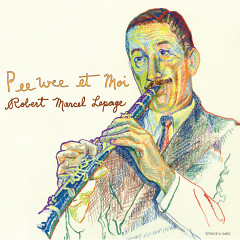
    Pee Wee et moi in ImproJazz

    “Critique”, Luc Bouquet, ImproJazz, no. 125, May 1, 2006
    Monday, May 1, 2006 Press

    Robert Marcel Lepage a raison d’affirmer que ses blues sont légèrement tordus. A partir de la deuxième plage, ses blues se contorsionnent, ils s’invitent en valses débauchées, s’offrent quelques riffs saillants (Dixie chinois, Pee Wee Rocks) et resquillent dans la marge. Une marge rassurante puisque habitée par une figure paternelle: le Pee Wee Russell.

    Pour rendre hommage au clarinettiste, Lepage a fait appel à un guitariste (René Lussier que l’on est heureux de retrouver aussi prolixe et inspiré), un contrabassiste (Normand Guilbeault), un batteur (Pierre Tanguay) et une armada de clarinettistes (Lepage lui-même, Guillaume Bourque, François Houle, Jean-Sébastien Leblanc, André Moisan, Pierre-Emmanuel Poizat, Richard Simas), laquelle forme une masse sonore imposante (Pee Wee fait des archaïsmes, moi des anachronismes), parfois décapante, toujours décisive.

    Il n’y a rien à reprocher à Lepage ici. Ses intentions sont claires et aucun grain de sable ne vient enrayer sa machine à swinguer. Bref, une musique vive et toujours soutenue. Swinguons heureux!

    une musique vive et toujours soutenue.

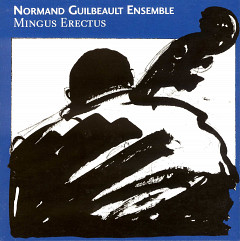
    Mingus Erectus, Pee Wee et moi, The Feeling of Jazz in Point of Departure

    “Review”, Bill Shoemaker, Point of Departure, no. 5, May 1, 2006
    Monday, May 1, 2006 Press

    Among the First World’s experimental music communities, Québec’s Musique actuelle community is one of the more insular. One might surmise that they are sufficiently supported at home, making travel less the priority it is elsewhere in North America. Certainly, developing a US audience is nowhere near the top of their list, even though most of the New England is within reasonable driving distance from Montréal. Their CDs are not covered by such basic reference books as The Penguin Guide To Jazz On CD. They are busy living and doing their work, the overwhelming bulk of which bears only a passing resemblance to that from other communities. That’s why it is intriguing that these musicians would unabashedly celebrate mid-century American jazz in three concurrently released CDs.

    For many interpreters of Charles Mingus’ compositions, the depiction of volatility seems to be the bar they strive to clear. And, bassist Normand Guilbeault’s well-balanced quintet on Mingus Erectus does that time and again with disarming ease. Part of this is attributeable to his choice of compositions like Pithecanthropus Erectus, which has Mingus’ signature mix of brooding and lashing-out, and All The Things You Could Be?, which gives ample space for soloists to work off Mingus’ emotional spikes. Guilbeault’s front line of clarinetist Mathieu Bélanger, trumpeter Ivanhoe Jolicœur, and Jean Derome, who plays flute and alto and baritone saxophones, meets these demands very well (the band is rounded out by drummer Claude Lavergne, who ably plays the role of Dannie Richmond). What they do better than most, however, is convey the gush of Peggy’s Blue Spotlight and the whimsy of Tijuana Gift Shop, not as the highs of a mood swing, but as fully realized moments. Guilbeault also milks the sarcasm of Fables Of Faubus with anti-Bush lyrics like “you’re so sick and ridiculous” that actually fit the idiosyncratic melody. These facets of Mingus’ music coalesce into a vivid portrait. It may not seem so at first, but Pee Wee Russell is almost as tough to interpret as Mingus, but for a host of different reasons. The arch eccentric of the generation that came of age in the late ‘20s and early ‘30s, the clarinetist committed several endearing heresies late in life, such as playing with Thelonious Monk at Newport, and recording both Monk and Ornette Coleman tunes for Impulse. His playing was rife with odd phrases saturated by a disaffected, wobbly tone, which makes him vulnerable to bad caricature if the swing is sapped from his phrasing to emphasize his idiosyncrasies, or if his quirky intonation is overdone. Robert Marcel Lepage gets it right on Pee Wee et moi by sticking with the blues and not delving into Russell’s drink and depression riddled personal life. At his best, Russell’s playing conveyed wizened joy as it unhinges from the quotidian, which Lepage emphasizes throughout this album-length suite. He brings on a half-dozen clarinetists — Guillaume Bourque, François Houle, Jean-Sébastien Leblanc, André Moisan, Pierre-Emmanuel Poizat and Richard Simas — who hoot and wail with an appealing vigor (unfortunately, there’s no score card to tell them apart). While Guilbeault and drummer Pierre Tanguay simply steam throughout the date, the real wild card is guitarist René Lussier, whose off-kilter blues phrases and occasionally maniacal strumming frequently jolt the proceedings. Pee Wee et moi is a great wild ride. Trio Derome Guilbeault Tanguay is something of a Québécois Clusone Trio. Both groups love jazz enough to be occasionally irreverent with the genre. The comedic roles within the two trios differ: Derome is not as deadpan as Michael Moore; Tanguay’s humor is gentler than Han Bennink’s; and Guilbeault can’t match Ernst Reijseger’s ability to lay the cello across his lap like a guitar. And, their respective tastes bypass bebop, favoring the likes of Ellington, Kern and Porter. When they tap a post-war source on The Feeling Of Jazz, Trio Derome Guilbeault Tanguay tend towards the books of cool characters like Lee Konitz and Misha Mengelberg, though they also give Sonny Clark’s Sonny Crib a sufficiently gritty reading. Trio Derome Guilbeault Tanguay arguably has a tad more punch in their delivery, due to Derome’s harder-edged alto and baritone, the lower reach of Guilbeault’s bass, and Tanguay’s simmering grooves. This is an excellent album, which may pull Trio Derome Guilbeault Tanguay into the international limelight.


  • 342
  • 343
  • 344
  • 345
  • 346
  • 347
  • 348
  • 349
  • 350