Dream of Heat in PAN M 360
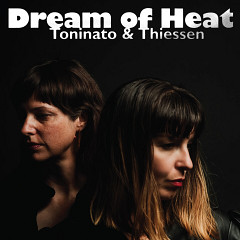
This is a second album for the Montréal baritone sax/viola duo of

This is a second album for the Montréal baritone sax/viola duo of
Lavorare sulla memoria dandole una forma uguale e diversa nella contemporaneità. Si può fare strutturando aree tematiche quali le migrazioni, gli spiriti, la perdita, la finitezza e l’addio. Il tutto legato, che magnifica intenzione, dalla gioia.
Convenuto su questo, si dividono sedici brani in quattro suite che arrivano dall’elaborazione di registrazioni su nastro effettuate a Parigia inizio anni Novanta.
È un progetto che definire inusuale è riduttivo, in quanto tra field recording, artrock, inserti electro, pop, psych e sperimentali risulta inclassificabile. Affascinante.
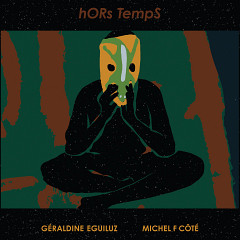
The potent collaboration between Montréal-based composer-performers
Their forthcoming album,
From Lockdown Postcards to Panoramic Compositions
Perhaps most notable among the panoply of new sonic components is the presence of singing. The fact that these six pieces feel like abstract songs brings additional stylistic intrigue to their already bewildering blend of approaches. The record’s underlying methodology explains much of this newfound panoramic outlook. As the liner notes state
The album’s constituent ingredients include viola, baritone saxophone, electronics, field recordings, reverberant spaces, and spoken and sung voices with original texts in both French and English.
Collaborative Alchemy
Initially conceived as a live performance entitled Winter [City] Speaks, the subsequent recording process continued to develop the pieces. Constellation Records alumnus
The fact that portions of the album were recorded at the legendary hotel2tango by
The
The album is available on February 13, 2026, on the Montréal-based Collection QB, the label created by
Ryan studied at the University of Toronto, where he earned a Bachelor’s, Master’s and PhD degrees in percussion. Today, he teaches at the Faculty of Music, University of Toronto, and at the
We caught up with
The release features new music by
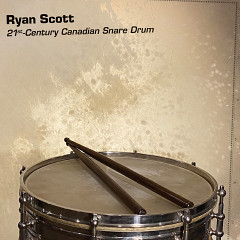
The humble snare drum is where many percussionists’ journeys begin, and it’s in common use around the world. The album showcases the wide breadth of possibilities for the instrument, as it showcases the work of Canadian composers.
“First of all, I chose the snare drum because it’s really the mother instrument of percussionists,”
That’s why it’s typically used for drummer’s auditions. “They start with snare drum, because you can tell right away if they have the skills necessary for the job,” he says. “It’s a tradition that goes back hundreds of years.”
The Music
He chose a group of 14 celebrated Canadian composers for a reason — to come up with a diverse range of music.
“This is not a CD of a bunch of percussion composers writing for the drum,” he says. “Each piece is so unique. It’s really 14 different voices.”
He gave each free rein to come up with their own ideas. “When I commissioned all the composers, I didn’t specify to them any limitations whatsoever.”
As a result, their approaches vary widely. About half use electronic enhancement or elements, while the rest don’t. “I met with most of them and worked with them on the material before the pieces were created.”
The compositions were premiered live in 2023. The commissions actually resulted in 15 pieces originally. As he notes, the only percussion composer he’d approached,
Part of the impetus for the album is to add to the global repertoire for solo drum. “We don’t have a lot of repertoire that is transportable,” he notes of percussionists in general. Music for solo snare drum is one of the more significant exceptions.
“It’s incredibly appealing to percussionists,” he says. As a percussionist, it’s an opportunity to savour. Typically, performance means either hauling or accessing a daunting series of instruments that can be heavy, bulky, and awkward to carry. “I call it a lifestyle.”
The Composers
How did he come to choose these 14 composers
“I’m also the artistic director at Continuum,”
The music speaks for itself. “It’s not like one piece is necessarily better than another.”
As he points out, some composers looked to explore percussion techniques, while others adopted a more conceptual approach. “It’s just a really interesting exploration of what’s possible with the instrument.”
The album’s impact should spread well beyond the percussion community per se. He says that the live performance was sold out, and audience comments afterwards were revealing. “Often times, a lot of the comments came from some of the more introspective pieces,” he says.
Naturally, assembling a body of 14 original commissioned pieces was no small feat. It began with the funding, which came from a Canada Council grant of a type that was new at the time. “I was awarded that in December 2020 right in the heart of the pandemic.”
He gave the individual composers flexible deadlines, and says most of the works were completed within two years. “I think the last work came in a couple of months before [the September 2023 live premiere].”
The recording project came immediately after. “Three days later I went into the studio with
Final Thoughts
“I’m really grateful to the Canada Council for the Arts,”
Additional support from the Ontario Arts Council supported the recording. “I broke even,” he laughs.
“Ultimately, a lot of gratitude,” he adds. “My gratitude is to the composers. No one said no.” He says they all approached it with excitement. “It’s beyond my imagination.”
It was a challenge to keep up with 14 different approaches to the instrument. “They really kicked my ass,” he says. “They’re all really genuine works. As the art goes, it is genuine and unique, and it is a meaningful contribution to the repertoire.”
He’s looking forward to the album’s release.
“I’m glad that five year so on, it’s finally off my desk, and on to something else.”
Comme les compositrices montréalaises