actuellecd

Blog

40 results
  • 1
  • 2
  • 3
  • 4
  • 5
  • 6
  • 7
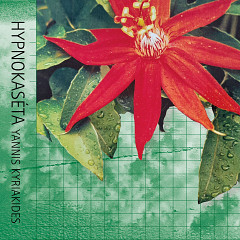
  • Hypnokaséta in Aural Aggravation

    “Review”, Christopher Nosnibor, Aural Aggravation, May 28, 2024
    Tuesday, August 13, 2024 Press

    When it comes to being a music writer, for me, at least, perhaps even more of a buzz than getting advance listens of the most eagerly-anticipated releases is being exposed to music I otherwise wouldn’t have. And the nature of the avant-garde means that you have to be in the know to know. Being introduced to the Unsounds label and the work of Yannis Kyriakides certainly opened my eyes — and more so my ears — to a whole expanse of music I assumed must exist, but would have had no obvious means of locating or accessing while going about my ordinary life before.

    Although I’ve only dipped in and out of Yannis Kyriakides’ output, more as one with a casual interest than a fan per se, his work has never ceased to impress with its range and constant questing for something different, something new, both sonically and methodologically and “Hypnokaséta (2020-2021) is no exception.

    Kyriakides’ introductory notes explain both the concept and the practice behind the recording of the album: “Hypnokaséta (2020-2021) is a continuous set of 16 pieces for string quartet, improviser (playing cassettes and any instrument) and live electronics. The source material is based on dreams that I had during the first few months of lockdown, April-June 2020. Accounts of these dreams are encoded in the music that is played by the quartet and also encrypted in the sound textures that surround this.

    “The pieces alternate between quartet as the foreground and electronic interludes, where solos or duos underpin the soundscape. The title of the piece (Greek for ‘sleep-cassette’) refers to a theory of dreams proposed by Daniel Dennett, that says that dreams are loaded into consciousness like a cassette tape during the night and played just before waking.”

    It’s longtime collaborator Andy Moor who provides the guitar and tape work on these recordings, and together with Kyriakides’ electronics, which move between shuddering skitters and unsettling scratchiness and quite abstract sounds, when juxtaposed with the strings — which span playful to mournful to droning discord.

    The sixteen pieces have been mastered as six separate tracks, but they flow as one immense composition in a continuous state of transition. Within each of the six numbered tracks, the individual segued pieces bear titles, with their time markers also noted. The titles present, if not strictly a narrative, then a guide to the theme, the idea, the inspiration.

    ‘Hypnokaséta I’ comprises ‘The government’s new cultural scheme’, ‘All roads to the airport are blocked’, and ‘Everyone is nervous, everyone is lost’, titles which serve to encapsulate the events and the sensations they engendered within the populace at the strangeness and uncertainty of lockdown.

    ‘Hypnokaséta III’ is a stunning work of contrasts, containing as it does the gentle, almost light-spirited string-led ‘The reluctant hotel manager’ and the dramatic, jarring ‘She lifts the mountain’, a dark, alien drone brimming with electronic tension that crackles and tweets. The rapid switches in mood and form recall the sudden and wild extremes I experienced myself during this time: it was impossible to keep up with the constant stream of developments in the news, while at the same time entrapped within the confines of the house, where the world outside felt so very far away, while also having to accommodate the changeable and diverse headspaces of friends, family, and colleagues. No-one knew what the fuck was going on, or how to cope.

    There was an air of unreality about it all, and at times it became difficult to distinguish between the bewildering nightmarish reality of the wakeful hours and bewildering nightmarish sleep, and in drawing on dreams in the creation of Hypnokaséta (2020-2021), Kyriakides captures the essence of that abstract space forged in the mind where everything blurs. This blurring and abstraction is also reflected in the titles: ‘The concert promoter complains that not much happens in the piece’ sounds like something that could happen in one of those self-reflective semi-anxiety dreams, and ‘Bridges are being dismantled across the city’ has an apocalyptic sense of separation, while ‘Body swap opera’, ‘Swimming pool synthesis’, and ‘Mutations on an empty grid’ are altogether more surreal in their connotations.

    Throughout the album, the lister is jolted from a moment of tranquil reverie by some abrasive thud or rasp, an unexpected spike in volume, and a turn towards an altogether more disquieting atmosphere.

    The composition is nuanced, the placing of the switches and transitions perfectly timed to achieve optimal impact, never allowing the listener to truly settle, to relax, to sit back and enjoy, and the moments of tension are indeed tense; but credit must also go to the performers: the strings are played with a keen awareness of the importance of both dynamics and detail, and Moor, in his capacity of ‘improviser’ brings texture and tone delivered with an infallible intuition. The album’s structures may be subtle, almost invisible, but they’re affecting, and as a whole, Hypnokaséta (2020-2021) is an experience which permeates the psyche in unexpected ways.

    There was an air of unreality about it all, and at times it became difficult to distinguish between the bewildering nightmarish reality of the wakeful hours and bewildering nightmarish sleep…

    Hypnokaséta in Inactuelles

    “Critique”, Dionys, Inactuelles, May 28, 2024
    Tuesday, August 13, 2024 Press

    Mon compagnonnage avec Yannis Kyriakides se poursuit disque après disque. Septième article consacré aux disques qu’il signe seul, ou cosignés avec Andy Moor. Je renvoie à l’article Amiandos pour quelques éléments biographiques sur Yannis, à l’article Rebetika pour Andy. Les renseignements fournis par le compositeur lui-même sont précieux pour comprendre la genèse de ce nouvel album: «Hypnokaséta (2020-2021) est un ensemble continu de 16 pièces pour quatuor à cordes, improvisateur (jeu de cassettes et de n’importe quel instrument) et électronique en direct. Le matériel source est basé sur les rêves que j’ai faits au cours des premiers mois de confinement, entre avril et juin 2020. Les récits de ces rêves sont encodés dans la musique jouée par le quatuor et également cryptés dans les textures sonores qui l’entourent. Les morceaux alternent entre quatuor en premier plan et intermèdes électroniques, où solos ou duos soutiennent le paysage sonore. Le titre de la pièce (en grec pour «cassette de sommeil») fait référence à une théorie des rêves proposée par Daniel Dennett, selon laquelle les rêves sont chargés dans la conscience comme une cassette pendant la nuit et joués juste avant le réveil.» Ce n’est pas la première fois que les rêves sont au centre de la musique du compositeur. Il y eut évidemment Dreams, en 2012, mais la plupart des œuvres de Yannis sont directement ou indirectement liés aux rêves. Les souvenirs aussi deviennent comme des rêves, surtout ceux d’un passé dont nous sommes coupés, exclus, passé de la partie grecque de Chypre dont il est originaire, évoqué dans Resorts & Ruins, en 2015, passé collectif d’avant la Grande Catastrophe (perte de l’Asie mineure) dans Rebetika. Face, en 2021, interroge le visage lui-même en tant que matière du rêve par sa capacité à nourrir fantasmes et craintes. Hypnokaséta poursuit l’exploration des territoires oniriques en revenant à leur veine intime…

    Le disque sublime d’un des plus grands compositeurs de notre temps, magistralement interprété. Un chef d’œuvre éblouissant.

    Hypnokaséta in Radiohoerer

    “Release Tipp: „Traumwelten“”, Henry Kozok, Radiohoerer, May 25, 2024
    Tuesday, August 13, 2024 Press

    Turning dreams into literature or music has a long tradition. Bruce Chatwin traveled dream paths in Australia, for Aphex Twin it was the path to his groundbreaking music and let’s not forget Sigmund Freud and many others. Yannis Kyriakides has written music for string quartet and electronics from his dreams and the resulting music is simply amazing!

    Hypnokaséta (2020-2021) is an ongoing series of 16 pieces for string quartet, improvisers (playing tapes and random instruments) and live electronics. The source material is based on dreams I had during the first months of the lockdown (April-June 2020). The accounts of these dreams are encoded in the music played by the quartet and also in the surrounding sound textures.

    The pieces alternate between the quartet in the foreground and electronic interludes in which solos or duos punctuate the soundscape. The title of the piece (Greek for ’sleep cassette’) refers to a dream theory proposed by Daniel Dennett, which states that dreams are loaded into consciousness during the night like a cassette and played just before waking up. The piece was premiered under the name “Cassettes” by Quatuor Bozzini and Andy Moor in October 2022 in Montréal and other locations in Quebec. It was subsequently recorded by Micha de Kanter at Studio Helmbrekers in Haarlem in November 2022.

    There are some interesting parallels here with other works involving a string quartet and electronic music. A piece by Scott Wilson was presented on BBC Radio 3 and the “New Music Show” series in April, which was performed as part of a concert entitled “CrossCurrents: The Ligeti Quartet — The Memory Project”. Project BEAST (Birmingham ElectroAcoustic Sound Theatre) was involved. Two pieces from this concert were presented in this program, one by Scott Wilson and one by Sara Caneva. I can recommend both without reservation. Just as I can warmly recommend the “New Music Show” series to anyone who is interested!

    I find the idea of writing works for string quartet and electronic music very appealing. On the one hand, a young audience is introduced to the musical world of string quartets through electronic music and the classical audience is introduced to the other. An opening that can be a gain for everyone.

    In any case, I think the realization of Yannis Kyriakides’ composition is very successful. The dreamlike quality is not comforting or cozy, no. The interjections of Kyriakides’ tapes and Andy Moor’s guitar do not allow this. The present doesn’t allow that and that’s how this music sounds. The beautiful moments are there, brief and just so that we don’t forget them. The whole thing leaves a strong and long-lasting impression and for me this is music at the height of our time. A favorite for the best of the year!

    The beautiful moments are there, short and just so that we don’t forget them. The whole thing leaves a strong and long-lasting impression and for me this is music, at the height of our time. A favourite for the best of the year!

    Jürg Frey: String Quartet No. 4 in Nieuwe Noten

    “Kritiek”, Ben Taffijn, Nieuwe Noten, January 28, 2024
    Tuesday, August 13, 2024 Press

    The collaboration between Frey and Quatuor Bozzini is close. Violinist Clemens Merkel and Frey have known each other since 1990. Furthermore, the quartet previously premiered the second string quartet from the late 1990s and recorded the first three quartets for Ediotion Wandelweiser. With this five-movement fourth quartet, the collaboration went a step further, Frey explicitly involving the string quartet in the process of composing. The first movement is very slow, but also very even, with the sounds coinciding remarkably. Also special are the subtle but very exciting string movements in this first movement. The second movement stands out in particular for its repetitive pattern, sounding pretty much like a siren, while the third movement, which begins quite brightly, stands out for its melodic content, something we don’t often encounter with Frey. Following this, the fourth movement again sounds broodingly exciting, with its hushed string movements. Finally, we hear the impressive fifth movement, which at over 30 minutes is about as long as the first four movements. Beautiful, quite similar patterns, like a quietly flowing river.

    Beautiful, quite similar patterns, like a quietly flowing river.

    Éliane Radigue: Occam Delta XV in A Closer Listen

    “Review”, Joseph Sannicandro, A Closer Listen, December 20, 2023
    Tuesday, August 13, 2024 Press

    In the first decade of the new millennium, just as she was finally receiving attention for her groundbreaking electronic works, Éliane Radigue surprisingly turned to composing for acoustic instruments. These “Occams” are compositions based on the particular resonances of a given instrument, each score growing out of the relationship between performers and their instrument: Rivers (for solo performer), Deltas (for small ensemble), and Oceans (for large ensemble). Occam Delta XV was written for Montréal string quartet Quatuor Bozzini, who have made a name for themselves as the finest interpreters of 20th century and contemporary new and experimental music. The result is like flowing water, seemingly static and yet always changing, the rich timbres of the string quartet generating overtones as sensuous as those of any synthesizer.

    The result is like flowing water, seemingly static and yet always changing, the rich timbres of the string quartet generating overtones as sensuous as those of any synthesizer.

    Éliane Radigue: Occam Delta XV in Nieuwe Noten

    “Kritiek”, Ben Taffijn, Nieuwe Noten, June 18, 2023
    Tuesday, August 13, 2024 Press

    Éliane Radigue is also among the founders of the musical movement we often refer to as minimalism, although by no means every composer agrees with this label either. She once started out with electronics, but some years back has devoted herself almost entirely to composing for acoustic instruments. Today, we focus on three recent pieces, performed by the musicians it was also written for. Quatuor Bozzini released a recording of ’Occam Delta XV’ on their own label; Ensemble Dedalus recorded ’Occam Hepta I’ and Ryoko Akama plays ’Occam XX’ on synthesiser. That second album was released by Montaigne Noire.

    Even more than the other composers we count under this movement, Radigue seems interested in the essence of sound. La Monte Young’s music comes closest to this. So it can happen that in that ’Occam Delta XV’, which adds up to over an hour of music, we find remarkably little variation. Radigue is more concerned with the coherence of the sound between the various instruments of the string quartet. Sometimes those sounds run a little further apart and a stratification arises, but regularly there is also a fairly even drone. So music that lacks progression, which is the case with a lot of music within this movement anyway, but Radigue goes a few steps further than many others. However, this does not mean that the music is static; there is plenty happening for those who have an ear for it. Something that, incidentally, is also evidenced by the fact that this album contains two recordings of the piece, which, despite that lack of variety, sound quite different.

    Radigue is more concerned with the coherence of the sound between the various instruments of the string quartet.
  • 1
  • 2
  • 3
  • 4
  • 5
  • 6
  • 7