actuellecd

Blog

78 results
  • 1
  • 2
  • 3
  • 4
  • 5
  • 6
  • 7
  • 8
  • 9
  • Towns and Villages in Le son du grisli

    “Critique”, Luc Bouquet, Le son du grisli, December 17, 2013
    Tuesday, December 17, 2013 Press

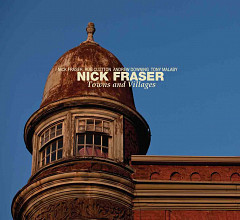
    Le souffle de Tony Malaby ne peut laisser indifférent. Tel un paquebot enroué ou une gralla catalane éraillée, son saxophone refuse d’aller en paix. Malaby malaxe, ressasse, pointe une convulsion, flirte avec le microtonal, tricote quelques pestes soniques, joue droit puis courbe. Bref, aime à chercher ce qui lui résiste encore quitte à oublier l’instant présent. Malaby est un solitaire, il faut faire avec.

    Aux cotés du très fin batteur Nick Fraser et des très complémentaires Andrew Downing (violoncelle) et Rob Clutton (contrebasse), et bien plus que d’ordinaire, il laisse ouverte la parole. Ici, les compositions du batteur imposent simplicité et insistent sur les béances rythmiques. Les espaces ainsi affirmés, chacun va raconter sa petite histoire avec plus ou moins de bonheur. Et dans le cas de Tony Malaby, l’on s’en doute, le lyrisme ne sera pas laissé au fond du filet.

    Le souffle de Tony Malaby ne peut laisser indifférent. Tel un paquebot enroué ou une gralla catalane éraillée, son saxophone refuse d’aller en paix.

    The Muted Note in Monsieur Délire

    “Listening Diary”, François Couture, Monsieur Délire, December 11, 2013
    Wednesday, December 11, 2013 Press

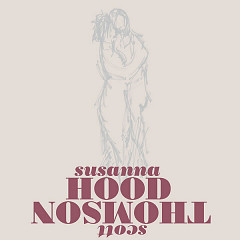
    Eleven compositionsfor voice and trombone by trombonist Scott Thomson, based on poems by P.K. Page. Enjoyable melodies, somewhere between lieder and jazz. Simple music imbued with contemplation and carried by the depth of Page’s words, sung by Hood with sensibility and precision. An elegant and highly coherent artistic proposition.

    An elegant and highly coherent artistic proposition.

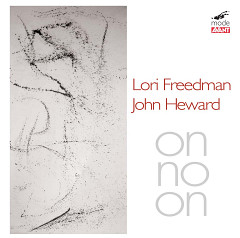
    On No On, Lori Freedman, John Heward in The WholeNote

    “Review”, Ken Waxman, The WholeNote, no. 19:4, December 8, 2013
    Sunday, December 8, 2013 Press

    As mass media continues to promote music as another instantly consumed product, the likelihood of new sounds — or even older ones — being ignored because they don’t fit the style of the moment intensifies. This is especially true when it comes to improvised music. But with the holiday season looming, more committed listeners may be seeking gifts for those who appreciate challenge rather than comfort in their music. Here are some CDs from 2013 that fit the bill. They include ones by established players, younger stylists plus important reissues. […]

    Another reed experimenter is Montreal-based clarinetist Lori Freedman, whose seven improvisations on On No On are with percussionist John Heward. Related to the cerebral texture and timbre experiments of Butcher/Buck or Parker/Lytton, there’s no chordal instrument present to smooth the interface. The chief pleasure of these tracks is noting the substance of Freedman’s reed flurries and the strategies Heward pulls from his kit to parry her thrusts. Using his palms as often as sticks, Heward’s whacks or rolls are singular replies to the reed solos which frequently extend like run-on sentences, adding violent or narrowed projections to make a point. Marimba-like reverberations are called into play on those rare occasions when Freedman’s output turns legato. Overall while technical prowess is the point, by the final Improvisation 7, the narrative turns from squeaks and shudders to an almost jaunty melodiousness. […]

    The chief pleasure of these tracks is noting the substance of Freedman’s reed flurries and the strategies Heward pulls from his kit to parry her thrusts.

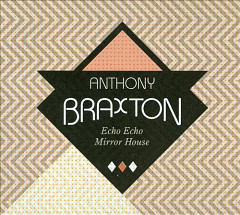
    Echo Echo Mirror House in Point of Departure

    “Moment’s Notice”, Art Lange, Point of Departure, no. 45, December 1, 2013
    Sunday, December 1, 2013 Press

    With Echo Echo Mirror House, the most recent conceptual shift in his evolutionary compositional paradigm, Anthony Braxton has added a simple yet effective element which amplifies its multi-dimensional symbolism. For Braxton, composition is not just a system of musical strategies, but a philosophical and spiritual state of being, meant to initiate a transformational experience for performer and listener alike. Previously, in various stages, he has incorporated compositional grafting, pulse track substitution, collage logic, structured improvisational schemes, mutable forms, varieties of notation, interactive electronics, visual elements, body movement, environmental conditions, literary and/or dramatized subplots — all of which have symbolic, as well as musical, consequences. (No one said it was going to be easy.)

    Composition No. 347, the first of the Echo Echo Mirror House works to be recorded (a second, Composition No. 376, for a 15-piece ensemble, has been issued on New Braxton House), makes use of notational maps and graphs which allow the performers to plot their own course through the possibilities of the available material; however, each instrumentalist is additionally supplied with an iPod loaded with earlier Braxton recordings, to be played back as score or response dictates. Sampling of prerecorded sources is nothing new, of course, and yet in this specific context serves not only as an inclusive nod to electronica, hip-hop, and other “popular” genres, but more importantly as an expanded symbolic representation of time — not in the sense of musical time passing, but as an indication of individual perception. If, for example, Braxton’s initial forays into compositional quotation and restructuring “altered” the manipulation and perception of musical time through the spontaneous choices made by the performers at hand, and, eventually, the Ghost Trance Music was a means of informing repetitive and extended material as a visionary experience of “timeless” time (the trance), the audible portions of (often) familiar Braxton recordings emerging from and coexisting with the “live” details of Composition No. 347 offers the “illusion” of multi-dimensional time as an ironic structural agent. (Stuart Broomer spins off on this subject and develops it in interesting ways in his book Time and Anthony Braxton, Mercury Press.)

    From the two recordings we have so far, it appears that the Echo Echo Mirror House system intends to create a polyphonic network of details — each instrument a distinct voice, selecting or inventing material in response to the score, causing a fluctuating, kinetic tangle of textures that clash rather than blend. The effect is of continuous change, energized movement, a complexity of relationships (reminding me of Marianne Moore’s un-ironic belief that “It is a privilege to see so / much confusion” from her poem The Steeple-Jack). As exhilarating, albeit sonically promiscuous, as Composition No. 376 is, the smaller septet of No. 347, from a 2011 concert during the Musique Actuelle Festival in Victoriaville, Quebec, has several advantages, not the least of which are the leaner, cleaner textures, allowing individual instruments to define their own identity, alternating currents of ensemble energy to affect the flow, and the sampled recordings more space in which to resonate, be recognized, and work their magic. […]

    For Braxton, composition is not just a system of musical strategies, but a philosophical and spiritual state of being, meant to initiate a transformational experience for performer and listener alike.
  • 1
  • 2
  • 3
  • 4
  • 5
  • 6
  • 7
  • 8
  • 9