Three new releases from Ambiances Magnétiques, all of them with a German connection. We met guitarist Rainer Wiens, from Germany but now living in Montréal, earlier on trio recordings with Malcom Goldstein and John Heward, and another one with Ganesh Anandan and Malcolm Goldstein. Shadow of Forgotten Ancestors is in fact his first solo album where we learn more about Wiens as a composer, and as a player of the kalimba. Over the years Wiens composed several pieces that we now find on this CD. The title track of this CD, Shadows of Forgotten Ancestors, as well as title The Taste Pomegranate indicate that filmmaker Sergei Paradjanov was a special source for inspiration for Wiens. The CD opens with The Valley of Green Ghosts with Wiens solo on kalimba, creating inevitably an african climate. Most pieces however are duets that have not Wiens, but Jean Derome (flute), Malcolm Goldstein (violin), Frank Lozano (saxophone), Jean René (viola) and Joshua Zubot (violin) as performers. In the title track flute and violin play — almost and almost continuously — uni sono. Shh… Whisper to the Wind is a delicate between violin and breathing sounds. Bird of Jade with Derome on flute, and If a Bird sings in the Forest (sax), as well as other pieces seem to be inspired on the whistling of birds. All pieces are mature and thoughtfully composed moving between traditional (african) musical forms and new composed music. And all players play very inspired and dedicated. The result is a very strong and convincing album, where everything is on its place.
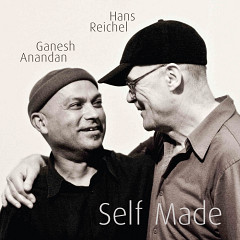
The cover of Self Made has a nice photo of Hans Reichel and Ganesh Anandan portrayed as two proud ‘self made’ men. Even more the title refers to both artists as designers and builders of their instruments. Hans Reichel, guitarist from origin, is known for his daxophone. Anandan built the shruti stick and a metallophone. The ‘daxophone’ is a single wooden blade fixed in a block containing a contact microphone, which is played mostly with a bow. Reichel draws many colourful sounds from this instrument — sometimes sounding like birdcalls, animal sounds, flutes, human voice and breath, etc. Very impressive and absolutely an amazing instrument. The shruti stick is a 12-string cither. Anandan presented it on another duo-cd, Shruti Project, which he worked with John Gzowski who played self-designed micro_tonal guitars. For Self Made Reichel and Anandan concentrate on creating sounds and textures. Structure is not their main interest. Although Anandan often lays down complex rhythmic patterns, and Reichel plays his solos over it, it is not always clear where they want to go. They create nice atmospheres, and specially the daxophone sounds very direct and very near to the human (language of) body and voice. Several of their improvisations are very worthwhile like Drunkeness. It is very subtile, virtuoso and soulful. Others however don’t bring me anywhere. The playing of Anandan I enjoyed most in the solo piece In the Stillness that develops like an indonesian gamelan-like piece of music. Pure beauty! For this and other qualities these improvisations deserve your attention.
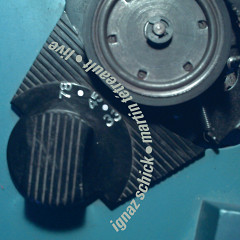
Live • 33 • 45 • 78 by Berlin-based Ignaz Schick and Martin Tétreault is the most far out of these three CDs. Two avant garde turntable-masters who collaborate since 2004. “Our music is made with raw materials that have nothing to do with the passive uses of the turntable. We quickly and sharply use our set of home-made sonic tools to produce dialogues of varying speed, volume level, and duration. Recorded live, our music offers lively exchanges where tone arms are playing a sonic sport! These exchanges will get you ears moving…” Within the parameters of their musical games they make truly fascinating music using concrete sounds only. Records are abandoned, instead they use various objects and manipulations to produce their micro soundworld. The CD contains two series of seven pieces listening to poetic names like 1-p45 un and cave12part1.The music itself has more effect on my phantasy. It sounds like the recording of some never-heard-of primitive life-form deep down in the ocean or earth.