actuellecd
  • This website is also available in English.

Blog

192 results
  • 4
  • 5
  • 6
  • 7
  • 8
  • 9
  • 10
  • 11
  • 12
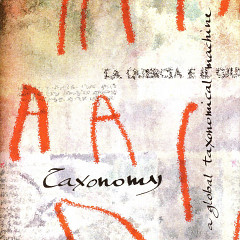
  • A Global Taxonomical Machine in Kathodik

    “Review”, Etero Genio, Kathodik, September 8, 2005
    Thursday, September 8, 2005 Press

    I had been waiting with curiosity for the debut album of this Roman (or almost Roman) trio and I should say that my patience has been amply rewarded by this cd, released by the prestigious Canadian label Ambiances Magnétiques.

    A Global Taxonomical Machine is-thus supported by an outstanding package-an album made of sound graffitis, bits and pieces perennialy torn between order and disorder: their appearance made more fascinating by their unstable equilibrium; their sound structures-albeit quite daring- never undermining the simple listening pleasure. The first track, Bear Witness Against Themselves, immediately echoes what has just been said, with its bagpiper’s theme that dissolves into uncontrolled voices, coughs and metallic resonances. Light the Fires of Insubordination keeps the tension quite high, with a spectacular contrast between a noisy first part and a second one made of imperceptible, almost silent pulses. However, it’s the very beatiful melody of Ad Esempio, played on clarinet (Roberto Fega?)-and continually abused by illogical, unmelodic sounds-that constitutes the highest point of this cd. Afterwards, every probability enters the realm of possibility, and that applies as well to the classically jazz rhythm of the opening section of Dipinto sul Nulla, although only “avant le désastre”, that is before the sudden change that transforms the track into a rolling Gimme Some Lovin’ for the city of the digital utopia. Partly because of that, the following Behind Me-a subtle lesson in minimal ambient-ology-comes out as the most predictable moment of the whole album. Tension gets high again with Eme, the most contorted track of the cd: always variating, it is a true punch under the belt to every idea of stability. After that follows a brief repetitive piece titled Exaust Utopias and an 8-second fragment reminding me of Starfucker’s (Creare Metafore). The cd ends with the draping lines of Euglena-in my opinion the best track with Ad Esempio. A highly recommended disc, the ideal companion to a few solo releases of each member of the trio, Unoccupied Areas by Elio Martusciello (on ReR), Arg by Arg/Graziano Lella (on SIRR.ecords) and Metafonie by Roberto Fega (on Aleatory Prod.).

    Voto 8

    A highly recommended disc, the ideal companion to a few solo releases of each member of the trio…

    Jean Derome in The Globe and Mail

    “Carden Street’s Montréal Invasion”, Mark Miller, The Globe and Mail, September 6, 2005
    Tuesday, September 6, 2005 Press

    It’s the proverbial tale of two cities at the Guelph Jazz Festival this year. This modest but always visionary event, which begins its 12th season tomorrow, honours Chicago’s Association for the Advancement of Creative Musicians on the occasion of its 40th anniversary and acknowledges Montréal’s vibrant musique actuelle scene, now into its third decade.

    The Americans, of course, will get most of the attention, culminating Saturday night when the lately reconstituted and still legendary Art Ensemble of Chicago performs at the River Run Centre. But the Québécois, with their up-to-the-moment mix-and-match of ideas from the jazz, rock, pop and classical avant-garde, should not be overlooked.

    Some 50 Montréal musicians will have appeared in this Southwestern Ontario university town before the festival concludes on Sunday. One of their number, saxophonist and flutist Jean Derome, likens them collectively to “a tribe of Indians,” with the important qualification that “the chief changes all the time.”

    It is, in other words, a highly collaborative and co-operative community. Derome estimates its representation in Guelph this year to be “more than half of what’s happening in Montréal,” where, he notes rather provocatively, “maybe there are even more groups than there are musicians.”

    As that suggests, many of the players do double, triple and quadruple duty in each other’s bands.

    Indeed, ask Derome about the number of groups to which he himself is a party, either as leader or band member. “Now, not too many,” he responds mildly, in a telephone interview from his home in Montréal’s Plateau neighbourhood. “The active ones — around 10 or 12. Less than usual.”

    Derome, a stout yet soft-spoken fellow just turned 50, has been a pivotal figure in Montréal’s left-of-centre musical circles since the mid-1970s, predating the advent of musique actuelle as a catch-all category for the city’s funky, largely Francophone avant-garde. His activities, well documented on CD by the Ambiances Magnétiques label that he and others established in 1983, are remarkable for both the breadth of music and the amount of sheer hard work that they represent.

    One of those aforementioned 10 or 12 bands of the moment is Évidence, whose raison d’être for more than 20 years has been the music of Thelonious Monk. The trio — Derome, bassist Pierre Cartier and drummer Pierre Tanguay — will appear on Friday at the Guelph Youth Music Centre.

    Another is the Fanfare Pourpour, a street band that is scheduled on Saturday afternoon to lead a parade along Wyndham Street and then give a free concert of waltzes and other traditional European music at the festival’s Carden Street tent. There can be as many as 20 musicians in the Fanfare, which often performs in Montréal for social or political causes.

    Derome calls it a “very beautiful, utopian group,” noting that it is run by two of its members, guitarist Luc Proulx and singer-accordionist Lou Babin, as if it were a family rather than a business. “They decided I was artistic director,” he admits rather uncomfortably, referring to the Fanfare’s otherwise wholly egalitarian membership. “I don’t know about that.”

    A third band of those 10 or 12 is the Pierre Cartier -led sextet that will offer the bassist’s classically informed, jazz-song settings of several Québécois poems on Thursday night at Mitchell Hall. A fourth is guitarist Rainer Wiens’s sextet Follow Follow, whose African-derived rhythms will rock the Carden Street tent on Saturday afternoon. That’s an impressive range of musical idioms for one musician to embrace in just three days, and it still scarcely touches on Derome’s work in free improvisation as heard last ear at Guelph in the form of Nous perçons les oreilles (We Pierce Ears), a duo with his wife, the singer and saxophonist Joane Hétu.

    So what makes Jean, um, blow?

    He harks back to his earliest experience as a musician. “The first time you play music,” he suggests, “there’s something there that will always be your way of being a musician. The rest is just learning how to do it, how to say it, how to be more accurate each time you play. But even in the ’nest,’ everything is already there.”

    And Derome’s “way” of being a musician? “First of all, I try to approach music with an open mind. I think that music can be many things. I try to be aware of different cultures, different eras, different styles — and not just as if they’re different clothes that you can wear. I’m always surprised to see that some musicians treat a style of music with disrespect, like a symphony musician who laughs at mariachi musicians, for example. You know, there’s something in the triplet ’swing’ that a mariachi band has that no symphony musician can play.”

    Not to mention the triplet swing of Thelonious Monk — whose compositional trickery continues to tease and taunt even the wisest of jazz musicians. Derome, however, heard something quite basic when he first encountered the American pianist’s music. “It was really open; there was space for me to learn. It’s like Johann Sebastian Bach’s music: There’s something that’s… well, I wouldn’t say neutral… but there’s not so much dramatic ego — the way there is in [Charles] Mingus’s music. For a long time I felt you couldn’t play Mingus’s music if you were not Mingus, it was so personal.”

    Rest assured, Derome knows his Bach and he knows his Mingus. Years ago, he studied the classics at the Conservatoire de musique du Québec à Montréal; lately, he has come to terms with Mingus as a member of the Normand Guilbeault Ensemble, which recently released its second CD devoted to the American bassist’s music.

    “In Monk,” Derome continues, “the tunes are like puzzles. There’s always something. It’s like having a rock outside your house and each time you go by, you stub your toe on it; each time you arrive at bar seven, second beat, there’s a strange note. So you have to be very aware. It’s always very exciting to play and it doesn’t let you just show off your technique; you have to think about the pieces and find a specific feeling for each one.”

    In the end, Monk, Bach, Mingus, waltzes, African grooves, free improvisation and mariachi music are all, in Derome’s eyes, simply “different facets of the same diamond.” Accordingly, it’s only right that he should add on his own behalf, “Sometimes maybe I’m a bit of a chameleon and I change, depending on the context. But I think, deeply inside, it’s always the same musician.”

    “The first time you play music,” he suggests, “there’s something there that will always be your way of being a musician. The rest is just learning how to do it, how to say it, how to be more accurate each time you play. But even in the ’nest,’ everything is already there.”

    Danielle Palardy Roger in FAMEQ à la une

    “Musiques d’aujourd’hui: la musique actuelle en quelques points…”, Danielle Palardy Roger, FAMEQ à la une, no. 20:1, September 1, 2005
    Thursday, September 1, 2005 Press

    La musique actuelle a surtout été analysée et décrite de l’intérieur par ceux qui la font et la diffusent, malheureusement il y a peu de musicologues qui se sont penchés sur ce qui fait sa spécificité parmi les musiques d’aujourd’hui — terme le plus souvent utilisé pour parler des trois grands courants de musiques de création: la musique contemporaine, la musique électroacoustique et la musique actuelle.

    Le terme de musique actuelle, qui existe depuis les années 50-60, était à l’époque rattaché à la musique contemporaine et à ses avant-gardistes tels les John Cage, Karlheinz Stockhausen, Morton Feldman, Pauline Oliveros, Harry Partch; mais depuis cette époque, la signification du terme s’est transformée. Aujourd’hui quand on parle du courant de la musique actuelle on ne parle plus de musique contemporaine, car le courant a dévié, il s’est élargi et a, entre autres, développé un nouveau langage articulé en grande partie à partir de musiques populaires. C’est là une des grandes différences entre la musique contemporaine et la musique actuelle, en effet, la musique contemporaine a ses plus profondes racines dans la musique classique, tandis que la musique actuelle a développé beaucoup des siennes dans le jazz, le rock et la musique traditionnelle. La musique actuelle s’est détournée de conventions par trop académiques ou conservatrices; et encore aujourd’hui elle présente un aspect «populaire» en entretenant des liens serrés avec la culture underground et en proposant des concerts dans des bars et des lieux enfumés…

    Parallèlement à cette dichotomie dans les musiques «d’avant-garde», deux événements fondamentaux ont également participé à définir la musique actuelle: l’avènement de la technologie et celui de l’électronique lui ont ouvert la porte aux bricolages et aux collages sonores, à l’échantillonnage et au bruitisme.

    La mixité de ces matériaux sonores ainsi que la cohabitation de la structure et de l’improvisation sont caractéristiques de la musique actuelle. Conséquemment celle-ci comprend des œuvres très variées; en effet elle inclut des musiques savamment écrites et calculées jusqu’à des musiques totalement improvisées; elle peut aussi contenir des musiques électroniques minimalistes jusqu’à des musiques rock extrêmes.

    L’utilisation de nouvelles lutheries est aussi un aspect particulier à la musique actuelle — à l’instar de la musique contemporaine, les œuvres de musique actuelle sont interprétées par des instrumentistes, en cela elle diffère totalement de la musique électroacoustique où les œuvres préenregistrées sont diffusées en concert via des haut-parleurs. Dans la musique actuelle, la cohabitation des instruments acoustiques et électroniques est fréquente et la lutherie est fort diversifiée; les instruments, qu’ils soient acoustiques ou électroniques, peuvent être utilisés dans leur version la plus originelle ou avoir été complètement réinventés.

    Une autre des importantes particularités de la musique actuelle est le fait que ses compositeurs sont aussi des instrumentistes qui jouent en concert. La musique actuelle s’est fait connaître au Québec et au Canada via des Frank Zappa, guitariste; John Zorn, saxophoniste; Fred Frith, guitariste; John Oswald, saxophoniste; Jean Derome, saxophoniste; Michel F Côté, percussionniste; Joane Hétu, saxophoniste; Diane Labrosse, pianiste: tous des compositeurs qui jouent leurs propres musiques.

    Des détracteurs ont maintes fois dit que la musique actuelle n’était qu’une passade et qu’elle disparaîtrait rapidement mais depuis quelques années une relève de jeunes compositeurs se manifeste, puissante et imaginative: des Bernard Falaise, Alexandre St-Onge, Sam Shalabi, i8u et Magali Babin et des plus jeunes encore comme Antoine Berthiaume, Guido del Fabbro et Myléna Bergeron.

    Depuis vingt-cinq ans, au Québec, trois intervenants majeurs ont permis la diffusion de la musique actuelle et la reconnaissance de ce courant: le Festival international de musique actuelle de Victoriaville, Le Navire Night à Radio-Canada (une émission qui n’existe plus) et l’organisme Productions SuperMusique; on peut visiter les sites Web de ces diffuseurs pour en connaître davantage sur la musique actuelle. Je recommande aussi la lecture de Plunderphonics, Pataphysics & Pop Mechanics, an introduction to musique actuelle du journaliste Andrew Jones aux éditions S-A-F.

    Pour terminer je voudrais rajouter que la musique actuelle est un courant présent dans tous les pays industrialisés, mais le terme «musique actuelle» est utilisé surtout au Québec et n’a pas son équivalent en anglais ou dans d’autres langues. En France, il n’y a pas non plus de terme spécifique, on utilise souvent nouvelles musiques ou musiques de création.

    La musique actuelle s’est détournée de conventions par trop académiques ou conservatrices; et encore aujourd’hui elle présente un aspect «populaire» en entretenant des liens serrés avec la culture underground

    Joane Hétu in La Gazette des femmes

    “Son en tête”, Pascale Guéricolas, La Gazette des femmes, no. 27:2, September 1, 2005
    Thursday, September 1, 2005 Press

    Pour mieux faire connaître les musiciens de concert, souvent oubliés des médias, le Conseil québécois de la musique a décidé d’en donner en «adoption». C’est une musicienne profondément originale que la Gazette des femmes a choisie pour «fille»: Joane Hétu. Qui d’autre aurait fondé des groupes aussi éclatés que Wondeur Brass, Les Poules, Castor et compagnie, Nous perçons les oreilles? Pas étonnant que cette artiste de 47 ans soit considérée comme l’un des piliers de la musique actuelle québécoise.

    D’abord attirée par les sonorités rock, cette amoureuse du son a plongé ensuite dans l’improvisation, l’instrumental, le bruitisme (musique inspirée des sons de l’environnement). Depuis, son saxophone chante comme le vent dans les branches aux côtés du piano ou de l’échantillonneur, à la recherche de l’émotion par le son. La compositrice ne dédaigne pas intégrer parfois des bouts de textes à ses œuvres. En ce moment, elle travaille sur La filature, un projet de théâtre sonore mené par l’Ensemble SuperMusique, important rassemblement de musiciens actuels. Dans ce spectacle, qui sera présenté à l’Usine C en mars prochain, la vidéo, la danse et l’éclairage seront au service du son, un renversement total par rapport aux conventions habituelles.

    Complètement libre dans ses compositions et ses improvisations, la musicienne a néanmoins les deux pieds sur terre lorsqu’elle porte sa casquette d’administratrice. En 1991, elle fondait la compagnie de disques DAME (Distribution Ambiances Magnétiques Etcetera). Son catalogue contient maintenant près de 140 disques en musique actuelle, souvent vendus directement au consommateur via Internet. «Je n’ai jamais cru au père Noël; je préfére m’occuper moi-même de mes affaires, explique-t-elle. Le genre de musique que je pratique a besoin de structures souples qui encouragent la création.» Parallèlement à la composition et aux concerts, elle mène aussi un combat pour la reconnaissance de la musique actuelle, avec ses complices de toujours, Danielle Palardy Roger et Diane Labrosse. Encore trop peu de femmes dirigent des groupes, se préoccupe Joane Hétu, qui se dit toujours persuadée de la nécessité du féminisme. Elle-même, par sa double carrière d’artiste et de gestionnaire culturelle, contribue à faire entendre la musique au féminin.

    Elle-même, par sa double carrière d’artiste et de gestionnaire culturelle, contribue à faire entendre la musique au féminin.

    Orbiting With Screwdrivers in The Wire

    “Soundcheck Review”, Keith Moliné, The Wire, no. 259, September 1, 2005
    Thursday, September 1, 2005 Press

    The first fruits of the latest project of Montréal percussionist and composer Michel F Côté, Orbiting With Screwdrivers is a delectable amalgam of low key electronic experimentation and finely wrought acoustic improvisation, sculpted into a series of beautifully mournful compositions. The mercurial impishness of much of Côté’s work with the Ambiances Magnétiques collective is largely absent here, the album’s eight pieces positively oozing melancholy. Côté’s team of collaborators is a veritable pantheon of Musique Actuelle superstars, with violinist Jean René, guitarist Bernard Falaise and pianist Jacques Drouin making particularly noteworthy contributions. With the exception of the springy bassline that underpins the coda of Planet Genre Specific and the Harry Partch-like bell patterns that interweave with Drouin’s decidedly John Tillbury-informed piano clusters on Nano Rotary For Nothing, the album is without pulse. Yet strangely, a feeling of time passing languidly, steadily, steeped in slow regret, permeates each track. Passages of dark beauty abound, among them the lonely woodwind chorale that ends Disability for Emotion, Falaise and René’s shifting suspended chords on Mechanisms Rarely Last, and the dense, microtonal accordion textures of Give My Regards to Time. The addition of quietly abrasive electronics and homemade machines and gadgets colours the music with subtle, unobtrusive delicacy, while heightening the atmosphere of aged resignation and nostalgia.

    That’s not to pigeonhole Orbiting With Screwdrivers as some kind of Ambient washout. This is harmonically and texturally challenging music, its emotional effect complex and powerful. Côté and co have produced a soundtrack to modern misery whose strength of vision forestalls any notion that their work is dire or depressing. Melancholia has rarely sounded so vibrant.

    Melancholia has rarely sounded so vibrant.

    Chicken in JazzoSphère

    “Critique”, Éric Norman, JazzoSphère, September 1, 2005
    Thursday, September 1, 2005 Press

    Sorti sur &records, nouvelle étiquette du batteur-bricoleur Michel F Côté, Chicken est le quatrième album du trio Klaxon Gueule. Voué à une musique résolument électrique, le groupe explore les viscères de la fée électricité au corps de la musique rock. Les instruments sont exploités avec ingéniosité, basse et guitare deviennent des micros à cordes confrontés à des manipulations diverses, faisant se côtoyer l’organique, le numérique et l’électrique. Chicken se situe dans la poursuite du précédent album par ses sonorités électroniques, mais présente des constructions plus lisibles et de nouveaux éléments, dont le travail sur les voix filtrées. On retrouve volontiers le son de la guitare qui s’était quelque peu dissipé dans les volutes numériques de Grain. Travaillant une sorte de rock microscopique, Côté prétend vouloir faire avec ce groupe un projet de plus en plus pop. Étonnant pour une musique si minimaliste et peu prétentieuse. Quoi qu’il en soit, le trio est en période d’activités et c’est réjouissant; autant pour ce disque un peu statique aux sonorités très riches que pour une performance de rock débridée, car ce groupe nous surprend à chaque apparition.

    … ce groupe nous surprend à chaque apparition.
  • 4
  • 5
  • 6
  • 7
  • 8
  • 9
  • 10
  • 11
  • 12