actuellecd

Blog

239 results
  • 20
  • 21
  • 22
  • 23
  • 24
  • 25
  • 26
  • 27
  • 28
  • Luminance in Splendid E-Zine

    “Review”, Brett McCallon, Splendid E-Zine, May 20, 2004
    Thursday, May 20, 2004 Press

    Francophone experimental/improvised music is not always the easiest sell. Even in these Freedom Fries days, I like to think that the reason for that difficulty rests with the “experimental” and “improvised” side of the description. If the preceding conjecture is indeed true, it’s hard to fault even the most open-minded listener for thinking long and hard before purchasing something like Magali Babin’s metal-scraping-against-other-metal-at-low-volumes opus Chemin de Fer.

    On the other hand, however many times you’ve heard that old saw about music’s universal appeal, it’s nice when an instantly arresting yet thoroughly novel and interesting album reminds you of that concept’s veracity. Luminance is the kind of album that can, with proper exposure, gain converts to the improvisational and experimental side of music.

    Warning: opener Plucky would be enough to convince any fence-sitting potential listeners that Lerner is just as obscure and dedicated to avant garde principles as anyone else in her field. The track, consisting of rhythmic piano-string pluckings, is unmelodic, arrhythmic, cerebral and not particularly endearing to the ears (not that there’s anything wrong with that). Immediately, though, the angular shapes it creates are metaphorically washed away by Deluge, a series of close, chromatically moving chords that jump thither and yon over the range of the keyboard. This latter track is far more representative of the tone and sound of the album as a whole; while Lerner certainly intends to explore musical concepts less formal than listeners acquainted with classical piano music might expect, she is not moving entirely in the direction of formless sonic experiment.

    The best showcase for her balancing act comes with the album’s longest tracks. Rife, an exploration of a melody that seems constantly to be tripping its way toward a greater understanding of its underlying composition, incorporates chords that call to mind Cole Porter, scale passages that evoke Rachmaninov, and tonal meditations that could come from cool-period Miles Davis. Wolfen, the other centerpiece, is far more interested in a narrower range of tones; from the contemplative opening to the quasi-industrial, contrapuntal middle-period, to the calmer resolution, the tonal space that the piece inhabits seems narrower than that of Rife, lending the latter piece a more cerebral, less physical feel.

    There are many other fantastic moments here, including the interestingly miked and teasingly titled Codec Moment (see the audio clip; this track is better heard than described) and the case-thumping La boxe. Mostly, though, Luminance is notable for its friendliness and inclusiveness. If you’re on the fence about whether or not experimental/improvised music is for you, here’s a little experiment. Pick up this album and listen to it a few times. If you can’t see why you should have it in your collection, you’re probably just not cut out to listen to the more “out there” side of musical expression.

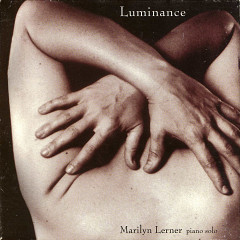
    Luminance is notable for its friendliness and inclusiveness.

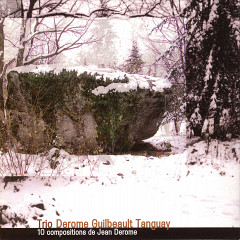
    10 compositions in Zookeeper Online

    “Album review”
    Wednesday, May 19, 2004 Press

    A wonderfully twisted straight-ahead jazz album from this Montréal trio. Derome’s compositions, while certainly acknowledging the jazz tradition, aren’t necessarily beholden to it. Combining a smoky late night swing with modern Euro-jazz and a little bit of improv, this disc is perfectly accessible without the usual retro-swing blandness.

    *1. Med straight swing

    2. Relaxed bluesy mood with double-time solos

    *3. Drifting free improv

    **4. Lumbering low-sax groove

    5. Faster floating swing

    *6. Flute-led quiet melody

    7. Med swing

    *8. Wandering, searching improv

    9. Lazy jazz-funk

    10. Mellow flute-led cocktail jazz

    Combining a smoky late night swing with modern Euro-jazz and a little bit of improv, this disc is perfectly accessible without the usual retro-swing blandness.

    liberum arbitrium, morceaux_de_machines in Voir

    “morceaux_de_machines à Victoriaville”, François Gariépy, Voir, May 13, 2004
    Thursday, May 13, 2004 Press

    Être invité à assister à une répétition en privé de morceaux_de_machines ne se refuse pas. Le duo formé d’Aimé Dontigny et d’Érick d’Orion, réputé pour clapoter une noize électronique improvisée partout dans le monde, sera de la première soirée du Festival international de musique actuelle de Victoriaville la semaine prochaine. L’heure est donc au peaufinage. Surtout que la démarche semble tellement compliquée pour certains néophytes qu’il devient formidable de pouvoir questionner en direct les bidouilleurs à chacune de leurs interactions avec le surprenant lot de machines devant eux, toutes branchées les unes aux autres. À quel genre de performance auront droit les spectateurs qui assisteront au concert de jeudi? «On a prévu 55 minutes d’improvisation musicale avec canevas, soutenue par les projections visuelles de Boris Firquet et Éric Gagnon, qui sont à mon avis les meilleurs VJ au monde…» annonce Érick d’Orion, qui ne déteste pas feindre de venir de la constellation d’Orion.

    Bruit. Musique. Musique faite de bruit. Assemblage sonore qui ne revendique à peu près pas de statut musical. Difficile de s’amouracher facilement de morceaux_de_machines, tant le résultat prend davantage de sens en spectacle. Pour bien comprendre la dynamique de travail: Érick donne un spectacle en jammant sur un ordinateur portable superpuissant équipé des logiciels Traktor et Audiomulch, alors qu’Aimé mélange des sons à partir de disques de sons et de bruits qu’il a lui-même gravés, pour ensuite les mélanger à la source sur une double platine laser. «Cela me donne l’impression de presque jouer d’un instrument!» rigole Aimé, qui ne voit aucun mal à ce que l’on s’échange gratuitement sa musique via Internet. Et de rajouter: «Si jamais on me harcèle juridiquement pour utilisation d’un sampling de Fernand Gignac par exemple, je m’en fous! J’irai alors piger dans une chanson de Jean-Pierre Ferland et ainsi de suite…»

    Bruit. Musique. Musique faite de bruit.

    La machine à explorer le tempo in Vital

    “Review”, Dolf Mulder, Vital, no. 421, May 11, 2004
    Tuesday, May 11, 2004 Press

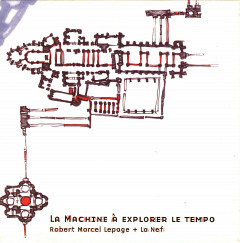
    La machine à explorer le tempo is an epic and narrative work. Cinema turned into music. Not so strange since Lepage wrote soundtracks for over hundred films and documentaries. The work is performed by the La Nef Ensemble. A suite in three parts, each part subdivived in 6 minor parts. This ensemble is specialised in playing early and traditional music, as well as new music. Founded in 1991 developped into a very dynamic and eclectic ensemble. Here they play a new work on new and traditional instruments: Stéphane Allard (violin, baritone violin), Ganesh Anadan (percussion), Nicolas Boucher (sampling and live sound treatment), Nicolas Caloia (double bass), Yanik Cloutier (guitar, banjo), Claire Gignac (flutes, ritual flutes, tenor saxophone), Patrick Graham (percussion), Betsy MacMillan (viola da gamba), Alain Trudel (trombone, sackbut) and Samuel Vero (trumpet, piccolo trumpet). Together they give away a very joyful and fresh rendition of La machine… , recorded during concert on march 8th, 2003. All three parts are introduced by Lepage and evoke different aspects of time: the time that passes, the time that hurries by and distorted time. Lepage is inspired by the novel of H.G.Wells Time Machine. The three parts differ in many respects. We hear different types of music and musical styles. Nice melodies and themes where you immediately ask yourself where did I hear that before, but that are impossible to identify. As a consequence the music often sounds ‘familiar’ and ‘safe’. The instrumentation ranges from traditional instruments like viola da gamba to live sampling. Beautiful banjo playing by Yanik Cloutier and extravagant trombone playing by Alain Trudel, etc. Considering this great diversity we should compliment Louis Babin for the arrangements, because the work changes colours very naturally. A nice work by workaholic Robert Lepage.

    liberum arbitrium, morceaux_de_machines in Le Journal de Québec

    “La musique actuelle à son meilleur au 21e FIMAV”, Yves Leclerc, Le Journal de Québec, May 7, 2004
    Friday, May 7, 2004 Press

    «Le Festival international de musique actuelle de Victoriaville, avec ses 24 spectacles, ne représente finalement, qu’un tout petit échantillonnage de ce qui se fait dans ce domaine.» Michel Levasseur, directeur général et artistique du Festival international de musique actuelle de Victoriaville (FIMAV), était de passage dans la Vieille Capitale, hier, à l’occasion de la 21e édition de cet événement, qui se déroulera du 20 au 24 mai.

    Il a fait remarquer, au cours d’une rencontre de presse, que la musique actuelle était en constante évolution et que les jeunes artistes poussaient maintenant dans le dos des vétérans. «Il y a, depuis cinq ans, au Québec, une véritable éclosion», a-t’il lancé, faisant référence aux petites étiquettes de disques indépendantes, à La Sala Rossa, salle de spectacle de Montréal et aux nombreux nouveaux artistes qui émergent. «La scène est d’une telle richesse que nous avons fait trois ensembles de Montréal, l’an dernier, et les musiciens ne se connaissaient même pas», a-t’il lancé, expliquant qu’il recevait plus de 500 propositions par année pour son festival. «Il y a beaucoup d’artistes que je ne connais pas. C’est un work-in-progress constant et c’est parfois difficile à suivre», a-t-il reconnu.

    morceaux_de_machines

    Habituellement, Michel Levasseur n’assiste jamais aux répétitions d’artistes avant les présentations de spectacles. Plusieurs concerts présentés en première mondiale sont souvent montés à Victoriaville quelques jours même avant le spectacle. «J’aime être surpris et c’est ce qui arrive la majorité du temps», a-til expliqué, faisant une petite exception pour une présentation d’un court extrait du spectacle de la formation morceaux_de_machines de la Vieille Capitale. Le quatuor sons et images, composé de Boris Firquet, Éric Gagnon, Érick d’Orion et Aimé Dontigny, se produira le 20 mai, à minuit 15, au cégep de Victoriaville. «Lorsqu’on a mis sur pied cette formation, il y a quelques années, on s’imaginait à la blague, jouer à l’occasion du FIMAV, a lancé Érick d’Orion. On a de la difficulté à y croire et on ne dort pas vraiment beaucoup, en ce moment», a ajouté Aimé Dontigny, précisant qu’il avait bien hâte de découvrir l’envers du décor et côtoyer les grosses pointures de la musique actuelle.

    Carré de sable in Splendid E-Zine

    “Review”, Justin Steward, Splendid E-Zine, May 7, 2004
    Friday, May 7, 2004 Press

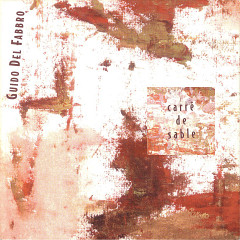
    This Canadian-born violinist has been playing since age four, but his work is more about avant-garde abstractions and sonic playfulness than a showy display of his formidable musicianship. He started exploring classical and folk music’s subtler, more experimental sides at around age ten, and has since clocked time with both the street group The Fanfare Pourpour and the challenging prog-fusion band Rouge Ciel. Except for some clutch bass clarinet work (Gaviscon) and eerie background vocals (Un Champs L’été and Migration) from two guests, Carré de Sable is all Del Fabbro. The title means “sandbox” in English, and its goal was to soundtrack the creation of “personal ecosystems”, and to have fun with simple tools. Few instruments were off-limits to Del Fabbro; he plays everything from banjo, flute, effects module, and turntable to a coffeepot, a music stand and a telephone. For most of the album, unfortunately, the songs add up to less than the sum of their parts;Del Fabbro’s ambient pieces are largely aimless, lacking a distinct atmosphere, and they’re over-reliant on reverb and delay. Del Fabbro is at his best when combining his better, shriller sound beds with his gorgeous violin playing, which he overlaps on Essaim. His tossed-off kitchen sink improvisations lack guiding orchestration and quality control, and as a result, listening becomes a chore.

    Del Fabbro is at his best when combining his better, shriller sound beds with his gorgeous violin playing…
  • 20
  • 21
  • 22
  • 23
  • 24
  • 25
  • 26
  • 27
  • 28