actuellecd

Blog

163 results
  • 20
  • 21
  • 22
  • 23
  • 24
  • 25
  • 26
  • 27
  • 28
  • Castor et compagnie: Mets ta langue in Audion

    “Review”, Nick Mott, Audion, no. 42, March 1, 2000
    Wednesday, March 1, 2000 Press

    A quartet making a very avant-garde music. Melodies and abstraction collide to wonderful effect. This is based a lot around the excellent solo and group vocals, incidentally Mets ta langue means “put your tongue”, and some of the song oriented pieces reminded me of the Art Bears, with a similar attention to simplistic/complex detail. I prefer the more obviously structured parts, yet there great instances when the vocals descend into abstract sound alongside the “Manipulation de cassettes”, and free-jazz parts.
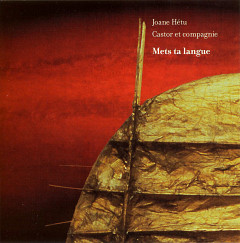
    … excellent solo and group vocals…

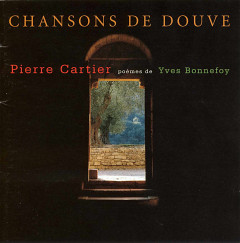
    Chansons de Douve in Audion

    “Review”, Nick Mott, Audion, no. 42, March 1, 2000
    Wednesday, March 1, 2000 Press

    This release totals nearly an hour and forty minutes worth of strange, dark and sombre R10-ish French fusion. With fabulously controlled and complex drumming on the first track, it reminds me of a more restrained Magma. All of the semi-operatic vocals that appear throughout are the poems of Yves Bonnefoy, a French poet, writer and philosopher, and are extracts from a book of his poems.

    Sometimes the music touches onto the likes of Henry Cow, Opus Avantra, and Bertold Brecht, though it has an identity of its own, fusing jazz, classical, folk and traditional French musics. Maybe it’s a bit over-long, but I did enjoy the majority of it.

    Sometimes the music touches into the likes of Henry Cow, Opus Avantra, and Bertold Brecht, though it has an identity of its own, fusing jazz, classical, folk and traditional French musics.

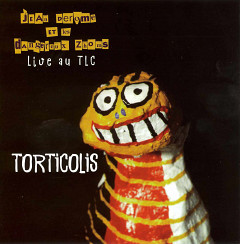
    Torticolis in Audion

    “Review”, Nick Mott, Audion, no. 42, March 1, 2000
    Wednesday, March 1, 2000 Press

    Torticolis documents Jean and various cohorts live in concert. It veers towards some New York acts like Curlew or Material, as a very rhythmical and percussive brassy rock, transmuting to more subdued jazzy parts with some “swinging” bass-lines.

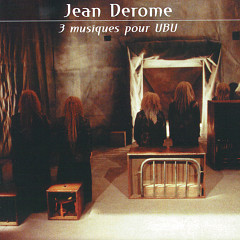
    3 musiques pour UBU in Audion

    “Review”, Nick Mott, Audion, no. 42, March 1, 2000
    Wednesday, March 1, 2000 Press

    3 Musiques pour Ubu comprise almost all of Jean Derome’s compositions written for Denis Marleau’s Théâtre Ubu. The first disc was inspired by reading the complete works of Beckett. Typical to other music on the label, it is very brassy, Iyrical and sombre. My interest waned, though there are some brilliant Art Zoyd/Univers Zero type moments with dramatic chopping strings and winds, interspersed with dead-stops for added tension. Disc 2, containing the works Les Ubs and Luna-Park, I found more enjoyable, more typically French, with Eric Satie like playful melodies, and some fine vocals, going on to wonderfully strange realms, almost sounding like The Residents at the end.

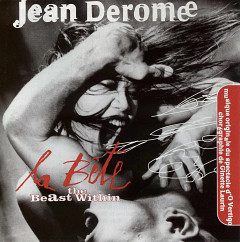
    La Bête / The Beast Within in Audion

    “Review”, Nick Mott, Audion, no. 42, March 1, 2000
    Wednesday, March 1, 2000 Press

    Carnival music? Joyous rodeo music? I am constantly reminded of cabaret and circus shows with La Bête, The Beast Within.

    Strange, and quite avant-garde in parts, yet oddly “easy to listen to” music. The arrangements are great with plenty of parallels to Eric Satie type moments juxtaposed with wonderful atmosphere and lots of variety.

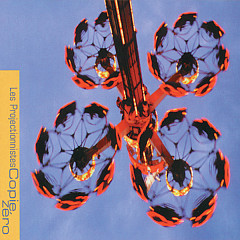
    Copie zéro in Cadence

    “Review”, Frank Rubolino, Cadence, no. 26:3, March 1, 2000
    Wednesday, March 1, 2000 Press

    Similarly, St-Jean uses sampling techniques in his music on, but his approach is oriented more toward spirited forward movement and tess with special effects. His quintet displays a bold attitude and exhibits a lot of brawn in navigating through nine of his compositions and two by band members. St-Jean builds his repertoire around his robust trombone playing and the interplay with the reeds of Labbé. Adding wattage to all selections is a boisterous rhythm section featuring guitarist Falaise. The music has intensity and volume, kicking into high gear at the start and rarely showing signs of downshifting. The group creates a carnival atmosphere through its highly amplified antics. It sports a rock-infused Jazz attitude with playful similarities to the raucous music of Gianluigi Trovesi.

    St-Jean’s band is a true collective. All players share in shaping the muscular identity of the band. Power drive is fueled by the power drummer Leclerc who plays with a heavy backbeat and throbbing put sation. He propets at a nonstop pace while the band builds in ever-increasing dynamic increments. Bassist Babin takes on a simitar rote. Onty infrequent y are individual soloists featured. The songs are written as collective expressions of mass commotion, and att five players adhere to the formula. The final selection was recorded over a 1924 surrealistic film by French cubist painter Fernand Léger, who incorporated mechanical images into his work. It has moments of dampened intensity but never forgets where high gear is located.

    The band of St-Jean creates sheer energy through its volatite playing. It starts at a gallop and finishes at the same pace. it is’hold on to your hat’ music for those in the fast lane.

    The band of St-Jean creates sheer energy through its volatile playing. It starts at a gallop and finishes at the same pace. It is “hold on to your hat” music for those in the fast lane.
  • 20
  • 21
  • 22
  • 23
  • 24
  • 25
  • 26
  • 27
  • 28