actuellecd
  • This website is also available in English.

Interférence sardines

5 results

World Tour ’98, Chants rupestres, L’oasis, Tout le monde, Au royaume du silencieux, Musique d’hiver, Zucchini, La boulezaille, Chants et danses du monde inanimé, Fanfare Pourpour, Interférence sardines, René Lussier, Pierre Tanguay in actuellecd.com

“Modern Folklore”, François Couture, actuellecd.com, March 16, 2004
Tuesday, March 16, 2004 Press

When I was asked to dive into DAME’s catalog in search of intersecting points or recurring themes that would sketch discovery trails, the trad connection stood out immediately. Not only because of the importance of traditional folk music in the development of avant-garde music in Quebec, but also because the albums belonging to this line usually speak to us in a more immediate way and are easier to grasp.

It may seem a bit paradoxical, but tradition and innovation often go together hand in hand. When a culture’s avant-garde artists look for ways to overstep the rules of the music industry, they often turn their attention to roots — theirs and others — to find new paths to explore. Traditional folk music often holds at his core treasures of stylistic freedom and improvisation. Furthermore, its festive outlook can make it easier for an audience to accept and appreciate the introduction of new rhythmic, melodic or improvisational parameters. That’s what happened and continues to happen in Quebec. Here’s a listening trail in three parts, three original ways DAME artists approach the tradition: revisited, reinvented, and made-up folk.

Revisited folk

Late 1970s: a trad folk revival is sweeping the Province of Quebec, thanks to a new generation of musicians (groups like La Bottine Souriante, Le Rêve du Diable, and L’Engoulevent). Among these groups, many of which recording for the label Tamanoir, is a collective of crazy youngsters, guitarists who deprave reels and folk tunes with their melodic inventions and post-modern poetry. Among Conventum’s regular members are André Duchesne and René Lussier, who will later rank among the founding members of the collective Ambiances Magnétiques (sadly, Conventum’s two albums, À l’Affût d’un complot and Le Bureau central des utopies, are out of print).

In Ambiances Magnétiques, René Lussier has continued to explore a rereading of Quebec’s music history. His discography is peppered with folk tunes stripped naked and dressed anew. On his three albums with Les Granules (a duo with Jean Derome) he exaggerates the Dionysian character of the music (Le Boudin de Noël — or The Christmas Blood Pudding — on Soyez vigilants, restez vivants and La Chicaneuse on Au Royaume du Silencieux rank among the finest examples). With Le Trésor de la langue, he focused on our historical folklore, turning the words of René Lévesque, the FLQ, and people on the street into a new “Cahier de la bonne chanson” (a music book of old folk tunes that rested on the piano of many Quebec families in pre-television days). His recent collaboration with American guitarist Eugene Chadbourne signals a return to these roots — their CD L’Oasis released on Victo presents many revisited tunes from both sides of the border.

Reinvented folk

The folklore of a nation is not limited to a body of songs, it is also a state of mind, a substratum from which many artists in DAME’s catalog dig to reinvent our traditional folk music (and others too). On La Boulezaille, Pierre Tanguay and Pierre Langevin (masters of many European folk music in the group Strada) mix up traditional and modern instruments in search of a new, “actuel” folk freed from the cage in which all kinds of traditionalists would like to preserve it. Groups like Interférence Sardines and La Fanfare Pourpour shape their original pieces in ways that bring to mind the Devil’s fiddler or street fair music (music of the people, the prime definition of “folk” music). Joane Hétu’s Musique d’hiver doesn’t have that festive side to it, but it nevertheless redefines the folklore of our Quebec winters with much more precision and evocative strength then Nelligan’s famous poem.

Made-up folk

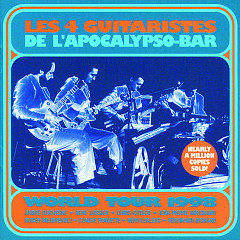
Traditional folk music refers to an instinctive form of music-making, music created outside the institutions and their codes, everyday music. And what if one wants to step out of the everyday? There is always the possibility to create folk out of nothing, to make folk-fiction. René Lussier and Robert Marcel Lepage establish their “musique actuelle” — a blend of free improvisation and reminiscences of trad — as the folk music of the future, the last enigma of a dehumanized world. The same goes for André Duchesne’s Les 4 Guitaristes de l’Apocalypso-Bar, the band being presented as trad rockers from the future (a post-apocalyptic future, mind you). And with Bruire’s Chants rupestres, Michel F Côté and his friends attempt to recreate through free improvisation the folk music of prehistoric men. We may have ventured far from the falsely naive tunes of Conventum, but this music still stems from a desire to go back to the roots of music expression. And in the end, there are many ways to call a square dance.

Interférence sardines, Ambiances Magnétiques in AllMusic

“Portrait: Interférences Sardines”, François Couture, AllMusic, June 15, 2002
Saturday, June 15, 2002 Press

Led by guitarist Philippe Venne and dominated by the exuberant drummer Frédéric Lebrasseur, the Quebec City group Interférence Sardines puts on the table an updated version of the Rock-in-Opposition sound. They take their cue from Henry Cow, but also from Central-European folk and rock musics (Dunaj, Uz Jsme Doma), Quebec musique actuelle (André Duchesne in particular), and Frank Zappa. The Sardines play complex but very lively instrumental pieces, along with the occasional oddball song. After a first album self-released in 1997, the group got signed to the prestigious Montréal label Ambiances Magnétiques.

The group started in early 1996 from an impulse from Venne, its main composer. A music student like most of his bandmates, Venne recruited Andrée Bilodeau (violin, voice), Lyne Goulet (saxophone), friend Jimmie LeBlanc (bass), and Lebrasseur, a maverick virtuoso able to do things with two hands you probably couldn’t do with five (provided you’d even imagine doing them in the first place). The Sardines played their first gig on April 4 that year. LeBlanc soon left to study classical guitar. His replacement Sébastien Doré had barely time to come to grasp with the material before the group started work on their first album, financed in part by a provincial program for workforce development. In 1997 they won first prize at the CONGA, a talent competition held at the Université Laval. Mare Crisium was released shortly after and the group continued to perform sporadically in Quebec City and Montréal.

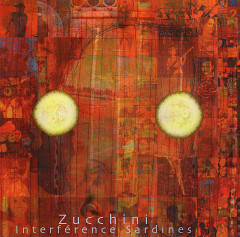
In 1998 the Sardines appeared at the Festival International de Musique Actuelle de Victoriaville. A year later Goulet called it quits on the count of a pregnancy. A second violinist, Marc Gagnon, was brought in the fill the void, steering the group’s sound closer to the Klezmer/Gypsy paradigm. Work on a second album began in late 1999, but it would take two years to complete Zucchini, finally released in November 2001 on Ambiances Magnétiques. Meanwhile group members got involved in a string of other projects, the most active being the neo-trad party group Les Batinses (with Bilodeau and Lebrasseur).
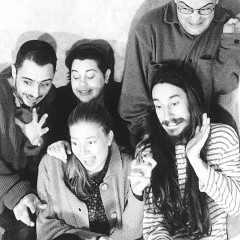
The Sardines play complex but very lively instrumental pieces, along with the occasional oddball song.

June 21 – July 5, 2002: Live DAME musicians

Thursday, June 13, 2002 In concert

Many DAME musician will be performing this summer. First, the Fanfare Pourpour will take part in Saint-Fortunat’s incredible music festival, June 21 and 22. Then, at the Festival international de jazz de Montréal, L’Orkestre des pas perdus will play outside from July 3 to 7. Also playing during the festival at the museum of contemporary arts, Les Projectionnistes July 3 and world renowned guitar player René Lussier July 6. This edition of L’OFF Festival de Jazz de Montréal also proposes plenty of DAME-related shows. Jean Derome will play at Lion d’Or June 27, July 3 and 5. Pierre St-Jak June 27. Rouge ciel June 29. Normand Guilbeault with an hommage to Mingus July 1. Martin Tétreault and Pierre Cartier July 3. Lee Pui Ming in duo with Joane Hétu aith also the {nbio:derome_je}-{nbio:guilbeault_no}-{nbio:tanguay_pi} trio July 5. Go see them all!

Chant des adieux, chant de la solitude, Zucchini, Rouge ciel, Interférence sardines in Vital

“Review”, Dolf Mulder, Vital, March 28, 2002
Thursday, March 28, 2002 Press

Three new cd’s on Ambiances Magnétiques and new sublabel Monsieur Fauteux…. Most of the time releases on this label have the newest output from well known artists like Derome, Lussier, Duchesne and others. Although this are often releases of considerable quality, I’m happy that this time we have three new cds from groups of the ‘next generation’.

What new talents do we have here? In general the most striking difference with the first generation is that these bands are more rock-orientated. This is also the the case for Papa Boa (1999). Especially with Interférence Sardines and Rouge Ciel we enter a new chapter in the kind of art-rock that Henry Cow developed in the 70s. This kind of rock music flourished in the first half of the 80s with bands like Univers Zero, Samla, Debile Menthol, and many others. But creativity came to end and boring music like that of Art Zoyd was what was left. Since then I have been waiting for new bands to pick up were many ended in the 80s. But listening to Interférence Sardines it became clear to me that we have a new creative outburst here. Let me present the bands in more detail. Interférence Sardines is a quintet: Andrée Bilodeau (violin, alto, voice), Sébastien Doré (electric bass, clap, voice), Marc Gagnon (violin, electric violin, voice), Fréderic Lebrasseur (drums, percussion, piano, voice) and Philippe Venne (guitar, piano, voice). Assisted by four guests. Most pieces are composed by Philippe Venne. Their second cd Zucchini is a very nice piece of work. Their music can be compared in a way with that of Debile Menthol, a famous swiss group from the 80s. Complex art-rock mixing rock, jazz and contemporary in a nice blend of composition and improvisation. The music is full of surprises. The playing is very tight and convincing.

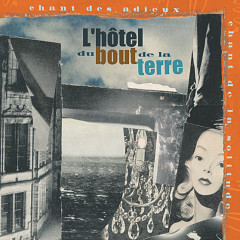
Rouge Ciel is a quartet: Guido del Fabbro (violin, mandoline, pick ups), Simon Lapointe (piano, claviers, melodica), Antonin Provost (acustic and electric guitar) and Nemo Venda (trumpet, drums, percussion). They debute here with a fresh mix of rock and improvisation. They do not reach the creative level of Interférence Sardines, but it still is very good music. Both bands I can recommend to anyone who like — I don’t know a better name — art-rock bands like Curlew, 5uu’s, etc. L’hotel du Bout de la Terre is the more conventional one of these three bands. No new territories here. This group was started in 1995 by Lou Babin (accordeon, voice ), Marie-Hélène Montpetit (voice), Pierre St-Jak (piano), and Norman Guilbeault. On this cd they are assisted by guests like Claude Fradette (guitar) and Pierre Tanguay (drums, perc. ). They present a collection of 12 songs composed by St. Jak and Montpetit. Melancholic and impressionistic songs. Texts written and sung by Montpetit. Although this may be a relatively new group someone like pianist Pierre St-Jak is a veteran of the Montréal jazz scene. Personally I never liked his piano playing very much which can also be heard on this one.

… listening to Interférence Sardines it became clear to me that we have a new creative outburst here.

2nd CD by Interférence Sardines

Tuesday, January 29, 2002 New releases

“… listening to Interférence Sardines it became clear to me that we have a new creative outburst here.” (Vital, The Netherlands) Four years after their first album, Mare Crisium, Québec City based group Interférence sardines offers a new album filled with surprising musical crossbreedings, Zucchini. Intrumental pieces and wild songs, dynamic and varied arrangements, Zucchini will seduce both the curious and the converted.