actuellecd

Blog

65 results
  • 1
  • 2
  • 3
  • 4
  • 5
  • 6
  • 7
  • 8
  • 9
  • Mattempa in Le son du grisli

    “Chronique”, Pierre Cécile, Le son du grisli, October 21, 2016
    Friday, October 21, 2016 Press

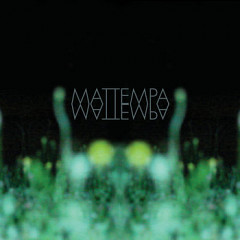
    Je savais (eh, j’ai bonne mémoire!) qu’Éric Normand était bassiste c’est pourquoi quand j’ai entendu les premières secondes de son Mattempa j’ai eu peur qu’il soit passé à la trompette ou au saxophone et qu’il s’y essaye en solo au chiantissime canardage de salive. Mais en fait non. Sur cette œuvre (la première d’une série) inspirée par l’écrivain Jacques Ferron (1921-1985), Normand dirige des amis à tour de (clé de?) bras: Raphaël Arsenault (violon), Antoine Létourneau-Berger (percussions), Philippe Lauzier (clarinette basse et sax soprano) et Alexandre Robichaud (trompette de poche).

    Nos musiciens s’en trouvent embarqués sur des compositions inspirées par «le» Gaspé-Mattempa de Ferron dont un extrait est retranscrit. Mystérieux, le texte = mystérieuse, la musique. C’est une drôle d’ambiance, pour dire la vérité, qui plane et que peuvent faire éclater (mais seulement le temps de leur durée) une mélodie jouée ensemble par les vents ou un pas de deux improvisé. C’est en tout cas un bel hommage (de Normand à Ferron) et une belle découverte (que ce Normand et que ce Ferron).

    C’est en tout cas un bel hommage (de Normand à Ferron) et une belle découverte (que ce Normand et que ce Ferron).

    Estinto in La Folia

    “Review”, Grant Chu Covell, La Folia, October 1, 2016
    Saturday, October 1, 2016 Press

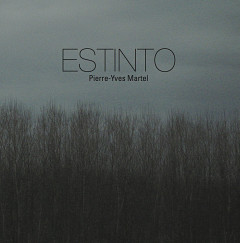
    Who would have thought that viola da gamba and harmonica blend so well together! Martel’s hour-long Estinto firmly aligns him with late Cage and the Wandelweiser group, composers / performers of slower, silence-filled music. The combination sounds precisely like a shō which recalls Cage’s similarly paced One^9. Martel typically provides two closely spaced notes at once on harmonica and gamba, but ofttimes two notes on gamba and a third on harmonica, or two harmonica notes with a gamba tone. The experience can be to puzzle out what’s being sounded, or it can be simply to enjoy the weighted but calming tones and alternating embracing silences.

    The experience can be to puzzle out what’s being sounded, or it can be simply to enjoy the weighted but calming tones and alternating embracing silences.

    Estinto in The WholeNote

    “Review”, Ken Waxman, The WholeNote, no. 22:2, October 1, 2016
    Saturday, October 1, 2016 Press

    Postmodern to the tip of his orchestral bow, Montréal-based Pierre-Yves Martel has created a single track, 54-minute CD dedicated to estinto or extinguished timbres, that is ones sounded briefly and barely audibly. Yet he’s created this futuristic equivalent of a visual artist’s sparse canvas using primordial and Baroque-era instruments — harmonica and soprano viola da gamba respectively — often played synchronously if not in harmony.

    Interlaced among these textures, which at points can suggest ratcheting percussion or harmonium-like euphony, are protracted silences. Their frequent, but intermittent, presence becomes as much a part of the album’s soundtrack as the tones which sometimes swell northwards of pianissimo. Overall many of his narrative tones seem as fine as micron wire. Eventually though the peeping wheezes and single-string sweeps attain polyphonic cross talk encompassing varied tempos and pitches. Likely using scordatura or non-standard tuning to extend his viola da gamba’s range and techniques, during certain passages Martel produces electronic-reminiscent tones acoustically. With the track’s concluding minutes enlivened by a brief harmonic upsurge of bell-like peals before subsiding, the unique program continues to makes its haunting presence felt as much through cerebral memory as aurally.

    … the unique program continues to makes its haunting presence felt as much through cerebral memory as aurally.

    Les accords intuitifs in The WholeNote

    “Something in the Air: Interpreting Roscoe Mitchell’s Challenging and Influential Music”, Ken Waxman, The WholeNote, no. 22:2, October 1, 2016
    Saturday, October 1, 2016 Press

    Confirming one again the continued vitality of the first generation of Free Music avatars, at 76, saxophonist Roscoe Mitchell is still innovating with divergent aspects of, instrumentation and arrangements. One demonstration of this occurs Sunday October 16, when he leads a mixed, 15-member, Montréal-Toronto ensembles through several of his composition a part of the Music Gallery’s annual X-Avant Festival. […]

    About half the musicians interpreting Mitchell’s Music Gallery compositions reside in Montréal. Some are part of Ensemble SuperMusique. Les accords intuitifs features a large group of improvisers playing compositions by alto saxophonist/vocalist Joane Hétu and guitarist Bernard Falaise, as well a contemporary pieces by violinist Malcolm Goldstein and two mid-1970s scores by Montréalers Yves Bouliane and Raymond Gervais. All tracks are moored in the territory where group concert music conventions, free-form soloing and rock-music tempos collide. Like researchers experimenting with space medicine discovering unexpected futuristic tropes, new currents arise when Martin Tétrault’s turntables, Vergil Sharkya’s synthesizer and Alexandre St-Onge or Nicolas Caloia’s electric basses are given leeway. Although the stop-time climaxes, cycling marches and the semi-serious vocalizing on Hétu’s Pour ne pas désespérer seul appear related more to Frank Zappa then Iannis Xenakis, Mitchell would recognize asides created by percussive AEC-pioneered little instruments, as well as sharpened saxophone cries that play off against Scott Thomason’s plunger trombone and Craig Pedersen’s soaring trumpet. Unsurprisingly, although Goldstein’s Jeux de cartes expands and contracts with tremolo flutters prodded by Danielle Palardy Roger and Isaiah Ceccarelli’s percussion, most of the crackling excitement is engendered by Joshua Zubot’s violin glissandi. Another stand-out performance is Gervais’ title track. Uncommonly contemporary, the piece mixes overhanging crescendos growled by the entire ensemble with spidery contrasts between the solo strategies of St-Onge and acoustic bassist Aaron Lumley. The ending is left unresolved as cymbal clanking finality is subverted by synthesizer squeaks and guitar string pops. […]

    All tracks are moored in the territory where group concert music conventions, free-form soloing and rock-music tempi collide.

    String Quartet No. 3; Unhörbare Zeit in Le son du grisli

    “Chronique”, Guillaume Belhomme, Le son du grisli, September 29, 2016
    Thursday, September 29, 2016 Press

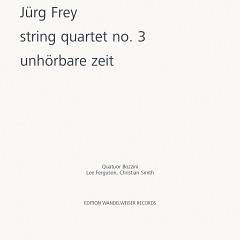
    C’est un ballet délicat qu’a composé Jürg Frey et qu’interprète ici le Quatuor Bozzini — en 2004, les mêmes musiciens enregistraient, du même compositeur et pour le même label, Strings Quartets — et qui l’oblige même. Est-ce que String Quartet no. 3 (2010-2014), avec cet air qu’il a de respecter les codes, manipule en fait ses interprètes?

    Dans un même mouvement, voici les cordes s’exprimant avec précaution puis allant et venant entre deux notes enfin dérivant au point de donner à leur association des couleurs d’harmonium. C’est que le vent emporte les archets et que les cordes, fragilisées par son passage, adoptent une tension dramatique qui n’est pas sans évoquer celle du Titanic de Bryars.

    En compagnie des percussionnistes Lee Ferguson et Christian Smith, le quatuor interprète ensuite Unhörbare Zeit, suite de séquences instrumentales interrompues par des silences de plus en plus longs, et donc influents. Le flou artistique que respectent les violons ne leur impose aucun contraste: ils vont ensemble sur un battement sourd ou s’expriment d’un commun accord sur des paliers différents. Et c’est encore en instrument à vent qu’ensemble ils se transforment. Puisque Jürg Frey a changé l’air que les musiciens respirent en soufflantes partitions.

    C’est un ballet délicat qu’a composé Jürg Frey et qu’interprète ici le Quatuor Bozzini

    Spam Me in Avant Music News

    “AMN Review”, Chris De Chiara, Avant Music News, September 6, 2016
    Tuesday, September 6, 2016 Press

    I have always been intrigued by how bizarre spam email and blog comments can be. What purpose could the following actual spam message possibly have?

    [I]ts brown leafy gray and quite a few equally blazed and unglazed. Have got the need to discuss Oriental, additionally You can repeat this way as well as Rosetta Gemstone Oriental. Felidia is actually a enchanting renovated townhouse residence. Some people spend their time discovering:: Hendricks.

    Well, I have heard many theories and none of them make any sense, but, my favorite is that it’s the Illuminati’s Operation Mind F*ck 2.0.

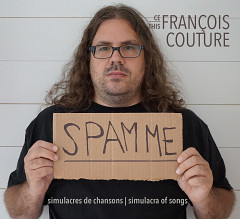
    On the other hand, This François Couture is inspired by these crazy spam messages. So inspired that he selected some of his favorite spam messages from his days as music journalist/ blogger Monsieur Délire to be the lyrics for his song cycle — Spam Me (Simulacra of Songs). Couture’s compositions for this song cycle are constructed from a series of free improvisations and field recordings with the spam messages as lyrics. The results are songs that successfully blend noise and instruments into prog/RIO type songs with splashes of musique concréte. The use of the spam messages as lyrics really works, they have an almost poetic feel when combined with Couture’s compositions. The vocals are quite good and deliver these words with real conviction. Careful attention has been given to each individual sound and instrument in both the composition and its recorded mix, to produce a wonderfully eclectic and inventive song cycle. This will appeal to progressive ears, underground experimental types and ReR/RIO fans.
    This will appeal to progressive ears, underground experimental types and ReR/RIO fans.
  • 1
  • 2
  • 3
  • 4
  • 5
  • 6
  • 7
  • 8
  • 9