actuellecd

Blog

69 results
  • 1
  • 2
  • 3
  • 4
  • 5
  • 6
  • 7
  • 8
  • 9
  • Just So in The WholeNote

    “Review”, Stuart Broomer, The WholeNote, no. 24:3, November 1, 2018
    Thursday, November 1, 2018 Press
    … varied works that possess a rare, original lyricism, in which traditional materials are fragmented and recast…

    Gyula Csapó: Déjà? Kojâ? in The Squid’s Ear

    “Review”, Brian Olewnick, The Squid’s Ear, October 31, 2018
    Wednesday, October 31, 2018 Press

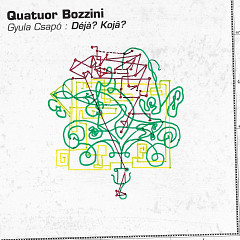
    Csapó is a Hungarian-born composer (b. 1955) living in Canada since 1990 who studied with Morton Feldman at SUNY Buffalo and also with John Cage. His Déjà? Kojâ? (’Already? Where [to]?’), for string quartet, is presented in three sections totaling about 73 minutes long.

    As the brief notes from Csapó point out, it’s essentially a dirge, though one which fluctuates from sorrow to ecstasy. The “Kojâ” in the title comes from a ghazal by Hafez, which seems to posit human life as a “threshold” before true existence. I find it very difficult to otherwise describe the music. It’s not very much akin to that of Feldman (especially the string quartets) and even less like (most) Cage. Though we hear lines that are pulled and stretched, there’s far more changeability in melodic line and attack crammed into any given 30-seconds than you’d find in an hour of Feldman. More importantly, Csapó, if not quite wearing his emotions on his sleeve, doesn’t shy away from content that is almost necessarily heard first as emotional, then abstractly. The strings surge, offer plaints, sigh and subside; it’s fundamentally sad, stirring music. The structure is flowing and loose, like a slow camera pan over a troubled landscape. The first movement works itself up to quite a fever pitch about 3/4 the way through — one can easily imagine the thrashing about of grieving souls — before settling back down to a more general level of despondency, ending with high, ghostly whines.

    Second Parte is pitched somewhat higher, contains more agitation, with pizzicato scurries and brief, clipped lines and overlapping glissandi voiced in the violins’ upper registers. It gradually shifts to the most subdued music in the piece, plaintive sighs studded with questioning plucks. The final portion is actually calm, perhaps even resigned. The texture is thick and creamy, very complex and lovely, the phrases almost conversational, as though discussing and contemplating that aforementioned threshold, but doing so with little apprehension. It ends with quiet acceptance.

    The texture is thick and creamy, very complex and lovely, the phrases almost conversational, as though discussing and contemplating that aforementioned threshold, but doing so with little apprehension. It ends with quiet acceptance.

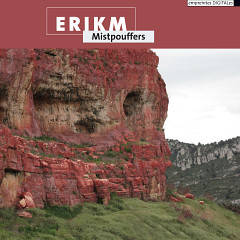
    Mistpouffers in Groove

    “Kritik”, Frank P Eckert, Groove, October 29, 2018
    Monday, October 29, 2018 Press

    Die Mistpouffers (empreintes DIGITALes) des Franzosen eRikm stammen aus der gleichen Gegend, spezifisch aus Island. Der englische Begriff „Mistpouffer“ bezeichnet physikalisch nicht vollständig erklärbare Klangereignisse, die an manchen Meeresküsten beobachtet werden, etwa Donnergrollen bei Sonnenschein. Die drei Soundscapes des gleichnamigen Albums geben sich ähnlich wettergegerbt, geheimnisvoll und verschlossen, obwohl ihre Quellen komplett offengelegt werden.

    Die drei Soundscapes des gleichnamigen Albums geben sich ähnlich wettergegerbt, geheimnisvoll und verschlossen, obwohl ihre Quellen komplett offengelegt werden.

    Political Ritual in Chain DLK

    “Review”, Steve Mecca, Chain DLK, October 17, 2018
    Wednesday, October 17, 2018 Press

    This was one heck of an album to track down the details for, which could have been solved simply by the inclusion of a one-sheet. If there was one it must have gotten lost en-route to me from Chain D.L.K. central, and just about everything about this album and its producers had to be sourced off the Internet. Have you ever tried Googling “Political Ritual”? Just use your imagination as the results you’ll get in this day and age. Fortunately, the artists, Félix-Antoine Morin & Maxime Corbeil-Perron, put their names on the album, but both being French-Canadian, much of the info about them and Political Ritual (the name of the project is also the album title) is in French. According to Morin and Corbeil-Perron, Political Ritual build their music in architectural and woven layers of harmony and polarity, arranging ethereal drone next to hard edged buzz or cinematic movements alongside pummeling beats. With live performance as their backdrop, Félix-Antoine Morin and Maxime Corbeil-Perron took to the studio in 2014 for their first album. Corbeil-Perron is a multidisciplinary artist who has created film and video work and interactive installations shown at international events and festivals, as well as making electro-acoustic and mixed-media music as Le Pélican noir and solo — he also started a PhD at the Université de Montréal in fall 2015. A visual artist as well as an electro-acoustic composer, Morin works solo and collaborates with contemporary choreographers, videographers and several other musicians, finding inspiration for his poetic creations in the processual components of traditional and sacred music. Pushing the boundaries of abstraction, these expert improvisors in analog modular and digital synthesis incorporate invented wind instruments, traditional Balinese percussion, field recordings and digital signal processing into their compositions, intent on shaping a transcendent listening experience.

    Okay, that’s all well and good, but what does this album sound like? The album is comprised of two long pieces — Ceremonie (20:07) and Projection cathodique (21:35). While ambient in nature, this isn’t a passive kind of ambient, but a very active, organic and highly charged sort of ambient. Ceremonie is full of crackling electronics and uneasy drones of indeterminate machinery. Over time it morphs into quasi-psychedelic Klaus Schulze territory before veering out into more experimental terrain. The oscillations employed are quite unsettling and throughout its droney demeanor, jarring events occur with some frequency in the background. Just when things seem to be humming along nicely the bottom drops out and the listener is transported to an alien construction site on some God-forsaken planet, replete with the distortion of heavy equipment until it grinds to a sudden halt.

    Projection cathodique begins with a less forceful demeanor, the twinkling of crystalline high frequency particles over melodic sonorous low tones and held together with hollowish metallic drone substances. The latter sonority intensifies and echoes off in a feedback loop which morphs in myriad directions overtaking all other sonics present. There is a somewhat natural evolution to the unfolding of this piece that you just have to hear as any description fails to do it justice. Let’s just say it gets pretty dense as sonic layers build on top of each other. By its conclusion there is a return to some of the elements that began this piece and so the cycle is complete.

    To be perfectly honest, I didn’t think a whole lot of the album on the first go-round, but after repeated plays the subtleties were revealed and the brilliance of the work became evident. That it was primarily released as a limited edition vinyl LP (500 copies, also available as a digital download) makes it an even more vital purchase.
    … after repeated plays the subtleties were revealed and the brilliance of the work became evident. That it was primarily released as a limited edition vinyl LP […] makes it an even more vital purchase. 4/5
    4

    Just So in All About Jazz

    “Review”, JOHN EYLES, All About Jazz, October 16, 2018
    Tuesday, October 16, 2018 Press

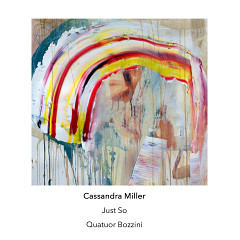
    Last but not least, the series is completed by two contrasting albums credited to British Columbia-born Cassandra Miller, one featuring commissioned and other pieces played by Apartment House musicians, the other string quartets played by Montréal’s Quatuor Bozzini. It is pleasing to note that both albums feature cover paintings by Lance Austin Olsen.

    Miller has twice been the recipient of the Jules-Léger Prize for New Chamber Music, Canada’s highest honour for composition. For years, her works have been performed across the world. In September 2018, she took up the post of Associate Head of Composition (Undergraduate) at London’s prestigous Guildhall School of Music and Drama. All of which makes it quite remarkable to discover that these two albums are the very first recordings to be issued featuring her music.

    Taken together, the two albums illustrate exactly why Miller has been honoured and heard around the globe. Across the spectrum, from Mira Benjamin’s solo violin piece For Mira, through the enchanting string quartets, up to the duet of Charles Curtis’ cello with the BBC Scottish Symphony Orchestra, Miller’s music gets it right; it feels like it is part of a tradition without being unduly shaped by that tradition or kow-towing to it.

    The Canadian Composers Series is such a significant event that it makes sense to appreciate it as a whole without drawing comparisons between the ten albums in it. Hopefully, this series has opened doors for the eight composers in it and for the many more who could just as easily have been included. On the basis of it, there is a strong case for further album releases by Canadian composers, either as another series or as one-offs. History has been made.

    History has been made.
  • 1
  • 2
  • 3
  • 4
  • 5
  • 6
  • 7
  • 8
  • 9