Sauter au contenu principal
actuellecd

Blogue

3585 résultats
  • 67
  • 68
  • 69
  • 70
  • 71
  • 72
  • 73
  • 74
  • 75
  • Phill Niblock: Baobab dans Touching Extremes

    «Review», Massimo Ricci, Touching Extremes, 23 janvier 2019
    lundi 28 janvier 2019 Presse

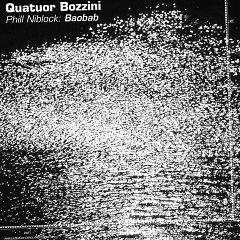
    This record comprises the performances of two Phill Niblock scores, Disseminate from 1998 and the title track, first conceived in 2011. For the occasion, the composer worked with Quatuor Bozzini (Clemens Merkel, Alissa Cheung, Stéphanie Bozzini, Isabelle Bozzini) with the aim of multiplying the string quartet’s voices and overall muscle. The procedure is synthetically explained in the liner notes, so I won’t bother repeating it here; moreover, Niblock’s ways of assembling his cascading microtonal drones are (hopefully) well known to the readers of this blog. Let me just remind the brightness of a man who, armed with a mere laptop, still manages to produce unlikely levels of psychophysical correspondence with the invisible forces of our environment.

    This version of Disseminate stands among the mightiest episodes met over decades of acquaintance with Niblock’s material. Its character is extraordinarily “in your face”; the self is symbolically invited to get out of the way, an army of shifting pitches developing a totality of quivering intensities striving to reach the perfection of an all-encompassing embrace. Baobab starts with a quasi-tonal affirmation, its enormous strength actually giving a chance to believe we’re hearing a steady chord. With the passage of time, the congenital jarring features start breaking through: right there the fun begins, internal rhythms and oscillations projecting a sense of cerebral and spiritual completion that no spoken or written word will ever be able to equal. The whole appears at once imperial and utterly instructive.

    Aside from the usual advice — namely, playing this music loud for an improved functionality of the adjacent upper partials — one can only dream about the average brain finally learning to decode and accept the complexity of a mass of contiguous tones, regardless of someone’s dictations on “consonance” and “dissonance”. As the initiator himself said, it is what it is; the spaces may be completely filled by the sounds, but the ultimate outcome is the silence of the mind. Kudos then to Quatuor Bozzini, who finely rendered an essential concept of Niblock’s vision: the instrumentalist — a fundamental injector of sonic fluids — is nevertheless a means to an awesome end.

    This version of Disseminate stands among the mightiest episodes met over decades of acquaintance with Niblock’s material. Its character is extraordinarily “in your face”

    Mistpouffers dans Bad Alchemy

    «Kritik», Rigobert Dittmann, Bad Alchemy, no 100, 1 décembre 2018
    jeudi 10 janvier 2019 Presse

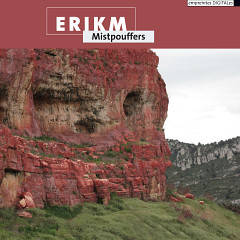
    Érik Mathon bekannt als eRikm und z.B. Michel Doneda, dieb13, Fennesz, Martin Tétreault, Otomo Yoshihide, Jérôme Noetinger, Catherine Jauniaux oder Norbert Möslang, das geht und gehört seit 20 Jahren zusammen. Dagegen verwundert es ein bisschen, den 1970 in Mulhouse geborenen Impro-Turntablisten mit Mistpouffers (IMED 18151) unter den Akademisch-Etablierten eingereiht zu finden. Aber waren da nicht auch schon Luc Ferrari, Donaueschingen oder Les Percussions De Strasbourg? In BA sind High & Low freilich selbstverständliche Bettgenossen. Doch das sind Nebensächlichkeiten, wenn sich eRikm von Georges Yoram Federmann zu den ‘Malgré-nous’ de l’histoire zählen lässt. Federmann ist ein französischer Psychiater, der mit ‘Judenhut’ Position bezieht. Im Menachem-TaffelKreis bemüht er sich um die Erinnerung an die 86 für die grausige ‘Straßburger Schädelsammlung’ ermordeten Juden, machte zuerst aber von sich reden, dass er sich um kriegsinvalide Malgré-nous kümmerte. Das waren jene etwa 130.000 ‘wider Willen’ zur Wehrmacht und SS zwangsrekrutierten Elsässer und Lothringer, die nach dem Krieg als Verräter und Kollaborateure in Frankreich verschrien waren und erst 2010 rehabilitiert wurden. Das erscheint mir als doch bemerkenswerte Hinführung auf Draugalimur. Dazu wurde eRikm angeregt durch den Schauplatz des Prologs von Ridley Scotts “Prometheus”, dem DettifossWasserfall in Island, und durch ‘Móðir mín í kví kví’, ein isländisches Wiegenlied, aus dem die Untertöne eines Kindesmordes verdrängt wurden. Er lässt, zu gesprochenen Zeilen des Liedes, im Klang von berstendem Eis und Getrommel auf aufgelassenen Lebertrantanks Naturgeräusche und Menschennot, schmerzliche Beklemmung und musikalische Verzauberung sich im Imaginären kreuzen. Poudre geht aus dem eskalierenden Böllern und Prasseln eines Silvesterfeuerwerks in Berlin hervor. Da rührt auch der flämische Ausdruck ‘Mistpouffers’ her, der für sich selber spricht. Der Elsässer hört dabei im exaltierten Krawall den möglichen Umschlag in zerstörerische Ausschreitungen. Und gedankenspielt mit W. S. Burroughs’ Idee, eine frustrierte Menge mit der Rückkopplung ihres eigenen Krachs zu irritieren und zu attackieren. Bei L’aire de la Moure 2 schließlich hat er ein blutig verfärbtes Felsplateau nordöstlich von Marseilles vor Augen, das als Übungsgelände dient für das Löschen von Waldbränden aus der Luft. Daher das Rot, durch das die Felsen an den Uluru der Aborigines erinnern. Dazu verbindet eRikm Bruce Chatwins “Traumpfade”, Paul Virilios Dromologie und, aus dem Mund von Natacha Muslera, Paul Éluards ‘À la flamme des fouets’ mit seinem alten Kindheitswunsch, fliegen zu können, den er symbolisch realisiert mit Worten, Bildern und Klängen: tickenden, schreitenden, peitschenden Lauten, Wind und Wasser, rauen Vogelstimmen, rhythmischem Wummern, brausenden Flugzeugen. Métal qui nuit, métal de jour, étoile au nid…

    Just So dans Herald Scotland

    «Top-ten classical albums of 2018», Kate Molleson, Herald Scotland, 26 décembre 2018
    mercredi 9 janvier 2019 Presse

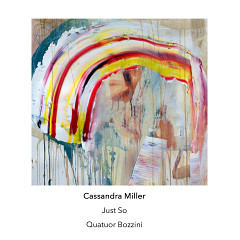
    The Canadian music series on Another Timbre is a thing of multifarious wonders. Ten portrait CDs championing music by Linda Catlin Smith, Martin Arnold, Isaiah Ceccarelli, Christopher Mayo and several others. The scope, the focus — it’s all compelling. No blunt conclusions are drawn about what Canadianness might mean in music, but I’m intrigued by Martin Arnold’s suggestion that it might have something to do with “slack” — by which he means a loose relationship to tradition, an open space upon which to make things new. Many of the discs in the series deserve mention here but Cassandra Miller’s music has knocked me sideways. Bold, kind-hearted, wistful, brave, simple, sophisticated… her string quartet About Bach is miraculously beautiful, with a bright, lonely violin drifting resolutely above the most gorgeous shapeshifting chorales.

    Cassandra Miller’s music has knocked me sideways.

    Tse dans Musicworks

    «Review», Stuart Broomer, Musicworks, no 132, 1 décembre 2018
    mardi 18 décembre 2018 Presse
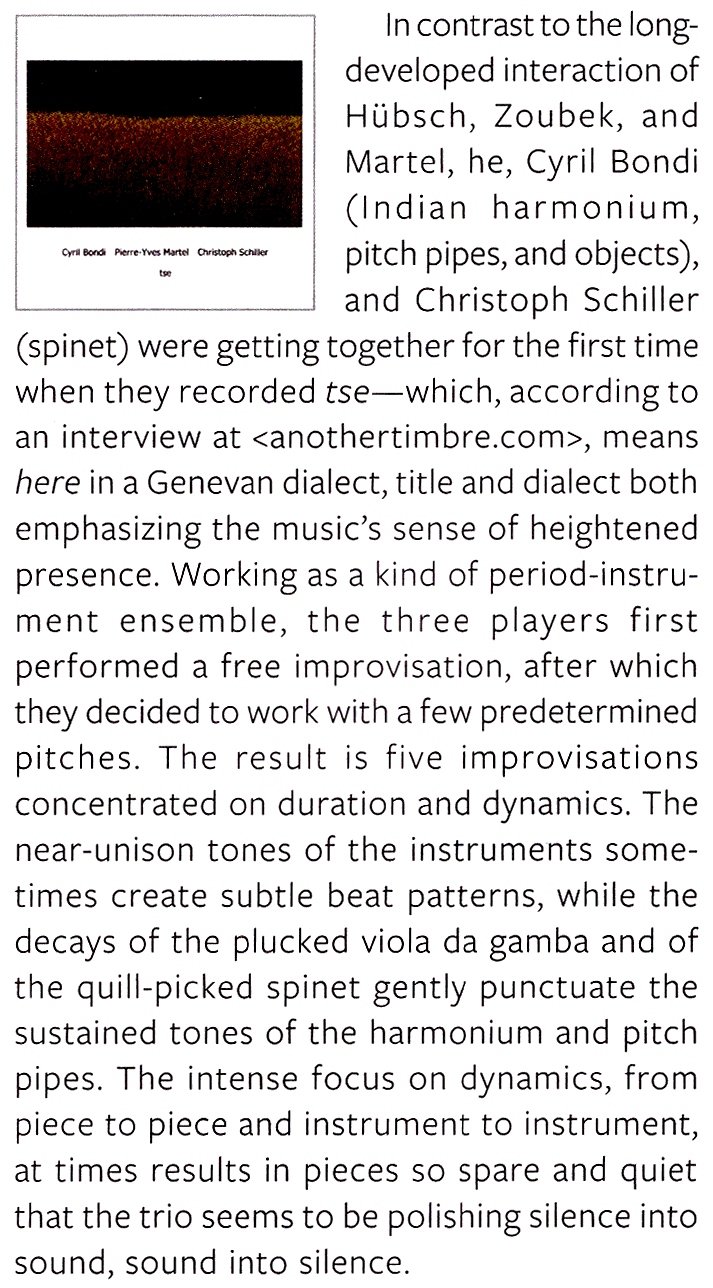
    Tse
    The intense focus on dynamics, […] at times results in pieces so spare and quiet that the trio seems to be polishing silence into sound, sound into silence.

    Fleur de chaos dans OttawaJazzScene.ca

    «HMMH redefines the possibilities in a flowing show with unexpected textures», Alayne McGregor, OttawaJazzScene.ca, 12 décembre 2018
    jeudi 13 décembre 2018 Presse

    When you’re operating on the bleeding edge of music, the old rules don’t precisely apply.

    New instruments, new methods of playing them, new combinations — all those characterized HMMH’s concert at IMOO on Sunday. It was not a show that one could judge based on its fidelity to a musical text — it was, after all, completely improvised — nor was there a specific style or genre that it adhered to.

    It was as much visual as aural — what exactly is making that sound? And it was almost as much of a process of exploration for the audience as it was for the musicians, as one listened to and absorbed the music that was being born in the moment.

    What it did have in common with more conventional music was the intensity and collaboration which the musicians brought to this performance. While only 45 minutes long, the show was very dense and multi-layered. One could never be sure one was hearing or seeing everything that was going on because each musician was doing so much.

    Four musicians: three from Montréal’s active creative music scene and one from Germany, comprise HMMH. Saxophonist and vocalist Joane Hétu is best known as co-leader of Ensemble SuperMusique; strings player Pierre-Yves Martel is a prominent composer and investigator of new sonic possibilities; German tuba player Carl Ludwig Hübsch is a frequent collaborator with Martel; and pianist Émilie Mouchous makes electronic instruments.

    For this concert, Mouchous played a vintage 70s-era KORG synthesizer; Martel primarily played his viola da gamba but also had a zither in front of him and blew into tiny, high-pitched whistles; and Hübsch was mainly on his tuba, which he muted with unconventional items which included a large metal mixing bowl, a white styrofoam hemisphere, a cylindrical cookie tin, and a white fluffy soft ball. He also had a collection of small metal bowls on which he created ringing metallic sounds; he would occasionally scrape a plastic cup along the edge of his tuba bell, or attach an uninflated balloon to his tuba and lightly strum it, letting the sound resonate through the instrument.

    Hétu had the largest number of possibilities. Besides her alto saxophone and her voice, she could pick from a whole table filled with noisemakers, hand fans, bells, whistles/pipes, a small metal whisk, graters, a metal bowl, plastic balls, marbles, a long corrugated plastic tube, balloons, and more. She chose to play only some of these objects, primarily the fans, the long tube, and the noisemakers.

    The audience was extremely quiet and engrossed throughout the show; the two times that new listeners opened the outside door to enter caused a noticeable stir. There was a considerable dynamic range, going down to near-silence. I appreciated, though, that HMMH, unlike some other improvising ensembles I’ve heard, carefully avoided really loud sounds or a cacophony; instead, the overall volume was controlled and the sound nuanced.

    The ensemble opened with a resonant lament. Martel sang into his viola, and Hétu began chanting, letting her voice ring back and forth in a formal and invocatory manner. Over muted tuba and light zither, Hétu continued to call out and then sing wordlessly over flapping plastic percussion. Others joined in to create an ambient rush of sound, with foghorn tuba on the deep end to bright metallic clinks and Hétu’s falsetto signing on top.

    While there were certainly conventional musical sounds — the underlying drone or quiet lines from Mouchous’ synthesizer, the melodic or scraping bowing of Martel’s viola, and light and dark tuba lines, even more noticeable were the non-musical textures. Crumpling paper, rattles, static, electronic whines, noisemaker squawks and flapping, tapping, and high-pitched vibrations from singing down a long plastic tube and then twirling it, all contributed to the sound. At one point, Martel bowed his viola through what appeared to be a sheet of plastic or thick cellophane, muting the sound and creating high-pitched sounds and rustles.

    It was a constantly-shifting river of sound, often unworldly, and occasionally even eerie.

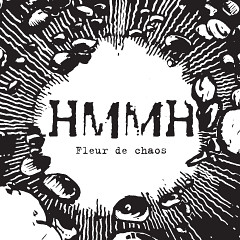
    HMMH has just released a new album, Fleur de Chaos, and had it for sale at the show. While I couldn’t say that anything they played on Sunday was precisely from that CD, the music certainly had the same thoughtful, cooperative vibe as what I had heard from the album.

    What was particularly interesting about the show was how well the musicians incorporated their unconventional sounds into the more standard melodies and rhythms they also created. The music stayed compelling because it was not just a scattershot of effects, but rather a musical conversation that built upon Western musical traditions.

    It was a fascinating look at possibilities, and the music which can be created by imagining different ways to use one’s voice, different ways to play, and different methods of creating sound.

    It was a fascinating look at possibilities, and the music which can be created by imagining different ways to use one’s voice, different ways to play, and different methods of creating sound.
  • 67
  • 68
  • 69
  • 70
  • 71
  • 72
  • 73
  • 74
  • 75