Sauter au contenu principal
actuellecd
  • This website is also available in English.

Blogue

86 résultats
  • 1
  • 2
  • 3
  • 4
  • 5
  • 6
  • 7
  • 8
  • 9
  • 21st-Century Canadian Snare Drum dans Anne Carlini

    «Review», Russell A Trunk, Anne Carlini, 1 mars 2026
    vendredi 7 août 2026 Presse

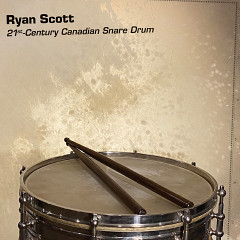
    For those unaware, this project centers on the snare drum — an instrument heard daily around the world and, for percussionists, a benchmark of technical precision.

    Toronto-based percussionist Ryan Scott presents the premiere of fourteen new solo works by Canadian composers, each created specifically for this project through commissions supported by the Canada Council for the Arts.

    The collection spans a wide range of approaches. All works emphasize traditional and extended snare drum techniques in acoustic practice, while some also incorporate electronics and alternative sound sources.

    Together, these pieces add new solo works to the international percussion repertoire. For performers, they offer material reflecting the challenges and possibilities of contemporary practice.

    For listeners, they reveal the snare drum as a solo instrument of depth and versatility, while providing a compelling portrait of Canadian composition today.

    A genuine stalwart figure in the Toronto contemporary music community and who has performed in over 400 world premieres, we are first gifted the rhythmically articulate ANTIGRAVITYDRUM and the industrially cultivated Skinscape IV and then we get the more regimented hush, sonically astute only ghosts, the impassioned Sepals, before the shuntingly emotive Time and Effort and the captivating growth of Snap Noir are brought forth.

    Along next is the aptly titled, spoken word-imbibed Infantry and the mechanized heirloom and they are in turn backed by the melodious of material signs and breaks, the ethereally absorbent equipo de sonido, before the set rounds out on the veritably crystalline, at first, fervent latterly FOMO, the disciplined pebbles, coming to the a close on the spatial awareness of The Far Night.fm.

    Ensemble, ces pièces viennent enrichir le répertoire international de percussion d’œuvres solo inédites. Pour les interprètes, elles constituent un matériau qui reflète les défis et les possibilités de la pratique contemporaine. Pour les auditeurs, elles révèlent la caisse claire comme un instrument solo d’une grande profondeur et d’une grande polyvalence, tout en offrant un portrait captivant de la composition canadienne d’aujourd’hui.

    Dream of Heat dans Anne Carlini

    «Review», Russell A Trunk, Anne Carlini, 1 mars 2026
    vendredi 7 août 2026 Presse

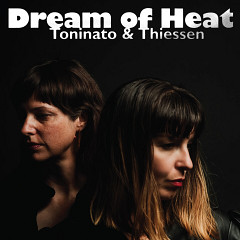
    For those unaware, Dream of Heat explores the cycle of death and rebirth as manifested by the experience of winter. The arc of the album follows an isolated awareness descending into the subconscious horrors and hopes of hibernation dreams before warming and waking to the flow of life.

    Written by Ida Toninato and Jennifer Thiessen for their live show Winter[City]Speaks, this project follows their first album The Space Between Us (Ambiances Magnétiques) which was nominated for Juno and Opus awards in 2019.

    This new body of work began as sonic postcards exchanged by the two musicians during the solitude of lockdown in the winter of 2021. These seed recordings were then nurtured into compositions that expanded the duo’s initial acoustic palette of viola, viola d’amore, baritone saxophone and reverberant spaces to include their spoken and sung voices, original texts in French and English, electronics, effects and field recordings.

    The journey leading to the album Dream of Heat was as personal as it was creative and musical—a story of friendship, of opening doors and portals, and of daring to show up in renewed ways.

    On what is a simply incredible sophomore album from the dutifully focused composer-performer duo, they open on the emotively engaging I need warmth and that is backed by the willowy Bear, the more industrialized ebbs, echoes and notches of On a tellement rêvé, the veritably ethereal smoothness of Hot blood flow, the set rounding out on the rhythmically canorous I am suffocating, coming to a close on the impassioned nuances within Change.

    Collaborating with performer-composer Jason Sharp on the production of the studio album continued the creative evolution of these six experimental songs, bringing a distinctive breadth and depth to the music while remaining grounded in the instrumental craft and imaginative vision that define the artistry of Toninato & Thiessen.

    Sur ce deuxième album tout simplement incroyable du duo compositeur-interprète, qui fait preuve d’une concentration sans faille, ils ouvrent le bal avec le titre I need warmth, d’une grande intensité émotionnelle, suivi du morceau Bear, aux sonorités aériennes, puis des flux, échos et nuances plus industriels de On a tellement rêvé, la douceur véritablement éthérée de Hot blood flow, l’ensemble s’achevant sur le morceau I am suffocating, au rythme mélodieux, pour conclure sur les nuances passionnées de Change.

    Le sourire dans Doppio Jazz

    «Recensione», Francesco Cataldo Verrina, Doppio Jazz, 6 juin 2026
    jeudi 6 août 2026 Presse

    Le sourire evidenzia come la musica possa ancora costituire un luogo di pensiero. Derome e il suo ensemble dimostrano che l’eredità di Lacy può essere ripensata senza ricorrere a formule celebrative, ma attraverso un lavoro di scavo che coinvolge la forma, il colore sonoro, la relazione tra parola e suono e la dimensione temporale.

    La riflessione che Jean Derome dedica da anni all’opera di Steve Lacy trova in Le sourire un punto di particolare interesse, poiché l’album riattiva un territorio estetico in cui poesia, forma musicale e pensiero critico confluiscono in un’unica prospettiva. Lacy aveva costruito un percorso in cui la parola poetica non fungeva da semplice sostegno testuale, ma da principio generativo; Derome, affiancato dal quintetto Somebody Special, prosegue questa linea con una lucidità maturata attraverso un lungo confronto con la scrittura lacyana.

    Karen Young (voce), Alexandre Grogg (piano), Normand Guilbeault (contrabbasso) e Pierre Tanguay (batteria) concorrono alla definizione di un impianto sonoro che alterna rigore e libertà, e che trova nella voce un punto di irradiazione in grado di influenzare l’intero discorso musicale. Young modella i testi di Robert Creeley, Anna Achmatova, Samuel Beckett, Judith Malina e Bob Kaufman con una sensibilità che unisce padronanza tecnica e attenzione semantica. La sua emissione non indulge in effetti ornamentali, ma delinea le parole con una cura quasi filologica, lasciando emergere la loro struttura ritmica e il loro peso concettuale. La voce, in questo contesto, non svolge una funzione illustrativa, ma agisce come vettore critico, mettendo in rilievo le zone più complesse del linguaggio poetico. Derome interviene con un uso del sax alto e del flauto basso che non mira a evocare Lacy, ma a dialogare con la sua eredità. Le sue linee non cercano l’effetto, ma tracciano itinerari che si insinuano nelle armonie con una logica affine alle geometrie di autori come Franco Donatoni e Iannis Xenakis. L’attenzione alla micro-variazione, alla qualità del respiro e alla distribuzione degli accenti mette in luce una concezione del suono come materia da scolpire. Il colore acustico che ne deriva assume una funzione strutturale, poiché definisce una temporalità che non coincide con la scansione metrica, ma con una pulsazione mentale, quasi una prosodia strumentale. Il lavoro armonico di Grogg sostiene siffatta impostazione mediante sovrapposizioni intervallari costruite su quarte, seconde e tritoni, che generano una fisionomia del suono volutamente instabile. Non si tratta di un’instabilità gratuita, ma di una strategia che permette alla voce di Young di inserirsi in un tessuto sonoro sempre ricettivo. Guilbeault e Tanguay regolano la densità complessiva, modulando la presenza del contrabbasso e della batteria secondo una logica quasi cameristica. Il contrabbasso introduce figure che non cercano la pulsazione, ma la definizione di un profilo armonico; la batteria interviene con una gestualità che privilegia il dettaglio, la sfumatura e la micro-articolazione.

    La scelta dei testi poetici non risponde a un criterio illustrativo, ma a un principio di affinità intellettuale. In I Heard the Indian Sage, Judith Malina propone una visione che oscilla tra ironia e desiderio di liberazione, e Derome accentua questa ambivalenza mediante una scrittura che alterna zone rarefatte e momenti di maggiore tensione. La chiusa — «Three Is Love / Because We Are Crazy / And Want To Be Happy / Forever» — non viene trattata come un epigramma, ma alla stregua di un punto di frizione che invita l’ascoltatore a interrogare la natura stessa del desiderio. In Love And Politics, sempre su testo di Malina, la narrazione del viaggio a Cipro e dell’incontro con Afrodite acquista una dimensione quasi mitologica, non per effetto di un’enfasi retorica, ma per l’attitudine del quintetto di far emergere la stratificazione simbolica del testo. La voce di Young sottolinea le ambiguità e le incrinature interne, mentre l’ensemble costruisce un ambiente sonoro che non illustra, ma commenta criticamente. Il rapporto tra parola e suono, in questo album, non si riduce alla giustapposizione, ma sviluppa una relazione di reciproca trasformazione. La poesia influisce sulla forma musicale, e la musica restituisce alla poesia una dimensione temporale che ne amplifica la portata. Questo processo trova un momento particolarmente significativo in Heaven, su poesia di Robert Creeley, dedicata a Irving Berlin. La pagina musicale assume un carattere meditativo che non indulge nella malinconia, ma riflette sulla condizione umana mediante una serie di domande che non cercano risposta. La chiusa — «If Life Were Easy / And It All Worked Out, / What Would This Sadness / Be About» — non viene trattata come un epigramma, ma come un punto di sospensione che invita l’ascoltatore a proseguire interiormente il discorso.

    Le sourire evidenzia come la musica possa ancora costituire un luogo di pensiero. Derome e il suo ensemble dimostrano che l’eredità di Lacy può essere ripensata senza ricorrere a formule celebrative, ma attraverso un lavoro di scavo che coinvolge la forma, il colore sonoro, la relazione tra parola e suono e la dimensione temporale. Ne deriva un ascolto che non pretende immediatezza, ma sollecita un’attenzione vigile, in grado di cogliere le sfumature e le tensioni interne di un progetto che unisce rigore analitico e sensibilità poetica.

    Le sourire montre que la musique peut encore être un espace de réflexion. Derome et son ensemble démontrent que l’héritage de Lacy peut être repensé sans recourir à des formules commémoratives, mais à travers un travail d’exploration qui porte sur la forme, la couleur sonore, la relation entre le mot et le son, ainsi que la dimension temporelle.

    Platanus dans Inner

    «Allison Cameron’s and Scott Thomson’s new album is incomprehensible music at its best.», Kari Nevalainen, Inner, 29 mai 2026
    jeudi 6 août 2026 Presse

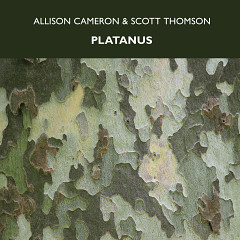
    Montréal based experimental music label Ambiances Magnétiques has published two new albums: Le sourire, a Steve Lacy tribute by Canadian artists Jean Derome & Somebody Special, and Platanus by the duo of noted Toronto-based composer-improviser Allison Cameron (crackle synthesizer, keyboards, tapes), and Montréal’s Scott Thomson (on trombone). It’s the latter album that I want to draw attention to. It’s so out-of-world.

    Platanus is pure abstract music born out of Thomson’s timbral experiments, and Cameron’s unique and unusual instrumentation, which showcases the Crackle Synthesizer and other keyboards (audibly the Casio SK-1) and tapes. The audible results such that it is hard to get grip on at any level. This is utterly bizarre! Truly tough material! I wouldn’t even say in a positive way but confusing, disturbing and unexplained way. But also thoroughly compelling and captivating. A mystery.

    “The near-hour’s worth of music pulls listeners into a uniquely disorienting topography, painting a confounding scenery — a place that feels perched precariously on the cusp between dreaming and wakefulness. Within this wobbly frame, their interplay variously floats, wafts, gurgles, and drifts, a curious assortment of textures and murky hues.”

    Another quote: “What they produce collectively resists easy description and that’s precisely what makes it so resonant. Their elusive semi-hush feels as like something was piped in from another reality.” I agree. Give it a try. You decide.

    The release is dedicated to the memory of Nobuo Kubota, the extraordinary Canadian improviser and intermedia artist who passed away in September of 2025 at the age of 93. The duo had played as a trio with Kubota, and the aforementioned Crackle Synthesizer in fact used to belong to the elder artist.

    … tout à fait captivant et fascinant. Un mystère.

    Le sourire dans Anne Carlini

    «Review», Russell A Trunk, Anne Carlini, 1 mai 2026
    jeudi 6 août 2026 Presse

    For those unaware, Steve Lacy was a quintessential artist of late modernism. His body of work is ample evidence of his refusal to bypass his forebears in pursuit of so-called ‘innovation.” He had to work through them. He called himself a “materialist,” an idiosyncratic use of the word describing his obsession with the material from which he made his music —— his saxophone as well as the countless artists whose work his œuvre synthesized.

    Through such a crystalizing process, his music grew increasingly singular, while always also paying homage to his antecedents, working through the material of, to name but a few, Sidney Bechet, Thelonious Monk, Mark Rothko, or Samuel Beckett.

    “I don’t know if Jean Derome would call himself a “materialist,” but such a Lacyan ethic adheres throughout his own notable body of work,” says Scott Thomson, Montréal [x-25]. “So, it felt apt when he delved into Lacy songs on Somebody Special (2019), which introduced this superb quintet.”

    Le sourire represents a deeper dive, extending Jean’s loving attention to the material at hand, with Lacy’s settings of Beckett poems in French (the little-known Sands suite) at its core. Along the way, the band touches on key elements in Lacy’s vast discography: Rushes and Packet (from which the songs that set Akhmatova and Malina derive) with Irene Aebi and Frederic Rzewski, and the two-volume Futurities, nonet settings of Robert Creeley poems and arguably his finest single-author project.

    As the sounds refract through the exquisite poem-lyrics that the music animates, Jean Derome & Somebody Special open their new collective work on the playful Jack’s Blues and the staggered The Smile and then we get the lushly dulcet The Cuckoo and the three-part Sands: the first part being the affecting beauty of Stand, then we get the joyfully vivacious Jump, the set culminating on the hauntingly ethereal Fall.

    Along next is the rhythmically paced Love and Politics which is itself backed seamlessly by the jazzy blues vibe of I Heard the Indian Sage, the improvised feel to the layered brilliance of Morning Joy, the music rounding out on the robustly enigmatic As Usual, coming to a close on the artfully hazed Heaven.

    Le sourire témoigne d’une approche plus approfondie, qui traduit l’attention bienveillante que Jean porte à la matière qu’il travaille…

    Le sourire dans Issues

    «Review», DJ Elbowlicker, Issues, no 108, 1 mai 2026
    jeudi 6 août 2026 Presse
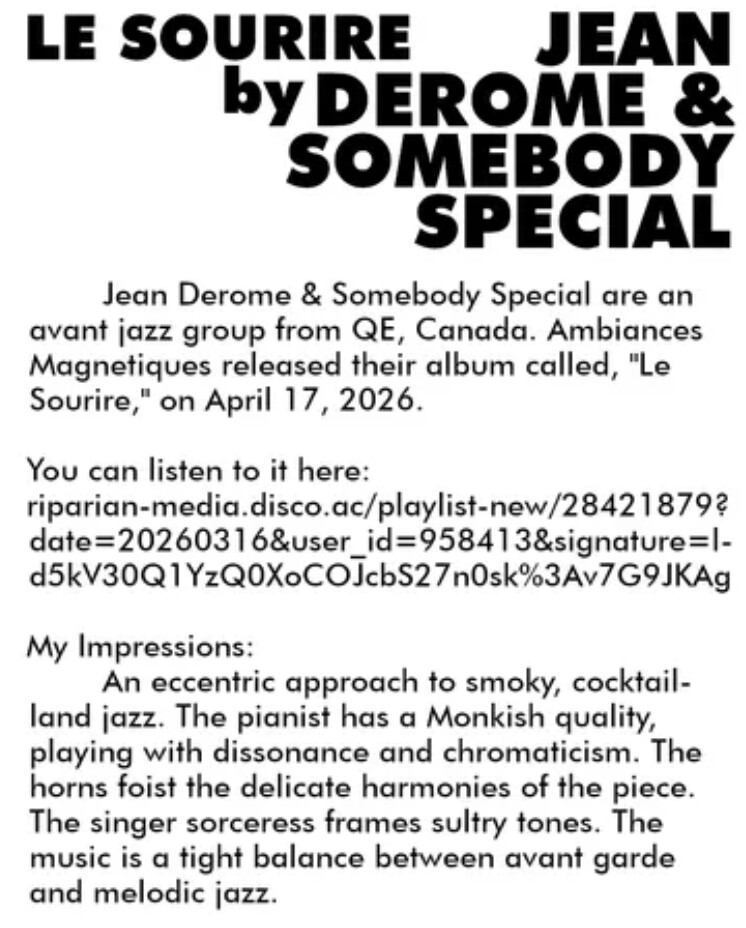
    Une approche excentrique du jazz «smoky» typique des bars à cocktails.
  • 1
  • 2
  • 3
  • 4
  • 5
  • 6
  • 7
  • 8
  • 9