When you’re operating on the bleeding edge of music, the old rules don’t precisely apply.
New instruments, new methods of playing them, new combinations — all those characterized HMMH’s concert at IMOO on Sunday. It was not a show that one could judge based on its fidelity to a musical text — it was, after all, completely improvised — nor was there a specific style or genre that it adhered to.
It was as much visual as aural — what exactly is making that sound? And it was almost as much of a process of exploration for the audience as it was for the musicians, as one listened to and absorbed the music that was being born in the moment.
What it did have in common with more conventional music was the intensity and collaboration which the musicians brought to this performance. While only 45 minutes long, the show was very dense and multi-layered. One could never be sure one was hearing or seeing everything that was going on because each musician was doing so much.
Four musicians: three from Montréal’s active creative music scene and one from Germany, comprise HMMH. Saxophonist and vocalist Joane Hétu is best known as co-leader of Ensemble SuperMusique; strings player Pierre-Yves Martel is a prominent composer and investigator of new sonic possibilities; German tuba player Carl Ludwig Hübsch is a frequent collaborator with Martel; and pianist Émilie Mouchous makes electronic instruments.
For this concert, Mouchous played a vintage 70s-era KORG synthesizer; Martel primarily played his viola da gamba but also had a zither in front of him and blew into tiny, high-pitched whistles; and Hübsch was mainly on his tuba, which he muted with unconventional items which included a large metal mixing bowl, a white styrofoam hemisphere, a cylindrical cookie tin, and a white fluffy soft ball. He also had a collection of small metal bowls on which he created ringing metallic sounds; he would occasionally scrape a plastic cup along the edge of his tuba bell, or attach an uninflated balloon to his tuba and lightly strum it, letting the sound resonate through the instrument.
Hétu had the largest number of possibilities. Besides her alto saxophone and her voice, she could pick from a whole table filled with noisemakers, hand fans, bells, whistles/pipes, a small metal whisk, graters, a metal bowl, plastic balls, marbles, a long corrugated plastic tube, balloons, and more. She chose to play only some of these objects, primarily the fans, the long tube, and the noisemakers.
The audience was extremely quiet and engrossed throughout the show; the two times that new listeners opened the outside door to enter caused a noticeable stir. There was a considerable dynamic range, going down to near-silence. I appreciated, though, that HMMH, unlike some other improvising ensembles I’ve heard, carefully avoided really loud sounds or a cacophony; instead, the overall volume was controlled and the sound nuanced.
The ensemble opened with a resonant lament. Martel sang into his viola, and Hétu began chanting, letting her voice ring back and forth in a formal and invocatory manner. Over muted tuba and light zither, Hétu continued to call out and then sing wordlessly over flapping plastic percussion. Others joined in to create an ambient rush of sound, with foghorn tuba on the deep end to bright metallic clinks and Hétu’s falsetto signing on top.
While there were certainly conventional musical sounds — the underlying drone or quiet lines from Mouchous’ synthesizer, the melodic or scraping bowing of Martel’s viola, and light and dark tuba lines, even more noticeable were the non-musical textures. Crumpling paper, rattles, static, electronic whines, noisemaker squawks and flapping, tapping, and high-pitched vibrations from singing down a long plastic tube and then twirling it, all contributed to the sound. At one point, Martel bowed his viola through what appeared to be a sheet of plastic or thick cellophane, muting the sound and creating high-pitched sounds and rustles.
It was a constantly-shifting river of sound, often unworldly, and occasionally even eerie.
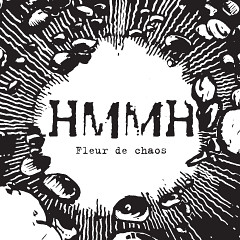
HMMH has just released a new album, Fleur de Chaos, and had it for sale at the show. While I couldn’t say that anything they played on Sunday was precisely from that CD, the music certainly had the same thoughtful, cooperative vibe as what I had heard from the album.
What was particularly interesting about the show was how well the musicians incorporated their unconventional sounds into the more standard melodies and rhythms they also created. The music stayed compelling because it was not just a scattershot of effects, but rather a musical conversation that built upon Western musical traditions.
It was a fascinating look at possibilities, and the music which can be created by imagining different ways to use one’s voice, different ways to play, and different methods of creating sound.