Sauter au contenu principal
actuellecd

Blogue

162 résultats
  • 14
  • 15
  • 16
  • 17
  • 18
  • 19
  • 20
  • 21
  • 22
  • Ave <w>, Palétuvier (rouge), Ellipsis dans Paris Transatlantic

    «On &records», Charity Chan, Paris Transatlantic, 21 mars 2011
    lundi 21 mars 2011 Presse

    &records is not just a record label, it’s also what you could think of as an ongoing conceptual art project, managed by two Montréal based artists: Fabrizio Gilardino and Michel F Côté. Both have been active on the Montréal music scene for many years, both releasing work on the Ambiances Magnétiques label and producing the annual “jazz sur mars” series. &records started in 2003, and has been putting out new albums ever since. 2010 proved to be one of their most prolific years, with over seven releases, spanning everything from solo recordings (Jean René’s Fammi), to noise rock (La Part Maudite), from electroacoustic improvisation (Palétuvier (rouge) ) to lush pop extravaganza (Alexis O’Hara’s Ellipsis).

    What’s intriguing about the label is the concept behind it: &records is an imprint with a set end date: when Côté and Gilardino reach a total of 24 releases, the label will close its doors. It’s an interesting idea, and one that differs from the usual means of organization for a label, presenting the listener with the feeling that everything has been carefully considered and curated. The care that goes into the project is evident from the discs themselves, with each album featuring graphics by Gilardino silkscreened onto its cover. Packaging is minimal, with only the bare necessities in terms of descriptive text, but the craft and thought behind the project are obvious.

    These three albums are among &records’ most recent releases, and despite their striking musical diversity, covering a gamut of musical approaches and techniques, they share a consistent atmospheric and evanescent quality. Whether electroacoustic, sample-based, purely improvised, partly composed, experimental sound art, noise or even indie post-rock style, the music makes you feel like you’ve walked into a fantastical treasure trove of sound. Blink once, and it might all be gone. Often making use of subtle and quiet electronics, these are intimate moments, further reinforced by the rhetorical understatement that seems to be the preference for all three groups / artists.

    In Palétuvier (rouge) , the fourth in the Palétuvier series, Diane Labrosse (sampler), Philippe Lauzier (bass clarinet and saxophones) and Pierre Tanguay (drums) present a hushed yet focused series of four improvisations constructed almost purely from wisps of sound, and playing as much with silence and space as with sound itself. Even when there’s a sense of consistent momentum, or where the music appears busier, as in the opening track Miso Eratu, there’s still plenty of space left in between its pulses and grains. The beats on Dextrus Fitera feel a bit plodding and heavyhanded, but they nonetheless contribute to the impression of this album being one long composition, as opposed to four pieces related only by propinquity. It’s almost as if the musicians were slowly breaking down the component parts of the first track into shorter, quieter, and smaller elements, until, by the time the final Alvarum Macenza is reached, what remains is barely audible, forcing the listener to strain to hear what is going on. It’s as if the music is progressively slipping away, with Lauzier’s gossamer-thin threads of sound the final echoes of a barely remembered dream.

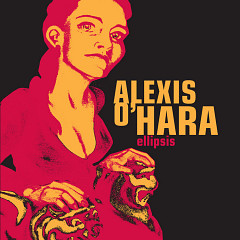
    Alexis O’Hara’s Ellipsis provides a similar aesthetic of understatement, but with a quiet fortitude that imparts a greater sense of grounding and permanence, albeit one that still maintains the fundamentally translucent and soft character of her compositions. For this album, she’s joined by a coterie of Mile End/Montréal musicians, including Sophie Trudeau (Godspeed You! Black Emperor, Thee Silver Mt. Zion Memorial Orchestra & Tra-la-la band), Alexandre St-Onge (Shalabi Effect) and Radwan Moumneh (Jerusalem in My Heart).

    The first thing to strike you upon listening to Ellipsis is the seductiveness of O’Hara’s voice, whose close, whispered quality makes it seem like she’s standing right beside you, telling you sly secrets no one else knows. At times it’s overdubbed, at times layered under the instrumental accompaniment, in a process of masking and unmasking that makes listening both hard work and something to relish. It’s compelling and intoxicating, the lyrics (in French, English and Spanish) switching from playful to somber in a heartbeat, all the while retaining their mildly acerbic wit. Even when the songs adopt a marginally disturbed character (Inside Joke (love is), Twenty-Three and Bugs), they remain beguiling and enthralling. Ellipsis is a gorgeously and skillfully rendered set of pieces that calls for listening to over and over again.

    If Palétuvier (rouge) and Ellipsis are dreams wearing rose-colored glasses, Ave <w> is their distant cousin in slightly nightmarish Technicolor, sonically denser, with harsher, grittier textures, more strident in character but by no means overwhelming. This is a project by one Tiari Kese, who, according to Côté, is “a world-renowned pianist and French horn player, known for his interpretations of John Cage.” In fact, Kese is actually Côté, who also credits himself on percussion and electronics and joins trumpeter Gordon Allen (a.k.a. Ellwood Epps) in a set of pieces originally commissioned by Sylvain Émard Danse. The music is a mix of live recordings and samples featuring a wide range of influences, including (as Kese names them): Satie & Cage, Tétreault & Falaise, Siewert & Brandlmayr, B Günter, Fennesz, Neina and Oval.

    Côté’s fondness for noisy, distorted sheets of sound combined with sweeter harmonies penetrating a morass of grainy distortion is evident throughout, as it is on his recent Mecha Fixes Clocks (À l’inattendu les dieux livrent passage). This proclivity of Côté’s for “musical white noise” is particularly clear on Marge brute du ƒ, where “Kese” performs sharply punctuated chords (courtesy Erik Satie) on the piano, their attacks triggering a patch that distorts and augments their overtone material. This and the opening Unit Vector in Vratsa are probably the most forceful of the pieces on offer here, the rest of which returns to the bittersweet atmosphere common to all three of the albums, well in line with the general aesthetic of this fine label.


    Whether electroacoustic, sample-based, purely improvised, partly composed, experimental sound art, noise or even indie post-rock style, the music makes you feel like you’ve walked into a fantastical treasure trove of sound. Blink once, and it might all be gone.

    Ellipsis dans La Presse

    «Alexis O’Hara: elliptique», Alain Brunet, La Presse, 12 mars 2011
    samedi 12 mars 2011 Presse

    Le plus récent document numérisé de l’artiste multidisciplinaire Alexis O’Hara est un album de 13 chansons et de mots dits en mode trilingue — surtout anglais, mais aussi français et espagnol.

    Sur une toile électronique incluant des instruments acoustiques ou électriques, la Montréalaise y explore les thèmes récurrents de l’intimité: amour, désir, loyauté, perte, fuite, auto-observation, auto-dérision, ironie de la situation, cynisme, joie. Pour cet Ellipsis, O’Hara a créé des charpentes et sédiments électroniques pour ensuite leur conférer un caractère organique en s’adjoignant différentes configurations d’instrumentistes. Ont été mis à contribution: les percussionnistes Michel F Côté et Stefan Schneider, le guitariste Bernard Falaise, le trompettiste Brian Lipson, le bassiste Alexandre St-Onge, la violoniste Sophie Trudeau, le joueur de saz Radwan Moumneh.

    Les références musicales s’inscrivent dans le sillon chansonnier post-Laurie Anderson de par l’alternance/enchevêtrement du conte et de la forme chanson, de par la nature composite de la lutherie. Un travail cohérent, somme toute, où la singularité se débusque dans le détail. Où l’interprétation demeure un concept très ouvert, on l’aura deviné.

    Un travail cohérent, somme toute, où la singularité se débusque dans le détail. Où l’interprétation demeure un concept très ouvert, on l’aura deviné.

    Transition de phase dans Downtown Music Gallery

    «Review», Bruce Lee Gallanter, Downtown Music Gallery, 11 mars 2011
    vendredi 11 mars 2011 Presse

    One of the better & stranger sets last year (2010) at the Victo Fest was by a quartet featuring Denley / Lauzier / Martel / Myhr, an international cast of gifted improvisers. Mr. Denley (once a member of Machines for Making Sense from Australia) and Mr. Myhr were also part of the Trondheim Jazz Orkester, who also performed one of the better sets last year. Electric bassist Éric Normand played at Victo last year as well in a different set. This disc was recorded right after the Victo Fest in May of 2010. Since all of these musicians prepare their instruments, the sounds are going to hard to pinpoint, as in who’s doing what. I remember the quartet set at Victo quite well since it was one of the few sets to employ that lower case aesthetic. This disc also sounds like that ultra careful, restrained, spacious improv that some of us have come to enjoy over the last decade. This music breathes and takes its time to unfold. This is a collection of different drones and long tones that shimmer softly. Kim Myhr, who was the leader of the Trondheim Orkester at Victo, had a tableful of small objects that he played while he occasionally plucked or bowed his table-top acoustic guitar. I hear the sound of scientists or craftsmen quietly creating their own new environment or world. The nuance of every sound is carefully placed on the canvas of silence. At times it is hard to tell that there are five musicians involved, yet the outcome is striking and completely focused. This music forces us to stop and listen closely since we might otherwise miss a fragment that is integral to the overall tapestry. Consistently fascinating if you take the time to explore.

    Consistently fascinating if you take the time to explore.

    Fléchettes dans Downtown Music Gallery

    «Review», Bruce Lee Gallanter, Downtown Music Gallery, 11 mars 2011
    vendredi 11 mars 2011 Presse

    French-based percussionist Le Quan Ninh has a completely unique approach to playing his bass drum, if you get a chance to see him live, you know what I mean. Still his sound is also quite distinct. This duo disc was recorded live at Coop Paradis in 2009 and it also features Quebec-based reeds wiz Jean Derome. Both of these men concentrate on small yet focused sounds. Mr. Derome at times recalls early John Zorn when Zorn worked with mouthpieces, bird calls & a cup of water. The duo works together extremely well, their odd sounds often blending together marvelously. The brittle bent notes of the sax and the cymbals rubbed on top of the bass drum often sound very similar, so it difficult to tell who is doing what. Derome also plays whistles and toys at times, occasionally adding bits of humor or other surprising sounds to the mysterious environment. Well recorded and able to cast a spell upon all those take the time to listen closely without distractions.

    Well recorded and able to cast a spell upon all those take the time to listen closely without distractions.

    Dix situations précaires dans Downtown Music Gallery

    «Review», Bruce Lee Gallanter, Downtown Music Gallery, 11 mars 2011
    vendredi 11 mars 2011 Presse

    We know clarinetist Lori Freedman & sampler-player Diane Labrosse from various discs on the Ambiances Magnetiques label. They other two players are new names for me. This disc was recorded live the Vieux-Theatre in Saint-Fabien in September of 2005. Much of this skeletal, cautious improv. The blending of the acoustic instruments (clarinet, cello & percussion) with the sampler is often subtle and well-integrated. At times it seems as if there is little going on yet there is a great deal of space and interaction at a more minimal level. There a number of eerie moments as well. Although this disc is not excitement-producing, the cautious sounds are quite evocative and thoughtfully constructed.

    … the cautious sounds are quite evocative and thoughtfully constructed.

    Tomahawk Territory dans Downtown Music Gallery

    «Review», Bruce Lee Gallanter, Downtown Music Gallery, 11 mars 2011
    vendredi 11 mars 2011 Presse

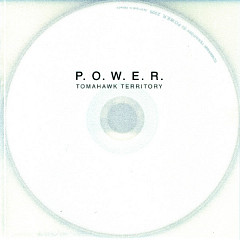
    Bassist Éric Normand runs this, the Tour de Bras label. P.O.W.E.R. is a trio plus two guests who play televisions, microphones and a few other normal instruments. Although I grew up watching a good deal of TV, especially in the sixties as child, I got tired of it and the way it both manipulated and pacified the masses in the seventies & eighties. I went back to watching a few shows in the nineties like Star Trek & North Exposure, but I eventually got rid of my television completely and just dealt with the computer and an occasion DVD film in recent years. Commercials have always bothered me. The sound of P.O.W.E.R. is a swirling collection of amplified noises, feedback, static and the sounds of the machines themselves. Ugly yet real. It is not that the sampling of televisions is new by any means, both Kramer in early Zorn game pieces made tapes taken from the TV & other sources and John Richey in Machine Gun sampled a television & radio on stage. Two of the four pieces here at live and two are recorded in a studio from what I can tell. The studio pieces sound more interesting to me, less disturbing. They contain quite a bit of microphones amplifying different objects or surfaces. Some of this reminds of Faust but without any their songs. The first piece seemed a bit indulgent, but the other three pieces actually worked as somewhat fascinating sonic weirdness. As they say in those cheap film reviews… your move.

    As they say in those cheap film reviews… your move.
  • 14
  • 15
  • 16
  • 17
  • 18
  • 19
  • 20
  • 21
  • 22