Sauter au contenu principal
actuellecd

Blogue

215 résultats
  • 28
  • 29
  • 30
  • 31
  • 32
  • 33
  • 34
  • 35
  • 36
  • To Continue dans La Presse

    «Stéréo. Dangereux Zhoms au service du maître Derome», Alain Brunet, La Presse, 6 janvier 2008
    dimanche 6 janvier 2008 Presse

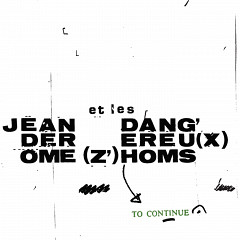
    Hiboux s’ouvre par une ligne épurée et très moderne. Nez qui coule est une coulée plus dramatique, plus ardente, plus collective. To continue s’amorce par une déclamation de verbes consonnants à l’infinitf présent, suivis de compléments d’objet indirect, le tout se déversant dans un jazz contemporain bien ciselé. Cogné un genou démarre sur une phrase presque baroque énoncée par le piano de Guillaume Dostaler et la basse de Pierre Cartier: la structure laisse énormément d’espace au saxophone de Jean Derome, en constante interaction avec ses collègues. La grenouille et le bœuf, connue de tous, devient une chanson absolument contemporaine qu’entonne Pierre Cartier. Prières, le plat de résistance, souscrit à la même esthétique que les pièces précédentes. Improvisation libre, polyphonie, polyrythmie, arythmie, polymodalité. Nous avons affaire à de redoutables Zhoms au service de Jean Derome, un maître à n’en point douter. (4/5)

    Nous avons affaire à de redoutables Zhoms au service de Jean Derome, un maître à n’en point douter.

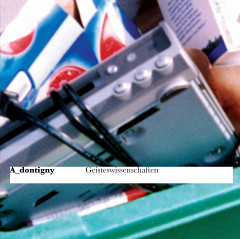
    Geisteswissen­schaften dans Skug

    «Kritik», Hans Kulisch, Skug, no 73, 1 janvier 2008
    mardi 1 janvier 2008 Presse

    Die erste Solo-CD des Komponisten A_dontigny verweist direkt auf elektroakustische Musik, Audio-Kunst und das weite Feld Electronica. Kurza sarkastische Vignetten, nitch ohne Charme mit einem Haufen von Querverweisen zur Kunstgeschichte une Philosophie. Drei Mitstreiter hat A_dontigny hier: Paul Dolden, Diane Labrosse und Jon Vaughn. Reife Leistung und ein echt tolles Hörerlebnis.

    Reife Leistung und ein echt tolles Hörerlebnis.

    Phon-O-Victo dans AllMusic

    «Review», François Couture, AllMusic, 1 janvier 2008
    mardi 1 janvier 2008 Presse

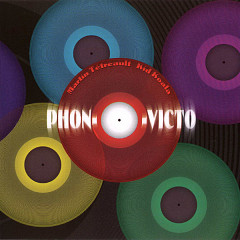
    If you think all turntablists are alike, think again. Case in point: this off-the-wall collaboration between experimental turntablist Martin Tétreault and famous left-field DJ Kid Koala. Now, there is a long way between left-field and experimental — if the Kid’s music is exciting and original in its own right, it sounds pretty “normal” compared to Tétreault’s experiments in noise and abstraction (his longstanding duo with Otomo Yoshihide is his best-known project). On the invitation of the Victoriaville FIMAV festival, Tétreault and Koala worked on a duo set that would bridge their differences through what they had in common: a fondness for old self-help and demonstration records. Humor was thus on the agenda. They also decided to bring with them a hefty load of records by other artists on the festival’s bill that year (2005, that is), so you can catch bits of Anthony Braxton’s saxophone and Yamatsuka Eye’s inhuman yelps in there, among other things. Most importantly, though, the two turntablists actually worked out their collaboration in advance, instead of simply having their “first meeting” on-stage. Transitional cuts and cues were determined to lead the way through a set of roughly sketched pieces. The live concert was a blast, funny and lighthearted. Phon-O-Victo, the CD documenting it, is a bit more demanding. Only 38 minutes of the performance ended up on the disc, and those are, for the most part, the more abstract parts of the set. Why? Because of licensing issues with the more commercial or more easily identifiable material. As a result, Phon-O-Victo will feel like an easier listen for Tétreault fans (this is the lightest album he has released since Des pas et des mois), but Koala fans will find it to be his most difficult release to date. Difficult, not bad. In fact, Koala displays an uncanny level of creativity here, and despite the missing encore based on Moon River, this CD is packed with fun moments, from a self-educational bit about DJing (in The DJ Factory Turn Crazy) to a marvelously inappropriate combination of blues singing and slowed-down moans (Godzilla a les bleus). Highly recommended.

    Highly recommended.

    Clic dans AllMusic

    «Review», Dave Lynch, AllMusic, 1 janvier 2008
    mardi 1 janvier 2008 Presse

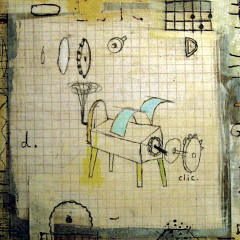
    Anyone aware of the Montréal avant-prog and musique actuelle scenes knows about guitarist Bernard Falaise — in addition to his comparatively high-profile gig with longstanding avant-proggers Miriodor, he has graced concert stages and recordings in practically every avant-gardist setting imaginable, as a member of the electro-acoustic free exploratory Klaxon Gueule, Claude St-Jean’s contemporary jazz-rockish Les Projectionnistes, Pierre Labbé’s chamber jazzish ensemble, the Jimmy Giuffre-inspired trio that recorded Joue Free, the two-guitarist/two-drummer Montréal-Vancouver tandem free improv quartet The Unexpected, and on and on. His first solo album, 2000s Do, garnered much critical acclaim — even described as “very close to a masterpiece” by AMG reviewer François Couture, which would seemingly set the bar quite high for the guitarist’s next outing. Well, in December 2007 that next CD, Clic, arrived, revealing that Falaise was in no apparent danger of a sophomore slump. One might naturally expect a musician such as Falaise, who possesses killer chops along with utter mastery of electronic effects both live and in the studio, to use his solo efforts as an opportunity to cut loose with displays of the “guitar hero” variety, since he is such a team-playing collaborator in his other settings, placing the needs of the ensemble ahead of any egotistic shredder tendencies. But Do demonstrated his ability to multi-track his guitar and other instrumentation with an admirable lack of grandstanding, and Clic proceeds even further away from the guitar as focal point (although Falaise does rip out a few concise and compelling solos and steps into the spotlight occasionally, with his instrument sometimes so sonically disguised that you can’t be sure it’s a guitar). In fact, Clic immediately places Falaise in the absolute top tier of avant-prog composers and arrangers for diverse instrumentation, not to mention a master of studio-based wizardry. A reading of the personnel should tip the listener off even before the music (or, more accurately, digital clicks, sampled voice, and circus calliope) of brief leadoff track Allô emanates in curious fashion from the speakers: in addition to Falaise on guitars, bass, banjo, mandolin, keyboards, percussion, turntables, and “manipulations diverses,” the musicians present include saxophonist/flutist Jean Derome, clarinetist Lori Freedman, trombonist Tom Walsh, trumpeter Gordon Allen, drummer/percussionist Jean Martin, and Julien Grégoire on marimba. This would be a phenomenal live band, but Falaise has stated that “most of this music would be near impossible to perform live,” and in fact the musicians individually overdubbed their contributions.

    The result is challenging, imaginative, playful, and accessible, and in a sense a perfect blend of the melodious yet complex music of Miriodor and the tightly arranged and scored side of musique actuelle, although there are improvisational interludes mixed into the compositional intricacies. Homages are many across the album’s 13 tracks, starting with Tricheur, an obvious tip of the hat to A Modern Lesson, the Bo Diddley-meets-Henry Cow leadoff track on Aksak Maboul’s classic Un peu de l’âme des bandits from 1980. Falaise knows his Rock in Opposition, but also claims inspiration from the likes of Braxton, Beefheart, Nancarrow, and Stravinsky. There is uncanny depth in the music’s many layers: a counter-rhythm of crisp percussives bursts in over a mesmerizing minimalist backdrop during Lime; the electronic and acoustic instruments of Tour dance in a delicate swirl, with melodies and solo snippets intertwining as the underlying harmonic foundation shifts and brings all the instruments along, the entire assemblage fitting together with the precision of a jigsaw puzzle as the overall energy level pumps up into higher levels of urgency. On the jazzier, funkier side, Allen gets a brief blowing opportunity and pumps out an angular unison line with the marimba over a chunky, driving rhythm on Mule, and Yeti fully integrates Les Dangereux Zhoms’ front line of Derome and Walsh into an arrangement whose tempos speeds up and slows down like a roller coaster plummeting madly downward, slowing to a crawl on the ascent and barely making it to the crest of the next rise before swiftly accelerating to the ground again. And so it goes throughout Clic: Falaise’s impeccable chops and advanced guitar sonics (not to mention banjo and mandolin!) tumble into a universe where radio static, digital blips, and oddball vocal samples meet calliopes, glockenspiels, marimbas, and jazzed-up brass and reeds to create music with an ebb and flow as natural and organic as the movement of thoughts and emotions, ranging from whimsically fun to dramatic and even mysterious and darkly atmospheric. With his second album, Bernard Falaise has managed to marry the engaging qualities of Miriodor and L’Ensemble Rayé to the challenging aspects of Henry Cow, Blast, Stevan Kovacs Tickmayer, and Rich Woodson’s Ellipsis (and sometimes you can even dance to it!). Clic is an astounding record — yes, even a masterpiece — and a strong candidate for 2007’s avant-prog album of the year.

    Clic is an astounding record — yes, even a masterpiece — and a strong candidate for 2007’s avant-prog album of the year.
    (juste) Claudette dans Solénoïde Radio

    «Les Chroniques du Solénoïde», Solénoïde Radio, no 117, 1 janvier 2008
    mardi 1 janvier 2008 Presse

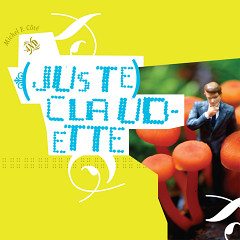
    Accompagné de Bernard Falaise (Miriodor, Klaxon Gueule) à la guitare électrique, Jesse Levine à l’orgue électrique et Alexandre St-Onge à la contrebasse, le québécois Michel F Côté développe un jazz libre et tonique, loin des schémas couramment rencontrés dans les mondes contemporains et improvisés. Avec une intensité jubilatoire, le quartet célèbre ainsi à sa façon les stratégies obliques, offrant aux amateurs de curiosités musicales une belle occasion d’étalonner leur ouverture d’esprit.

    Avec une intensité jubilatoire, le quartet célèbre ainsi à sa façon les stratégies obliques

    (juste) Claudette dans Blow Up

    «Altrisuoni», Stefano Isidoro Bianchi, Blow Up, no 116, 1 janvier 2008
    mardi 1 janvier 2008 Presse

    Côté (batteria e tromba), Bernard Falaise (chitarra) e Alexandre St-Onge (contrabbasso), in pratica i tre Klaxon Gueule, qui con l’apporto di Jesse Levine, suonano nel nuovo album solo del batterista. Distante dal suono della band-base, (juste) Claudette presenta tredici tracce attraversate da un forte feeling jazz-rock che, pur estremamente compatto nel mood complessivo, tocca corde sixties-noir (Gros découvert, Rince-doigt) o limitrofe al Davis elettrico nel clou degli anni ‘70 (Par en avant, Raccourcir en séchant), ma si estende facilmente anche verso più ombrose minacce rock (Arms Oil, Progress Is Made), distensive digressioni in punta di tastiere (Descente centrale, la cover di Vincent Gallo Was) e frenetici capitomboli acid-jazz (Virement manuel et pinçage). Piacevolissimo. (7/10)

    Piacevolissimo.
    7
  • 28
  • 29
  • 30
  • 31
  • 32
  • 33
  • 34
  • 35
  • 36