Sauter au contenu principal
actuellecd

Blogue

215 résultats
  • 28
  • 29
  • 30
  • 31
  • 32
  • 33
  • 34
  • 35
  • 36
  • Scat dans Exclaim!

    «Review», David Dacks, Exclaim!, 1 février 2008
    vendredi 1 février 2008 Presse

    Tim Brady’s ever-expanding skills as a composer are displayed to spectacular effect on his tough new disc. His compositions are always a seatbelt-fastening experience; they are wild, precise orchestrations that, in basketball parlance, distribute the ball with efficiency. On this disc, the Australian quintet Topology bring these challenging works to life, along with Brady, who dispenses with his guitar entirely in favour of samples. The melodies un-spool amongst all five players; the narrative is always maintained, but produced by always-recombinant instrumental voices. Brady’s sample technique can lapse into clumsy, Synclavier-like rigidity, but elsewhere the effect is almost seamless as he folds compositions in on themselves in a digital style. The three long form pieces are too complex to sum up in a few sentences but all are rich landscapes of activity and evocative slower sections. The final track features Christa Powell’s frenzied viola engaging with sample orchestration in a fiery Plunderphonic showdown. This is yet another superb, ambitious Brady work.

    Tim Brady’s ever-expanding skills as a composer are displayed to spectacular effect on his tough new disc.

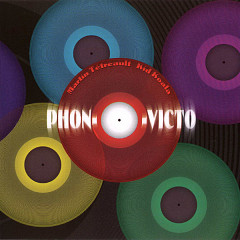
    Phon-O-Victo dans Exclaim!

    «Review», Jerry Pratt, Exclaim!, 1 février 2008
    vendredi 1 février 2008 Presse

    Phon-O-Victo documents Kid Koala and Martin Tétreault’s 2005 Victoriaville festival performance. It’s a rare collaboration that’s a dead on improv hit. It works because Koala and Tétreault wisely built on their musical commonalities — instructional recordings, jazz, etc. — to construct the project’s creative apex. But Kid Koala, whose turntable virtuosity is well-known, and self-proclaimed “sonic conceptualist” Martin Tétreault, spinner of experimental noise compositions, structured their improv moves — mainly transitional cuts and cues — making this a wickedly inspired set. The duo’s vinyl-only rule, featuring the music of some of their fellow festival performers, adds an edge. The ensuing concert is seven dense tracks of free-jazz, hilarious sound art, spoken word, noise freak-outs and many “happy” sound accidents. Tétreault frequently sets the mix-down tone here, with Koala interjecting hype scratch patterns. Check out Godzilla a les bleus, where Tétreault gleefully mangles a blues groove that’s further disrupted by Koala’s abstract scratch fuckery. Tétreault’s love for avant-noise figures prominently here — listen for his mixing of Boredoms singer Yamatsuka Eye’s mental shrieks into Michel au pays des merveilles. Phon-O-Victo’s biggest surprise is how the duo’s symbiotic turntablism draws out their influences. At several points, Koala sounds eerily like himself and Coldcut combined, circa the Beats & Pieces era. And Tétreault’s noisy mix snippets occasionally channel a Naked City sonic barrage. Phon-O-Victo is a brilliant experiment in abstract and pop-culture turntablism.

    Phon-O-Victo is a brilliant experiment in abstract and pop-culture turntablism.

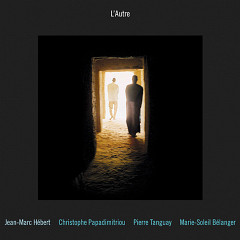
    L’autre dans The WholeNote

    «Review», Ken Waxman, The WholeNote, 1 février 2008
    vendredi 1 février 2008 Presse

    This folkloric bent, but with Asiatic and Arabic influences, is taken one step further by guitarist Jean-Marc Hébert’s L’autre. Hébert, who studied classical guitar at the University of Toronto in the 1980s, orients his Montréal playing towards World Music-fusion in groups such as Ragleela and Africa Musique. The CD’s seven tracks temper European folksiness with harsher Third World textures. Hébert’s single-string frailing and picking often suggests the additional overtones available from exotic strings, while Marie-Soleil Bélanger, who also plays in Ragleela, is able to display splayed and flanged bow movement, whether playing erhu or standard violin. Pierre Tanguay, one of Montréal’s most versatile rhythm players, adds his drums and “body percussion” throughout, creating tunes that reference droning ragas, serpentine Arabic melodies and formal Cantonese operas as well as western sounds.

    Although some of the tunes exhibit a certain sameness in theme-variation-and-recapitulation, the standout is Asie mineure, where the percussion beats could come from tablas or talking drums, the strings’ chromatic runs from a sarod and the shrill string sluicing from the Indian classical fiddle. In addition rock music-like backbeat and note spraying improvised solos are also prominent.


    The CD’s seven tracks temper European folksiness with harsher Third World textures.

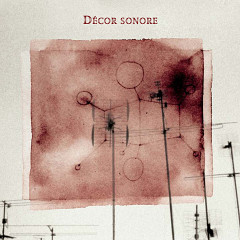
    Décor sonore dans The WholeNote

    «Review», Ken Waxman, The WholeNote, 1 février 2008
    vendredi 1 février 2008 Presse

    Even more non-categorical are the timbres and textures exposed on cellist Mélanie Auclair’s Décor Sonore, another aural stunner. Leading a seven-piece ensemble including clarinetist Lori Freedman and guitarist Antoine Berthiaume as well as musicians manipulating a laptop, a foley for sound effects, and a piano, plus narration, the Drummondville, Que.-born, Montréaler uniquely melds music and everyday sounds. With the 20 tracks encompassing, foley-created scrapes and squeaks and non-specific buzzes and wheezes as well as trilling chalumeau split tones, hollow wood cello thumping and under the bridge finger-picking, the results touch on musics New, free, concrète and folkloric. Most notable is an unintentional four-track intermezzo (Le fil, Les volets mous, Mon cerf-volant and Dream Alarm which uses the cello’s shuffle bowing with a thick vibrato to joins floating, tongue-stopping reed lines, string plinks, tangled ring modulator clangs, natural thunder approximations into agitato but exhilarating patterns.

    … non-specific buzzes and wheezes as well as trilling chalumeau split tones, hollow wood cello thumping…

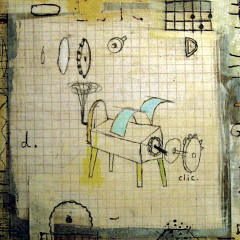
    Clic dans Voir

    «Critique», Réjean Beaucage, Voir, 31 janvier 2008
    jeudi 31 janvier 2008 Presse

    Deuxième disque solo (parmi une myriade de collaborations) pour Bernard Falaise (guitare, basse, platine, etc.), qui prouve avec ce nouvel opus toute l’étendue de son talent de compositeur et de producteur. Le musicien semble saluer ici, consciemment ou non, les multiples ensembles avec lesquels il a travaillé ou continue de le faire. On a des réminiscences du rock bien carré de Diésel, mais aussi du rock progressif à la Miriodor ou des explorations sonores à la Klaxon Gueule. Le son y est hyper-soigné et magnifie le travail des acolytes du compositeur (Derome, Freedman, Walsh, le percussionniste Julien Grégoire, etc.). Et en plus, ça groove! (4/5)

    • 25% de virtuosité instrumentale
    • 20% d’abstraction actualiste
    • 20% d’arrangements superbes
    • 20% de groove
    • 15% de guitar hero

    Deuxième disque solo […] qui prouve avec ce nouvel opus toute l’étendue de son talent de compositeur et de producteur.

    Clic dans The Gazette

    «Review», Juan Rodriguez, The Gazette, 31 janvier 2008
    jeudi 31 janvier 2008 Presse

    Falaise, guitarist of Les Projectionnistes, Miriodor and many sessions, says this album was “written” in the studio featuring six musicians who arrived one by one to improvise alone on music he composed beforehand. “Most of this music would be near impossible to perform live,” he adds. Rarely will you hear such ostensibly experimental music sound as charming as a music box. The creative conceit allowed the musicians (including saxophonist Jean Derome, clarinetist Lori Freedman, trombonist Tom Walsh) to create flights of fancy as concise as they are inspired. Falaise has never sounded so wide-ranging on guitar while winking at Stravinsky, Captain Beefheart, Anthony Braxton, Conlon Nancarrow and Robert Wyatt, among others. Difficult and utterly delightful, revealing new bursts of magic with each listening.

    Difficult and utterly delightful, revealing new bursts of magic with each listening.
  • 28
  • 29
  • 30
  • 31
  • 32
  • 33
  • 34
  • 35
  • 36