Sauter au contenu principal
actuellecd

Blogue

199 résultats
  • 1
  • 2
  • 3
  • 4
  • 5
  • 6
  • 7
  • 8
  • 9
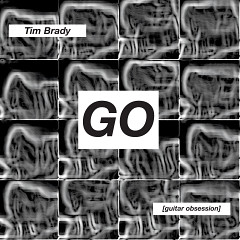
  • GO [Guitar Obsession] dans AllMusic

    «Review», François Couture, AllMusic, 1 décembre 2006
    vendredi 1 décembre 2006 Presse

    After a number of ensemble projects for the Ambiances Magnétiques label, GO (the letters stand for Guitar Obsession) reasserts Tim Brady’s stature as a guitarist. The album is split into two halves. First, we have four pieces by Brady, among which the title track is the highlight. A multitracked piece with criss-crossing loops and a feverish pace, it has all the structural complexity and immediate virtuosity Brady has gotten us used to. Yellow, Add Green is also noteworthy for its unusual devolution from trashy pyrotechnics to soulful blues licks. Frame 22: Switch, for guitar and live electronics is less striking and surely not unique, despite some inspired passages. The second half of the album features guitar pieces written for Brady. Jean-François Laporte’s Le Chant des baleines calls for an electric guitar with metal extension and resonator, played with a bow, and accompanied by an electroacoustic tape part. It is a haunting piece, although it remains somewhat cold. Ironically, Alexandre Burton’s Unplugged is another story. In this piece, Brady plays a de-tuned, unplugged electric guitar linked to a computer running Max/MSP. The human component of the piece draws from all the possibilities left by the unamplified instrument, including its percussive potential, while the computer manipulates and multiplies his efforts, with surprising results. Laurence Crane’s Bobby J is a quiet, reflexive resonant piece, strongly reminiscent of Chas Smith’s works. For anyone who may have missed Tristan Murail’s Vampyr! (already recorded by Brady for 10 Collaborations), here it is again, recorded live, a flashy metalesque piece of serious music. GO is Brady’s first guitar-centric album since 20 Quarter-Inch Jacks and, just for that reason, deserves investigation.

    3 dans The WholeNote

    «Discoveries / Pot Pourri», Ken Waxman, The WholeNote, no 12:4, 1 décembre 2006
    vendredi 1 décembre 2006 Presse

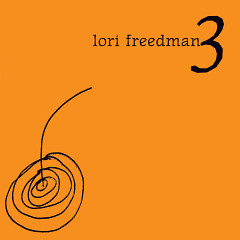
    Recorded over three days, 3 showcases three sets of compositions interpreted by three dynamic trios, whose only constant is Montréal-based bass clarinettist Lori Freedman.

    Sounding arcing timbres, harsh spit tones, rhythmic tongue slaps, rotund chalumeau vibrations and moist glissandi, Freedman moulds her impressive technique to reflect each situation. However, only two parts of this triple header attain the highest score. Most memorable are her five interchanges with the off-kilter folksiness of René Lussier’s guitar and the pulsating crackles of Martin Tétreault’s turntables; as well as her chamber group-like interplay on four tracks with Nicolas Caloia’s thumping bass and Danielle Palardy Roger’s ever-shifting, understated percussion. Sweeping, twangy vibrations and kazoo-like squeaks from respectively, Rainer Wiens’ prepared guitar and Jean Derome’s alto saxophone upset the triangular game plan though. Too many reed buzzes and trills contrapuntally piled on top of one another relieved only by reverberating strums weaken those four selections.

    But two outta three ain’t bad, with the remaining threesomes superlative. Roger’s rattles and inventions plus Caloia’s blunt string-stopping and sawing deftly fuse with Freedman’s vibrated flutter tones to resolve compositions from atonally to connective, horizontal interaction. Most protuberant of the triptych meetings are those with Lussier-Tétreault. With the turntable’s shrill whistles, hissing static and metrical scratches bushing against the guitar’s chromatic snaps and rhythmically complex strums, the mood is definitely POMO. Utilizing this droll interaction, the clarinettist regularly knits the strands together with mellow vibrated pitches which succinctly complete the tripartite musical impulses.

    3

    GO [Guitar Obsession] dans The WholeNote

    «Discoveries / Pot Pourri», Andrew Timar, The WholeNote, no 12:4, 1 décembre 2006
    vendredi 1 décembre 2006 Presse

    Given its full title, Guitar Obsession, leading Montréal-based new music guitarist and composer Tim Brady’s new CD covers much of the musical ground the electric guitar has travelled in the past three generations. In fact much of the zeitgeist of our popular culture has been saturated with this mighty instrument. In guises as different as serving in a Big Band rhythm section, to Stairway to Heaven, to the African Guitar Summit, this essentially quiet acoustic plucked string instrument has become through the mediation of electronic amplification a global musical juggernaut.

    GO is really two CDs in one. While featuring the virtuoso cutting-edge guitar playing of Brady throughout, the first eight tracks are Brady originals, while the balance of compositions on the album are by others. Most notable of the other composers perhaps is the French Tristan Murail, known primarily for his “spectral” works. He is represented here in Brady’s ominous, ‘heavy metal’-sounding rendition of Vampyr! (1986), recorded live in a New York performance.

    For me the outstanding track is GO. Here, Brady shows himself to be a musical quick change artist. In places jazzy, bluesy, and jaggedly new music-y, his guitar and composer chops effortlessly merge in a happy marriage. As a composer, he avoids solo guitar monotony by multi-tracking and thus layering his guitar lines, and varies GO with a rich palette of solo lines, solo with accompaniment and ensemble textures. He pays close attention to structure, variety of densities, tension and release, lyrical melodies as well as bell-like string harmonics.

    If your personal musical obsessions include the extended electric guitar, then Tim Brady’s GO can certainly help scratch that itch.

    If your personal musical obsessions include the extended electric guitar, then Tim Brady’s GO can certainly help scratch that itch.

    Portrait Montréal dans La Folia

    «Never Enough String Quartets!», Grant Chu Covell, La Folia, 1 décembre 2006
    vendredi 1 décembre 2006 Presse

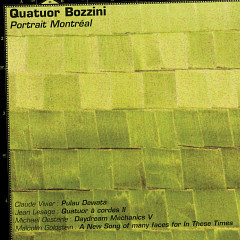
    The Bozzini’s wonderful debut self-release explores four diverse Canadians (Portrait Montréal, followed with Reich’s Different Trains). Vivier ought to be the most familiar. A Stockhausen student and Grisey follower, his murder is deplored by many as a blow to music. Originally scored for percussion, the quirky Pulau Dewata, “infused with the spirit of Bali,” reflects Vivier’s voracious response to influences. Winking at Satie, Lesage’s second in six short movements flirts with expectations and forms. In delicately muted tones, Oesterle’s magical Daydream Mechanics V sequences stanzas the delicate harmonies of which support a gently ornamented perpetual motion. Hushed speech signifies each stanza’s change. Keep an eye out for CQB’s upcoming new Oesterle release. Goldstein asks for structured improvisation and receives a hearty compendium of smartly used avant-garde techniques in return. Montréal is well worth the trip.

    Montréal vaut le détour!

    Aurores boréales dans Blow Up

    «Altrisuoni», Dionisio Capuano, Blow Up, no 103, 1 décembre 2006
    vendredi 1 décembre 2006 Presse

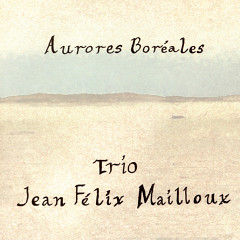
    Il giovane contrabbassista Jean Félix Mailloux, nuovo nome della scena di Montréal Jazz, guida un trio il cui cielo è attraversato dal gusto della canzone come, appunto, da aurore boreali: You si tatua nella memoria; la melodia in Aurores Boréales si è smembrata nell’arrangiamento ma il tema rimane impresso e riporta ad unità tutte le variazioni. La geografia emotiva non guarda necessariamente a nord, la mappa è estesa. C’è l’oriente della memoria (Au bord du Nil), lo swing brillante (Cent titres) e stlizzato, quasi monkiano (Aérospasme). La scrittura di Mailloux, di nitida sintassi, propone all’interprete sia la possibilità di esaltarne la cantabilità, sia di sfrangiarne la struttura con flashes improvvisativi e solistici (esempio: la batteria di Racine-Ménard in Un peu de poudre de pirlimpinpin). Avanti a tutti c’è, però, il pianoforte di Arden Arapyan, sempre cristallino e morbido, da un estremo (i passaggi armolodici e downtown di Densité 23,7) all’altro (lo slavato croonerismo tonale di Les haricots florissants). Potrebbe alla fine risultare una sorta di A.O.J., adult oriented jazz, questo il suo rischio. Si suoni come si suoni, un po’ di sangue lo vogliamo vedere.

    Muzika dans Blow Up

    «Altrisuoni», Dionisio Capuano, Blow Up, no 103, 1 décembre 2006
    vendredi 1 décembre 2006 Presse

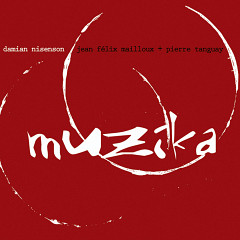
    Non abbiamo ben capito ancora se la ramificazione dell’associazione DAME in sub-etichette specializzate sia un modo per rendere più organico la variegata produzione musicale delle “musiche attuali”, oppure per confondere. Vedremo. Per il momento vi proponiamo qualche vagito dalla neonata Malasartes Musiques, che sembra orientarsi verso un jazz conversazionale. Fondatore di Malasartes è proprio il sassofonista Damian Nisenson, nato argentino, cresciuto europeo e “attualmente” residente a Montréal. Il suo trio stinge nei pastelli d’un Europa tardo autunnale (ossia del Quebec) le melanconie gastriche del Sud-America e mesce un blend tonale e da camera dove ricorrono suggestioni carovaniere con cadenza di tanghi narcolettici (Hanne), o danze del ventre al ralenti (Ojosrojos, Have a Smoke), cimenti etnici (Druse dubke), morbidi abbracci à la rumba (Nikadance). Il timbro del sax è caldo, pulito e confidenzialmente grasso. Giusto ogni tanto s’imbizzarrisce e ne vorremmo di più, d’impennate. Il contrabbasso di Mailloux è quasi un lubrificante. Tanguay ci pare straordinario come sempre: accompagna, sostiene, colora in empatia con finta flemma una muzika che non ci sconvolge ma ci massaggia piacevolmente le reni. Dal vivo, si dice, è altra storia.
  • 1
  • 2
  • 3
  • 4
  • 5
  • 6
  • 7
  • 8
  • 9