Sauter au contenu principal
actuellecd

Blogue

188 résultats
  • 1
  • 2
  • 3
  • 4
  • 5
  • 6
  • 7
  • 8
  • 9
  • La boulezaille dans Ici Montréal

    «Compact!», François Couture, Ici Montréal, 13 novembre 2003
    jeudi 13 novembre 2003 Presse
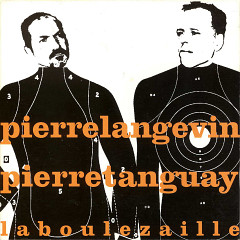
    Pierre Tanguay est un percussionniste d’avant-garde exceptionnel. Mais on oublie parfois qu’il est aussi actif du côté des musiques du monde, en particulier dans le groupe Strada dont fait aussi partie Pierre Langevin. Pour La Boulezaille, les deux compères mettent à profit leur connaissance des traditions du monde pour partir à la recherche d’une nouvelle musique traditionnelle, celle d’un monde fabuleux où l’invention et l’émotion règnent. Clarinettes, flûtes à bec, chalumeau et autres instruments à vent rencontrent un fouillis de percussions de main, ethniques ou inventées, de jouets et d’objets hétéroclites. Le résultat est étonnant de richesse, divertissant et facile d’écoute. 9

    Le résultat est étonnant de richesse, divertissant et facile d’écoute.
    9

    La machine à explorer le tempo dans Le Journal de Montréal

    «Critique», Christophe Rodriguez, Le Journal de Montréal, 8 novembre 2003
    samedi 8 novembre 2003 Presse

    Quand le compositeur Robert. M. Lepage (Urgences, Les Enfants du Refus global, 20h17, rue Darling) fait équipe avec l’ensemble musical La Nef, le résultat ne peut être que déroutant et explosif. Entre le banjo, les percussions, la flûte traversière et le violon, chacun y trouve son compte. Réjouissant.

    Réjouissant.

    Montréal Free dans Coda Magazine

    «Review», Mike Chamberlain, Coda Magazine, 1 novembre 2003
    samedi 1 novembre 2003 Presse

    For the last several years, especially since Mauro Pezzente and Kiva Stimac opened the Casa del Popolo on upper St-Laurent Boulevard, there has been a flourishing improvised music scene in Montréal. I mention the Casa because of the opportunity that a regular performance space has given to the members of Montréal’s improvising community to create a musical scene that brings together audience and artists. Many of those musicians appear on this 4-CD set, which is the first release by No Type. Issued at a bargain price, it’s a generous introduction to the scene.

    The four groups are respectively, Po (John Heward, Sam Shalabi, Alexandre St-Onge, Rainer Wiens), ’Gypt Gore (Philémon, Shalabi, Thierry Amar, Andrew Dickson), the trio of Chris Burns, John Heward, and Nicolas Caloia, and Balai Mécanique (Amar, Will Glass, Jacques Gravel, Jesse Levine, Philémon, Shalabi). The disc captures the musicians literally in their own element. Po were recorded at Hotel2Tango, the forerunner (in a sense) of the Casa, ’Gypt Gore at saxophonist Philémon’s home and Hotel2Tango, and Balai Mecanique at La Sala Rossa, which is the sister concert space of the Casa. Only the Burns/Heward/Caloia trio was recorded in a studio.

    Derek Bailey is the spiritual godiather of the four groups here. For one, guitarist Shalabi, who is the heart and soul of this quasi-collecuve, has described Bailey as “The Beatles” of improvised music. For another, each group includes at least one guitar player. Finally, all the groups, as far as I have seen them, operate as total improvisers.

    As might be expected, this is all a rather hit-or-miss affair. There are moments when the musicians build up a fury of sound and others when they appear to be searching for the elusive element that will bring everything together. Of course, it’s in the searching, or rather, the desire to search, that one finds the joy.

    Issued at a bargain price, it’s a generous introduction to the scene.

    La boulezaille dans AllMusic

    «Review», François Couture, AllMusic, 1 novembre 2003
    samedi 1 novembre 2003 Presse

    Pierre Langevin and Pierre Tanguay are one half of the Mediterranean traditional music ensemble Strada. Tanguay is also the busiest avant-garde jazz drummer/experimental percussionist in Montréal. For La Boulezaille, they bring to the table their inventory of traditional instruments (wind instruments like a duduk, bagpipes, pipe, recorders, etc. for Langevin; all kinds of hand-held percussion and toy instruments for Tanguay), a bunch of found and invented instruments, and an urge to improvise. The resulting music is fanciful, cheerful, witty and strange, driven by the pleasure to discover new sounds and literally play with them. The duo taps into traditional music currents from all over the world, integrating culture upon culture — or more exactly ignoring them — to come up with a form of music that sounds traditional in a multi-dimensional way but is in fact traditional only to Langevin and Tanguay. Each piece is full of surprises, new odd instruments joining in all the time, but this project is not about novelty. These pieces have depth, sensitivity, and a down-to-earth fairy tale vibe — it’s not an oxymoron since the music evokes both faraway lands and the local junkyard. One thinks of Mike Adcock and Clive Bell’s beautiful duo album Sleep It Off. La Boulezaille has that kind of indescribable magic, magic that makes you feel close to the true essence of music: emotion in invention. And it reminds us that improvisation and resourcefulness once were at the core of all traditional folk music. Recommended.

    … reminds us that improvisation and resourcefulness once were at the core of all traditional folk music. Recommended.

    La machine à explorer le tempo dans AllMusic

    «Review», François Couture, AllMusic, 1 novembre 2003
    samedi 1 novembre 2003 Presse

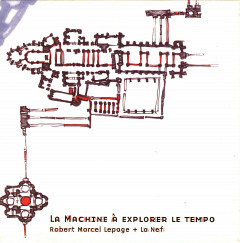
    Robert Marcel Lepage has not released a quirky, playful album like this since Les clarinettes ont-elles un escalier de secours? back in 1998. In fact, La machine à explorer le tempo (a play on words on H.G. Wells’ novel, roughly translating to “The Tempo Machine”) arches back to the zany side of the Ambiances Magnétiques collective and deserves a place alongside Les Granules’ albums, Jean Derome’s Je me souviens, and Martin Tétreault’s Des pas et des mois. On this album Lepage leaves his clarinet untouched. Instead he conducts La Nef, an early period music ensemble with ties to the contemporary and new music scene. The 18 tracks are grouped into three suites, each illustrating a different fanciful time paradox. The instrumentation includes strings, flutes, trumpet, trombone, sackbut, banjo (Yanik Cloutier, impressive), live sampling, and percussion (Ganesh Anandan and Patrick Graham, who also play together under the name Ga Pa). Lepage leads them through a number of styles, ranging from Ballroom dance to Western ballad, Baroque, Polka and Rockabilly. His knack for graceful melodies — so often featured in his film soundtracks — pops in here and there (La villa des loups for example), but for the most part the music focuses on odd stylistic combinations, festive rhythms, and occasionally cartoonish playing. The album was recorded live and includes spoken presentations by Lepage. After a couple of listens they get in the way (coming from a reviewer who understands French, it will be worse for listeners who don’t), but you can always program them out of the track list. And in any case, La machine à explorer le tempo remains an unusually entertaining album.

    … an unusually entertaining album.

    Sang 9 dans AllMusic

    «Review», François Couture, AllMusic, 1 novembre 2003
    samedi 1 novembre 2003 Presse

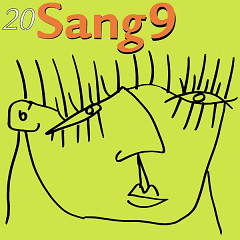
    This compilation album has a symbolic meaning. It was put together by DAME, the company running the Montréal “musique actuelle” imprint Ambiances Magnétiques. The name is usually associated to a generation of artists who by 2003 had around 25-30 years of musical activity behind them. Those numbers come pretty close to the average age of the artists on Sang9. Coming from all around the province of Quebec, but mostly from Montréal, these youngsters, “fresh blood” following the translation of the title, cover every aspect of avant-garde music, from free jazz to deconstructed rock, computer experiments, noise, sound poetry, and post-psychedelic freak-outs. The range of styles and talents is very impressive, but what strikes is the dominating presence of acoustic instruments over electronics. Highlights are numerous, so are interrogations triggered by the listening experience (what is this “string” Francis Arsenault plays in Face dans l’dash’s noise fest Bush on the Highway?). Personal favorites include Concorde Crash’s bastardized take on progressive folk, Pascal Desjardins and Frédéric Léonard’s Lavabo, Cléo Palacio-Quintin’s “hyper-flute” (a flute plugged into a computer, much like Carlos Bechegas’ MIDI flute set-up), Jocelyn “Doctor” Tellier’s sound collage Saturation du Marché (reminiscent of Ernesto Diaz-Infante’s home recordings), James Schidlowsky’s virtuoso prepared guitar, and L’Hexacorde’s personal take on new ensemble music, with early Univers Zero overtones. Four or five tracks out of 20 lack originality or taste, which is a respectable average for such a compilation album. Now let’s see which artists will get a full-length release out on Ambiances Magnétiques.
  • 1
  • 2
  • 3
  • 4
  • 5
  • 6
  • 7
  • 8
  • 9