Sauter au contenu principal
actuellecd

Blogue

188 résultats
  • 8
  • 9
  • 10
  • 11
  • 12
  • 13
  • 14
  • 15
  • 16
  • Unison Rituals dans Bad Alchemy

    «Kritik», Bad Alchemy, no 42, 1 septembre 2003
    lundi 1 septembre 2003 Presse

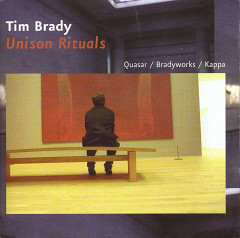
    Tim Brady, der, nach einer Reihe von JTR-Releases, mit Unison Rituals (AM 110) nach 20 Quarter Inch Jacks (AM 107, 2002) seine zweite Veröffentlichung auf der Homebase der Musique Actuelle vorlegt, zeigt fur einen Künstler aus Montréal gleich mehrere Abweichungen vom Erwarteten. Nicht nur zeigt sein Kompass nicht nach Paris sondern New York, er stellt hier auch, obwohl selbst ein renommierter Gitarrist, bevoeugt das Saxophon in den Mittelpunkt einer Reihe solider kammermusikalischer Kompositionen. ‘Quasar’ ist der komplex arrangierte Reeds-only Nachfolger seines ‘Quartet 1998’, Sound Off eine per Multitracking durch das 16-köpfige Big Band Kappa realisierte Studioversion eines Monsterwerks für 12 Trompeten, 12 Posaunen, 15 Saxophone und 3 Basstrommeln. Dazwischen erklingen, interpretiert vom Bradyworks Ensemble, Double Helix, ein Quarten fur Soprano-, Alto- & Baritonesaxophone, Piano, Cello und Percussion, Two Chords Less Than a Blues für Tenorsax, Piano und Percussion und Escapement für “Scordatura”-Gitarre, Saxophon, Cello und Percussion. Brady steht mit seinen Arbeiten für den Vollzug eines Crossovers von jazz-rockigen Avant-Sounds in die notierte >New Music< und damit für den Trend zur subventions- und adult-orientierten Verbürgerlichung der einstigen >Lachenden Außenseiter<. Immerhin spuckt bei allem Feinsinn der Sound Off-Brass-Drachen noch soviel Feuer, dass man an ähnlich donnergÖttliche Ansätze von Branca oder an Björkenheims „Apocalypso” erinnert wird.

    Unison Rituals dans SOCAN — Paroles & Musique

    «Critique», SOCAN — Paroles & Musique, no 10:3, 1 septembre 2003
    lundi 1 septembre 2003 Presse

    Guitariste et compositeur singulier, Tim Brady en est à sa deuxième apparition sur cette étiquette. Dès la pièce titre Unison Rituals, sa musique s’impose à nous avec puissance. Faisant appel au quatuor de saxophones Quasar, Brady joue sur les timbres pour créer un univers sonore intrigant qui prend constamment l’auditeur en alerte. L’album comprend également trois interprétations de son Bradyworks et Sound Off, œuvre pour cent instruments à vents et huit grosses caisses, interprétée en multipistes par Kappa. Unison Rituals, un album saisissant.

    … sa musique s’impose à nous avec puissance.

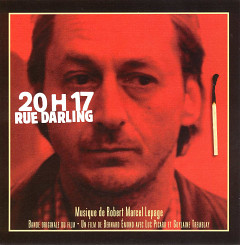
    20h17 rue Darling dans SOCAN — Paroles & Musique

    «Critique», SOCAN — Paroles & Musique, no 10:3, 1 septembre 2003
    lundi 1 septembre 2003 Presse

    Compositeur prolifique de la scène contemporaine montréalaise, Robert Marcel Lepage est un touche à tout qui compose pour le cinéma, le théâtre, la télévision, etc. Dans 20h17 rue Darling, il a rendu avec justesse la lourdeur et le désespoir qui habitent le personnage principal du film. Partageant l’espace musical avec des extraits de l’œuvre de Ludwig Van Beethoven, les compositions de Lepage nous attirent inexorablement vers le bout de la nuit, le bout de la tristesse. La beauté se cache parfois dans l’ombre. Robert Marcel Lepage sait nous la faire découvrir avec brio.

    … les compositions de Lepage nous attirent inexorablement vers le bout de la nuit, le bout de la tristesse.

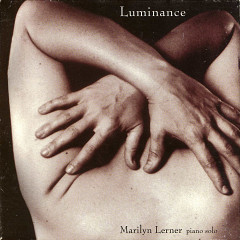
    Luminance dans The Squid’s Ear

    «Heard In», Brian Olewnick, The Squid’s Ear, 1 septembre 2003
    lundi 1 septembre 2003 Presse

    I was previously unfamiliar with Lerner’s work though from her discography I had the impression that she often works in more mainstream lines and has collaborated with several Cuban musicians. Noting that this disc was on the Ambiances Magnétiques label, however, I expected some more adventurous fare and that is indeed the case (though arguably a little conservative by the label’s standards). Unfortunately, Lerner employs a somewhat scattershot approach in these mostly brief pieces, venturing down this or that avant-garde by-way, remaining in one place seldom enough for the listener to derive an accurate or deep impression of “Lerner“, as opposed to just another exploratory pianist. She delves into the by now routine panoply of effects including string strumming, box pounding and piano preparing and, on Bordeaux, makes a regrettable decision to bring a Casio keyboard into play. She’s at her best on the lengthier numbers like Deluge, Wolfen or the impressively rhapsodic Black Tulips, where an absorbingly expansive character can be heard, somewhere to the right of Cecil Taylor and the left of Paul Bley. In fact, although it may be too easy a comparison, I couldn’t help but think of another Marilyn, Crispell, much of the time. Lerner tends toward a similar dark rumble and tumble that sometimes gives way to bombast but often enough draws in the reins and conjures up some nicely sensitive and thoughtful moments. Whereas in years past, one looked for musicians to shed the unwanted baggage of tradition, the current “academy” of the avant-garde, largely threadbare after the last several decades, often has one yearning to hear players simply play and not worry so much about being in the vanguard. Luminance gives me little doubt that Marilyn Lerner is a fine pianist capable of creating some strong music. If only she wouldn’t try so hard.

    Soshin dans The Squid’s Ear

    «Heard In», Phil Zampino, The Squid’s Ear, 1 septembre 2003
    lundi 1 septembre 2003 Presse

    Despite the trio listed on this album, this disc in fact pivots around relative newcomer Antoine Berthiaume, presenting solo work and duos with the great guitar improvisers Fred Frith and Derek Bailey. Berthiaume is a Montréal artist working with other actuelle musicians such as as Michel Donato, Pierre Tanguay, Michel F Côté, Philippe Lauzier and Tim Brady. He first met Derek Bailey in 2001 while traveling in London, and recorded the duos on this album on his second trip there, also appearing solo at an Instant Music Meeting show. Berthiaume can also be heard on Bailey’s Incus release Visitors Book. The duos with Frith were recorded in Montréal, and the majority of the release is three pieces with Frith. A solo piece and two duos with Bailey are also presented. On the whole the album is an excellent display of guitar improvisation. Starting with the delicate solo piece Soshin, composed with Denis Gougeon, Berthiaume scrapes, slides and slips in with beautiful and drifting guitar work, using every inch of his instrument to create evocative sound. Berthiaume has a great sense of space and allows the piece to evolve slowly, bringing in a deep droning chord and percussive scrape over which he improvises in fragments as the drone eventually overtakes the piece. It is a well balanced and beautifully structured composition. The three pieces with Frith are more playful improvisations, atmospheric and introspective while still being active. Both players seem remarkably compatible in their conception of improvisation, and the unhurried approach lends itself both to a gorgeous quality of sound and to many interesting ideas that sneak out of each guitar. Morning Froth introduces a beautiful Frith melodic riff that reappears and bends itself away repeatedly, with a bottleneck twang feeling. It is a refreshing piece of music, quirky, lovely and engaging. The magnificent Indicateur d’assiette is another thing altogether, clocking in at 18:40, a strange and gigantic improvisation that has both players utilizing a variety of techniques to create an often frightening but always fascinating piece of music. Their last piece, Wolf’s Wood is an uneasy work of guitar scrapes, rumbles and unusual sounds, settling into a meandering acoustic improv with a rubbing guitar sound much like a voice whimpering in the midst of these unusual woods. The pieces with Bailey are more abstract affairs. Afternoon Tea is a fragmentary work with Bailey on acoustic guitar while Berthiaume provides a rich chordal backdrop, a meandering but interesting punctuation to the cd. Aquatheque ends the cd with an odd scraping and scrabbling piece that settles into a sort of daydreaming improvisation. These pieces provide a great complement to the album, a balanced release of modern improvisational ideas.

    Berthiaume scrapes, slides and slips in with beautiful and drifting guitar work, using every inch of his instrument to create evocative sound.

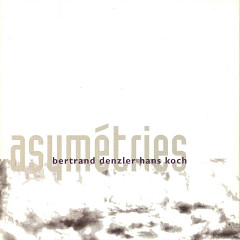
    Asymétries dans The Wire

    «Soundcheck Review», Julian Cowley, The Wire, no 235, 1 septembre 2003
    lundi 1 septembre 2003 Presse

    Hans Koch is the better known of these two Swiss reed players through his longstanding trio with drummer Fredy Studer and cellist Martin Schütz, and other projects, including Duets, Dithyrambisch (FMP) recorded with Evan Parker and Louis Sclavis. On that CD, Koch plays bass clarinet and soprano sax, as he does here with Denzler on tenor. Asymétries features four duets that probe the reeds’ margins in a confinding, often whispered exchange of secrets of embouchure, breath and attack. Long wheezing exhalations, rapid juddering, birdlike trills and chirrups, gaseous pops, purring and rasps have displaced the sounds of the centre ground. Dialogue occurs nonetheless as statements interlock and overlap, cryptic yet clearly and tightly shaped.

    … four duets that probe the reeds’ margins in a confinding, often whispered exchange of secrets of embouchure, breath and attack.
  • 8
  • 9
  • 10
  • 11
  • 12
  • 13
  • 14
  • 15
  • 16