Sauter au contenu principal
actuellecd

Blogue

179 résultats
  • 17
  • 18
  • 19
  • 20
  • 21
  • 22
  • 23
  • 24
  • 25
  • Chemin de fer dans Convergence

    «Critique», Jean-François Perreault, Convergence, no 2:6, 15 mai 2002
    mercredi 15 mai 2002 Presse

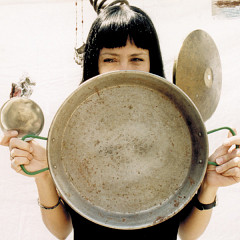
    Magali Babin, c’est une «patenteuse», une vraie. Plus jeune, dans la cuisine de ses parents, elle ne devait pas être un cadeau, probablement prête à taper sur tout ce qui fait du bruit. Plusieurs années plus tard, elle ne démord pas et fait de la musique avec tout ce qui lui tombe sous la main. Dans Chemin de fer, elle utilise une multitude d’objets métalliques fabriqués, recyclés, réinventés; la très belle pochette de son disque nous l’indique clairement, d’ailleurs. Fait intéressant: sept des neuf pièces sont improvisées, proposant des œuvres très personnelles et sensibles. Ça démarre en grande avec Triturations, une paisible pièce qui semble nous glisser dans un costume de scaphandrier, mille pieds sous l’océan. Dire qu’en réalité, la musicienne ne fait que frotter des casseroles et autres trouvailles à côté d’un micro! Le tout est réalisé avec la joyeuse complicité de Mario Gauthier et ca paraît.

    … des œuvres très personnelles et sensibles.

    Chemin de fer, Magali Babin dans Vital

    «Review», Brian Lavelle, Vital, no 323, 10 mai 2002
    vendredi 10 mai 2002 Presse

    Nipping at the heels of the gripping and fugue-state-inducing eclecticism of the first No Type compilation, The Freest of Radicals, comes this incredible debut CD release from Montréal sound artist Magali Babin. Born in 1967, Babin combines linear yet sculptural metal-based sound pieces with a true flair for dynamism, abstraction and otherworldliness. Although Chemin de fer is the first appearance of material of this nature by her, she has apparently worked with soundscapes featuring the recording of metals for more than a decade now and, possibly as a result of this time-served honing of her skills, her utter control of the proceedings here is totally compelling. The constructions on this album were originally recorded for a radio show in Canada but shelved prematurely and, it would seem perhaps, unfairly. I have to admit I expected some element of coldness and isolation from this disc; but warmth, confusion, playfulness and apprehension all combine in Chemin de fer’s 50 minute journey and prove me wrong. At times, as on the opening Triturations and on E, the musical palette is of some vast, partly steam-driven and partly clockwork organism, respiring and shuffling at the limits of exhaustion; elsewhere, the album title is interpreted near-literally, as with the seemingly endless electrified rolling stock effect of L’entonnoir. These are impressive, intimate soundworks that cross the boundaries of acousmatic music, free improvisation, the pure sound of the gamelan, and early electronic composition methods, and yet retain a recognisable fingerprint that appears to be Babin’s alone. Let’s hope another decade is not allowed to elapse without more from this unique talent.

    … a true flair for dynamism, abstraction and otherworldliness… her utter control of the proceedings here is totally compelling.

    Chemin de fer, Magali Babin dans lowercasesound

    «Commentary», James Coleman, lowercasesound, 10 mai 2002
    vendredi 10 mai 2002 Presse

    From: “JC JC” <james_39@h…>
    Date: Fri May 10, 2002 4:12 pm
    Subject: Magali Babin

    I first became familiar with Magali Babin’s work when she performed in Baltimore, USA’s High Zero Festival of Experimental Improvised Music in 2000, and was immediately attracted to her work. Magali is very active in Montréal’s vibrant experimental music and sound art scene, and primarily works with amplified metal/objects and transducers.

    Acoustic/amplified/contact mic’d metal materials and metallic found objects have had an interesting history in experimental music/sound art/electroacoustic music, ranging from, for example, Harry Bertoia’s “Sonambient” sound sculpture recordings, Xenakis’ “Orient-Occident,” and Einstürzende Neubauten, among numerous others.

    So i was looking forward to her new CD, Chemin de fer, on No Type. I got it a couple of days ago, and it’s been living in my CD player since then. In the face of the aforementioned history, I have to say that Magali’s take, approach, and resultant sonorities and sounds from her chosen sounds and objects are utterly unique and new. She manages to disclose small, mostly quiet, magical, mysterious little universes of sound. Another thing that emerges from listening to this work after enjoying the beauty of the pieces is how literate and articulate Magali is with her chosen materials and tools — there is a very broad language of sound in these recordings that will reward careful listeners. Added bonuses include the piece Pluie de homards which was mixed with the piece “Rain” from the CD “Warm Coursing Blood” by Ian Nagoski, one of the more interesting people working in drone these days, and beautiful packaging. I have a strong feeling that this disc is going to be one of the few releases each year that really speaks to me, and I’m already hooked.

    Another thing that emerges from listening to this work after enjoying the beauty of the pieces is how literate and articulate Magali is with her chosen materials and tools…

    Who’s Playing, Lee Pui Ming dans Voir

    «Disques», Réjean Beaucage, Voir, no 16:7, 2 mai 2002
    jeudi 2 mai 2002 Presse

    Qu’elle en joue avec le clavier, en triturant directement les cordes ou en frappant dessus comme sur un tambour, Lee Pui Ming ne se sert jamais du piano d’une façon que l’on puisse qualifier de standard. Rompue aux techniques du piano, LPM joue avec une grande intensité, et son imagination ne se limite en effet que rarement à n’utiliser que le clavier de l’instrument. Le disque est lancé ce 3 mai au Centre culturel Calixa-Lavallée dans le cadre de la série de concerts de musique improvisée Canevas (c’est gratuit).

    Rompue aux techniques du piano, Lee Pui Ming joue avec une grande intensité…

    Un moment de bonheur dans The Wire

    «Soundcheck», Bill Shoemaker, The Wire, no 219, 1 mai 2002
    mercredi 1 mai 2002 Presse

    The rap on French saxophonist/clarinettist Louis Sclavis is that his polished technique hampers his expressive range. However, based on this collaboration with Québécois saxophonist/flutist Jean Derome, that opinion proves to be sheer folly. Sclavis is much more sombre than Derome, who can be particularly zany when paired with drummer Pierre Tanguay. It is fitting that Tanguay and Sclavis’s bassist, Bruno Chevillon, extends the contrast between the coleaders in rounding out the quartet for this 2001 FIMAV performance. Throughout the sets expanses of improvised space, Sclavis is as visceral as Derome. The emphasis on extended improvisation gives the quartet few opportunities to demonstrate their finesse with shorter jazz-flavoured vehicles. Whether it is the bustling Tu dis tout de travers, which suggests a gritty Ornette-Dolphy front line, or the floating Jonas, featuring ethereal bass flute and bass clarinet, a more tightly scripted format draws upon their concision as much as their creativity.

    … improvisation gives the quartet few opportunities to demonstrate their finesse with shorter jazz-flavoured vehicles.

    Chemin de fer dans Incursion Music Review

    «Review», Richard di Santo, Incursion Music Review, 29 avril 2002
    lundi 29 avril 2002 Presse

    For the recordings of Chemin de fer, Montréal based sound explorer Magali Babin found inspiration in metallic objects of all shapes and sizes. Through improvisation, she brings out their sonorous qualities and created a series of dynamic sound sculptures; “sculpture” is a good term for this music (or, at least it’s a convenient term) because of its concrete qualities and strong textures. From deep gongs to light rustling, strange scrapings and various clamourous sounds, Babin keeps things dynamic and interesting, pursuing new ideas and sounds from different objects in each track. Very little, if any, digital processing was used in the making of these recordings. An intriguing buzzing drone pulses through the piece Monsieur et madame Watt. A beautifully rich scraping texture can be found on L’entonnoir, a relatively short piece with such an intense character. This is followed by short “chirps” dominating the following track. The diversity of sounds and intriguing arrangements notwithstanding, the listener is able to understand from the first couple of tracks the general tone and approach to the work as a whole. This is not to say that the music is predictable; but one picks up its “language” quickly. As a result, I found myself more interested in the first twenty or so minutes of listening, finding my curiosity and attention gradually waning after a while. Still, it’s an intriguing release, full of unusual tones, resonances and strikes; in short, a compelling introduction to Babin’s unique world of sound.

    From deep gongs to light rustling, strange scrapings and various clamourous sounds, Babin keeps things dynamic and interesting…
  • 17
  • 18
  • 19
  • 20
  • 21
  • 22
  • 23
  • 24
  • 25