Sauter au contenu principal
actuellecd

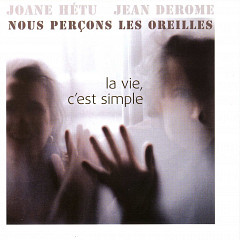
Nous perçons les oreilles

31 résultats
  • 1
  • 2
  • 3
  • 4
  • 5
  • 6
  • 8 mars 2005: Tournée italienne pour Nous perçons les oreilles

    mardi 15 février 2005 En concert

    Le duo Nous perçons les oreilles (Jean Derome et Joane Hétu) transportera toute sa fougue, son énergie et son irrévérence en Italie du 1 au 8 mars 2005. Le duo donnera des concerts et des ateliers en compagnie de Gianni Lenoci dans plusieurs villes italiennes. Le duo sera en concert à la La Taverna del Maltese de Bari le 1 mars, à la Chiesa Di San Pietro de Monopoly les 2 et 3 mars, au Rialto de Rome le 4 mars, à l’Areasismica de Meldona le 5 mars et finalement au Teatro Fondamenta Nuove de Venise le 8 mars.

    Jean Derome, Joane Hétu, Nous perçons les oreilles dans One Final Note

    «Edgefest 2004, Ann Arbor MI, 13-16 October 2004», David Dupont, One Final Note, 1 novembre 2004
    lundi 1 novembre 2004 Presse

    Edgefest in Ann Arbor, Michigan is an avant-garde jazz Brigadoon. Walking into the Kerrytown Concert House, the same folks are settling into the same seats as they were just over a year ago, and as they have been in the six years I’ve been making the trek up here. And even the leader of the band ready to take the stage was familiar. Guitarist James Emery had been here last year with the String Trio of New York. In fact, Edgehead-in-chief David Lynch likes to present musicians in different formats. This year he presented Emery leading his own quartet featuring ace reedman Marty Ehrlich with the rhythm team of bassist Drew Gress and percussionist Kevin Norton.[…]

    But Thursday I’m ready to make the short six-block walk to the Firefly Club, a cozy nightspot in the heart of Ann Arbor’s downtown. Opening the two-band show was Nous Percons les Oreillles (We Pierce the Ears) featuring Jean Derome and Joane Hétu. Derome’s appearance is an example of how festival producer David Lynch likes to work. In 2002, Derome was at the festival with two different groups. In 2004, he returned with a third aggregation, a duo with his wife. Together they delivered their own brand of urban bohemian folk music. Their sounds seemed rooted in the urbane detritus of a cosmopolitan household. They both sing—she in a powerful, malleable voice and he in a rich, but unaffected voice. They both play saxophone, though on this night the saxophone playing seemed more of an emulsifier than the key ingredient.

    Derome adds a toy chest full of little instruments—toys, whistles, animal calls, which the duo brought together in odd, whimsical combinations. Sometimes their singing seemed to be emanating from a church. Or on one number, Hétu produced gagging sounds as if she had something lodged in her throat. It had the audience on edge, caught in that odd place wondering whether this was to be taken seriously. I smiled, and breathed a sigh of relief when Hétu’s voice suddenly rang free. Following the piece, Derome explained the text. Sure enough, it was about having something caught in the throat. Yet this was more than the reprise of an unfortunate scene one might witness at the dinner table. Even at her most strangled gagging, the overtones in Hétu’s voice resonated.

    “We’re from Montréal”, Derome said. “This is the kind of music we do.” Not everywhere, he added dryly. “So you can visit.” At one point between numbers, the bar’s ice machine clattered—an aberration, the Firefly is very solicitous of performers. “The ice is nice”, Hétu commented, thinking I suspect about how it could be integrated into the music. The duo closed its set with a game of avant-garde patty-cake, beating hands together while singing a simple four-bar, nursery-song like phrase. That little melodic nugget stayed lodged in my ear during the break between shows.[…]

    So how did Edgefest 2004 stack up? The festival is always a high point of my year, and this year was no exception. As usual the variety of acts that fell under the cover of the festival’s large umbrella was impressive. I suspect the strongest images I’ll retain from this festival will be Rashied Ali’s torrential drumming, the fine balance of James Emery’s quartet, the out-lyricism of Joe McPhee, and those few fleeting moments of Jenny Scheinman’s Salagaster. Those are the kind of memories that will keep me in anticipation of next year’s festival.

    Jean Derome, Joane Hétu, Nous perçons les oreilles dans The Ann Arbor News

    «Annual Edgefest Kicks into high Sonic Gear», Will Stewart, The Ann Arbor News, 15 octobre 2004
    vendredi 15 octobre 2004 Presse

    Avantjazz’s outer edge isn’t only razor sharp; it’s also broad enough to accommodate a range of artists who at once push the envelope of improvisatory music to glorious effect, but also, at times, test the patience of the casual listener’s attention span.[…]

    And the fact that some of these performers are pretty far out there only adds merit to their accomplishments. That a vocalist squealing and grunting in French and slapping her torso in time to her accompanist’s caterwauls on various whistles can come across not only as listenable, but enjoyable and oddly soothing, is a tribute not only to the artists’ abilities but to the patience of an open-eared audience.[…]

    Derome and Hétu performed for an hour, their unique sound occasionally living up to their performance moniker: “We Pierce the Ears.” Oddly, for as challenging as their sound was — and “challenging” isn’t a pejorative when it comes to Edgefest — the duo frequently found harmonic plateaus that, while frequently dissonant, had an unmistakable beauty.[…]

    … “challenging” isn’t a pejorative when it comes to Edgefest — the duo frequently found harmonic plateaus that, while frequently dissonant, had an unmistakable beauty.

    Nous perçons les oreilles dans Musicworks

    «Review», Éric Lewis, Musicworks, no 87, 1 octobre 2003
    mercredi 1 octobre 2003 Presse

    The highly empathetic duo performance of Joane Hétu and Jean Derome focused instead on the word-sound and the instrument noisemaker continuum. Jean Derome, equipped with a small table full of noisemakers—from children’s toys through to small bells and whistles—blurred the distinction between a toy and an instrument. In a silent concert hall, is a Japanese fan rubbed against a microphone now a proper instrument? Indeed,these smail instruments were integrated into an overall sonic structune with all the hallmarks of a high-art musical work, complete with unison melody playing and clear beginnings, middles and ends. Jean’s flute and sax playing was rich and lyrical, with no hint that we were expected to take his sound creations in toto as toy-like, as incidental or children’s music Joane’s high overtones on the sax melded into her vocalizations, which themselves mouved between preconceived text and pure vocal improvisation, often bereft of even phonetic reference. Do these sounds take on meaning, Iike words, when found both alongside words and as parts of a structural whole redolent with meaning? Would one consider many of these sounds to be inviting of aesthetic evaluation if heard in a different context?

    Nous perçons les oreilles dans The Squid’s Ear

    «Big Sound in a Small City», Kurt Gottschalk, The Squid’s Ear, no 13, 1 septembre 2003
    lundi 1 septembre 2003 Presse

    […]Hétu on alto and vocals, Derome on alto, flute, bass flute and an array of sound-making devices, both singing and vocalizing, their songs (sung in French) were miniature portraits of domesticity and getting along, imparting a feeling of cooking dinner while the news plays in the next room. Intimate enough as to simply breathe into the microphone and through the saxophone. And jazz being the macho business that it is, you have to appreciate a guy who’ll go onstage and play patty-cake with his wife.[…]

    … you have to appreciate a guy who’ll go onstage and play patty-cake with his wife.
  • 1
  • 2
  • 3
  • 4
  • 5
  • 6