Sauter au contenu principal
actuellecd
  • This website is also available in English.

Aussi dans le blogue

12 résultats
  • 1
  • 2
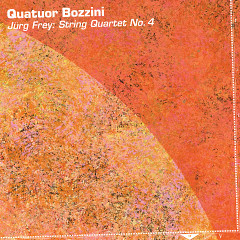
  • Jürg Frey: String Quartet No. 4 dans Bandcamp Daily

    «Review», Peter Margasak, Bandcamp Daily, 30 janvier 2024
    mercredi 28 février 2024 Presse

    The elevation of veteran Swiss composer Jürg Frey, a key figure of the post-Cagean Wandelweiser Collective, came after Montréal’s Quatuor Bozzini premiered Frey’s second string quartet back in 2001. In the decades since, they’ve continued to work together — most recently on last year’s sublime Continuité, fragilité, résonance, where they formed a gauzy, heavenly alliance with the reed ensemble Konus Quartett. The arrival of Frey’s fourth string quartet is grounds for celebration. The intensely intimate, gently voiced epic doesn’t necessarily unveil new procedures or ideas — the molasses-slow pace and harmonic grandeur of the early works felt radical at the time — but it does feel like a stunning refinement and a generous expansion of those sounds. Most of the five-movement work is hushed, the strings producing a faint glow of sound that radiates a gauzy rainbow of color. Naturally, in music designed to be relatively static and still, any change or shift carries weight. When the quartet raises the intensity, as in the opening passages of the third movement, the sound hits hard, like a sudden explosion cracking open new possibilities—including an arrestingly beautiful solo violin line drifting through the sorrowful tumble of stately chords. But when nothing is happening, that emptiness is exquisite, carving out a space for contemplation that creates the most ravishing place on earth during its placid unfolding.

    … carving out a space for contemplation that creates the most ravishing place on earth during its placid unfolding.

    Jürg Frey: String Quartet No. 4 dans Morning Star

    «Review», Ben Lunn, Morning Star, 19 février 2024
    jeudi 22 février 2024 Presse

    In 2023, Jürg Frey celebrated his 70th Birthday, and the modestly captivating Swiss composer had numerous celebrations across the globe. This new album released in Winter 2023, is a treasure which demonstrates the power a long-term relationship can have between a composer and an ensemble.

    Frey’s quartet is the third written especially for the Bozzini Quartet over the span of 20 years. In the five movements of the work time feels frozen, to the point that the almost grandiose final movement flies by, despite being three times longer than the preceding movements.

    Frey’s music can be naively described as simplistic as notes hang lost in space and time — but the music it is not “easy music.” The great contradiction in Frey’s work — complex simplicity — is what draws the ear in, and Bozzini’s ability to play this with passion and skill that it feels like they inhale and exhale Frey’s delicate tones.

    The great contradiction in Frey’s work — complex simplicity — is what draws the ear in, and Bozzini’s ability to play this with passion and skill that it feels like they inhale and exhale Frey’s delicate tones.
    ★★★★★

    Jürg Frey: String Quartet No. 4 dans Free Jazz Blog

    «Review», Eyal Hareuveni, Free Jazz Blog, 17 février 2024
    jeudi 22 février 2024 Presse

    String Quartet No. 4 is the third string quartet Frey composed for Canadian, Montréal-based contemporary ensemble Quatuor Bozzini (first violinist Alissa Cheung, second violinist Clemens Merkel, violist Stéphanie Bozzini and cellist Isabelle Bozzini) over twent years of collaboration (the first one, String Quartets, was recorded in 2004, Edition Wandelweiser Records, 2006). This 65-minute, five-movement composition was written between 2018 and 2020 (and completed before Frey composed Les signes passagers). It was first premiered — virtually — at the MaerzMusikl Festival in Berlin in March 2021 and performed live for the first time at the Only Connect Festival in Oslo in April 2022 and refined during the recording with Quatuor Bozzini in Montréal in May 2023.

    Frey describes this composition as “slow, sometimes static, often delicately shifting between standstill and movement. And yet, after more than an hour, this music has arrived at another place. Standstill, little happens, — it is this atmosphere from which my music emerges and to which it always returns. Sometimes it just stays there. This is my world”.

    String Quartet No. 4 is a calm and beautiful composition that radiates a rare sense of poetic weightlessness in search of silence in sound, with a profound emotional effect. It is developed slowly, with minimalist and slow shifts and almost transparent dissonances, always hinting about its deeper, secret wonders, evoking a musical garden that asks you to appreciate its delicate, changing colors as they blossom in their own accord. And, like all Frey’s compositions, it is performed masterfully by Quatuor Bozzini with precise sensitivity for color, sound and silence in Frey’s aesthetics.

    … performed masterfully by Quatuor Bozzini with precise sensitivity for color, sound and silence in Frey’s aesthetics.

    Jürg Frey: String Quartet No. 4 dans The Quietus

    «Review», Vanessa Ague, The Quietus, 23 janvier 2024
    vendredi 26 janvier 2024 Presse

    In Jürg Frey’s world, stillness is motion. Throughout the Swiss composer’s String Quartet No. 4, Quatuor Bozzini pull their bows so gradually that it feels as if each note is stopped in time. Yet they aren’t: With each reiteration, these tones gradually expand, taking up every inch of the quartet’s wooden instruments. Each slight change feels faint, but they accumulate; it’s like the shifting of a glacier over thousands of years. This is the world Frey has come to embody across his career, and his fourth string quartet continues to explore the engulfing atmospheres he crafts out of thin air.

    Quatuor Bozzini, a Montréal-based string quartet that comprises violinists Alissa Cheung and Clemens Merkel, violist Stéphanie Bozzini, and cellist Isabelle Bozzini, are expert interpreters of Frey’s conscientious works. The group has a twenty-year relationship with the composer. His second string quartet was also written for and recorded by them. First performed in a virtual premiere in 2021, the five-movement fourth quartet often deals in similar swaths as the second, venturing from moments of delicacy to broader, more expansive harmonies. But here, Frey allows the music to feel a little rougher around the edges. Each chord basks in its dissonances and a cloudy haze circles around every whispered note.

    While Frey often writes diaphanous music, the most striking moments of String Quartet No. 4 lean into bold dissonances. Though the piece opens in wisps, it blooms into piercing tones that interweave and clash. The quartet plays every hushed phrase with great attention to detail, but they shine in these moments of resonance, letting them hang wherever they are, even if they never resolve. Each note spirals into the next, giving the feeling of motion and standstill all at the same time. It’s similar to the way Frey’s most hushed sounds feel, yet amplified and expanded.

    But it’s when Frey’s music returns to quietude, that his world feels most intimate. Here, each moment invites close listening to the tiniest flutters. Towards the end of the piece, there are a series of rests that feel one in the same as the moments of sound; it ends where it began, emerging from nowhere and disintegrating into a pool of dust. Of the quartet, Frey writes: “Standstill, little happens — it is this atmosphere from which my music emerges and to which it always returns.” Music can be found where it might not have existed before, and Frey invites us to discover it with him.

    … his fourth string quartet continues to explore the engulfing atmospheres he crafts out of thin air.

    Jürg Frey: String Quartet No. 4 dans Boring Like A Drill

    «Review», Ben Harper, Boring Like A Drill, 21 janvier 2024
    vendredi 26 janvier 2024 Presse

    There was a lot of excited chatter around when Quatuor Bozzini gave the UK premiere of Jürg Frey’s Fourth String Quartet in Huddersfield in November. For those of us who missed it, the Bozzinis’ recording of String Quartet No. 4 from last May is now commerically available. Composed over a couple of years, its gestation proceeds from that of his String Trio, recently recorded by Apartment House. Like the trio, the quartet is a large work, made all the more imposing in substance through consisting of five movements instead of one elongated span. Frey’s longer works have often taken on the form of a journey, with episodes, incidents and detours, but with this quartet the sense of movement has been sublimated while the questioning aspects remain.

    In a way not readily apparent before, Frey lets a curious lop-sidedness define this composition from the outset and then tries to find a balance between the incongruous forces at play. The overall structure even suggests this, with the fifth movement taking up a little over half of the quartet’s hour-plus duration. His early tendency towards silence and his later one towards romanticism are set against each other throughout the piece. The opening movement even falls into two halves, when the reduced heart rate of the slow-breathing chorale that begins the work suddenly drops into a period of whispered, near-pitchless bowing. For the rest of the piece, you’re left wondering if a similar gap in the sound will re-open. Subsequent movements contrast moments of prolonged stillness with more classically-motivated interplay between the instruments, albeit in Frey’s characteristic manner of distilling such passages to their most essential, in slow motion. The second movement takes fragile gestures from unaccompanied and builds them into something articulate and expressive, while the third begins with a more assertive chorale before dissolving into brooding, introspective solos. That long final movement consolidates the preceding tendencies into a coherent statement, but without resolving any of the contradictions, finding it to be achievement enough to give expression to the complexities inherent to the composition. Heard in isolation, the movement could be taken as a self-sufficient and eloquent work in its own right, but what we’ve heard before exposes us to the tensions that animate the music.

    This is a troubled work, where Frey has stripped away more of the artifice that has previously constrained his expressive tendencies behind a facade of impassive observation. It shows us more of a composer wrestling with imbalances and contradictions, in turn requiring the listener’s involvement far beyond what would have once been assumed as little more than contemplation of an impeccable surface. Quatuor Bozzini excel at revealing these difficulties without drawing attention to their own labour. They excel at distinguishing between the finest gradations of dark and light, infusing greater colours into a work with such an attenuated range of dynamics. In their performances of older repertoire, I’ve always been struck at how they find a timeless element in the music. For Frey’s latest quartet, their ear is attuned to Schubert and Webern.

    Quatuor Bozzini excel at revealing these difficulties without drawing attention to their own labour. They excel at distinguishing between the finest gradations of dark and light, infusing greater colours into a work with such an attenuated range of dynamics. In their performances of older repertoire, I’ve always been struck at how they find a timeless element in the music. For Frey’s latest quartet, their ear is attuned to Schubert and Webern.
  • 1
  • 2