Sauter au contenu principal
actuellecd

Aussi dans le blogue

9 résultats
  • 1
  • 2
  • Un moment de bonheur dans Musica Jazz

    «Recensione», Alberto Bazzurro, Musica Jazz, 1 avril 2003
    mardi 1 avril 2003 Presse

    Canadese del Quebec (quindi francofono), Derome e senza dubbio il principale artefice e promotcre del progetto cocumentato da questo ottimo album dal vivo, mentre Sclavis ne e il prestigioso ospite. Eppure nessuna casualita, cosi tipica di situazioni del genere, vi aleggia. La musica parte ruvida, verrebbe da dire turgida, per incamminarsi tuttavia Jungo tracciati piu lineari, fortemente suggestivi, fin dal secondo brano, che rifluisce nel seguente senza soluzione di continuita. Qui la particolarità sta nell’incrociarsi dei tre strumenti gravi — flauto, clarinetto e contrabbasso archettato — con un effetto di notevole forza evocativa.

    Nelsuccessivo Pas à pas, aperto da un nervoso annodarsi tra clarone e sax alto, il clou coincide con un febbrile assolo di contrabbasso, in cui Chevillon sforna gran parte della sua non indifferente scienza strumentale. A seguire, arriva l’unico episodio a firma di Sclavis (tutto il resto si deve alla penna di Derome), una dinamicissima suite di oitre venti minuti dove — incastonati in una sorta di puzzle dalle mille diramazioni, con voltapagina continui e spesso sorprendenti — s’incontrano un contrabbasso che si fa chitarra distorta e un soprano che si fa cornamusa, un flauto basso che si liofiliza in puro soffio e ancora intrecci vorticosi fra contraito e clarone.

    Chiude il disco un episodio in cui tutto sembra acchetarsi sullamorbidaspinta, nuovamente, dei due fiati piu gravi. Di fatto si tratta pero di un’impressione fallace, visto che sia Derome sia Sclavis, in assclo, hanno impennate di grande vivacita.

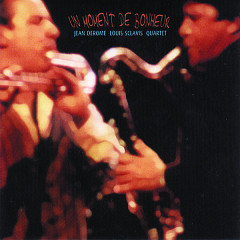
    Un moment de bonheur dans AllMusic

    «Review», François Couture, AllMusic, 1 avril 2003
    mardi 1 avril 2003 Presse

    The album title is trite, but the concert was marvelous (yes, this reviewer was there) and the recording preserves all of its intensity and charm. This was a first meeting between Jean Derome (flutes, alto sax) and Louis Sclavis (clarinets, soprano sax). Although different, their sound worlds are highly compatible. They have both dug their way out of the jazz realm and into new, largely unexplored music trenches while keeping ties to jazz. They both use other idioms to transform jazz and turn it into something completely new. They both favor an approach that combines clever writing, wild improvising and a touch of humor and emotion. To put the project on firm ground, they agreed on a solid rhythm section of bassist Bruno Chevillon (Sclavis’ most trusted sideman) and drummer Pierre Tanguy (a regular of Derome’s bands for two decades). The quartet hit it off incredibly well. Derome penned five of the six pieces presented here. His tunes show his usual taste for elegance in odd designs and tenderness im comical gestures. The basic motif in Tu dis tout de travers, would fit nicely in the repertoire of his group Dangereux Zhoms, while his gripping bass flute solo in Jonas ranks among his best moments on record. Sclavis displays unusual levels of playfulness in Le baiser and Pas à pas. He contributes the 21-minute Suite pour un bal a cross-stylistic composition of epic proportions — including a passage where Chevillon adds a distortion pedal to his double bass. Tanguay’s lumbering rhythms (his sense of out-rhythm is unique) match Chevillon’s power plays in a quasi-rock way. The enthusiasm of the crowd is well deserved.

    The quartet hit it off incredibly well.

    Un moment de bonheur dans The Wire

    «Soundcheck», Bill Shoemaker, The Wire, no 219, 1 mai 2002
    mercredi 1 mai 2002 Presse

    The rap on French saxophonist/clarinettist Louis Sclavis is that his polished technique hampers his expressive range. However, based on this collaboration with Québécois saxophonist/flutist Jean Derome, that opinion proves to be sheer folly. Sclavis is much more sombre than Derome, who can be particularly zany when paired with drummer Pierre Tanguay. It is fitting that Tanguay and Sclavis’s bassist, Bruno Chevillon, extends the contrast between the coleaders in rounding out the quartet for this 2001 FIMAV performance. Throughout the sets expanses of improvised space, Sclavis is as visceral as Derome. The emphasis on extended improvisation gives the quartet few opportunities to demonstrate their finesse with shorter jazz-flavoured vehicles. Whether it is the bustling Tu dis tout de travers, which suggests a gritty Ornette-Dolphy front line, or the floating Jonas, featuring ethereal bass flute and bass clarinet, a more tightly scripted format draws upon their concision as much as their creativity.

    … improvisation gives the quartet few opportunities to demonstrate their finesse with shorter jazz-flavoured vehicles.
  • 1
  • 2