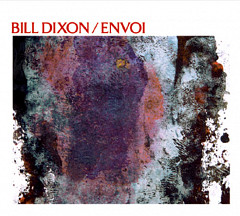
Praised and reviled in equal measure during his 40-year career, Vermont-based trumpeter Bill Dixon was finally recognized as one of improvised music’s most original stylists and theorists before his death at 84 in June 2010. Fittingly his final concert took place a mere three weeks previously at Quebec’s Festival International de Musique Actuelle de Victoriaville, where a hand-picked octet played this composition under his direction. Luckily the performance has been released as Envoi (Victo Records, VICTO 120). Not only do the two sections illuminate Dixon’s particular mixture of formalism and freedom, but with a horn section of four playing cornet, bugle and flugelhorn, Envoi also demonstrates Dixon’s influence on a younger generation of brass players.
Famously prickly and opinionated, Dixon organized The Jazz Composers Guild, one of jazz musicians’ first self-help organizations in the mid-1960s. A long-time professor at Bennington College in Vermont, Dixon recorded sparingly over the years, which makes this session doubly valuable. Impressionistic and dramatic, Envoi is organized with classical precision in varied sequences. Most involve muted, shaded bent notes from the brass players in counterpoint to the spiccato string swipes of cellist Glynis Loman and bassist Ken Filiano, or, in the first section, tart slurs from Michel Côté’s bass clarinet. Additional unifying motifs come from Warren Smith’s resounding kettle drumming, and, in the second section, his ringing vibes, which soften the interface as it moves forward. In that same section the unison strings maintain a menacing undertow, breached only occasionally by heraldic brassiness or dissonant grace notes, plus at one point echoing stillness from Graham Hayes’ bugle. True to Dixon’s style, most of the brass tones are segmented sound shards which waft pure air through the horns. Following nearly 40 minutes of quivery tremolo theme variations, a spectacular example of the trumpeter’s measured art arrives near the end. After one cornetist sounds heraldic tones at a higher pitch among the others’ capillary whispers, all harmonize for a protracted section of legato impressionism, only scattering at the end as one puffs quietly while another exposes plunger tones. Finally, call-and-response vamping from all marks the climax.