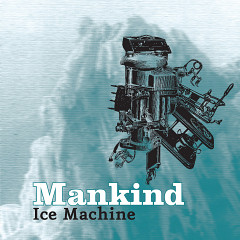
Ice Machine is the debut CD by Montréal duo Mankind, made up of word-sound digitizer Alexis O’Hara, and poet at large D. Kimm. The CD is short — its overall running time is 40:39, yet within that brevity it sprawls. Ice Machine blends electronic effects, a range of vocal expressions, riffs on the fairy-tale, the nursery rhyme, and the mafia film score. It incorporates storytelling, sound poetry, and sound-collage. It moves from seemingly improvised pieces to compact song-like works to longer, text-based explorations. The album includes bilingual tracks (English/French) and unilingual ones (English, French, Spanish), and as a result, has no dominant language.
The first piece on Ice Machine, Mile End Throat Singers recalls the rhythmic throat singing of Tanya Tagaq, and the layered breath-work of French sound-poet Henri Chopin, but it incorporates laughing and coughing, and employs delay and echo to enhance and abstract the sound of breath.
Track 7, Post Colonial plays on the meditation chant. The two voices, both chanting, weave in and out of harmony, and a third harmonizing voice emerges, that of “the machine,” conjured by electronics. Then, just as this track has established its serene mood, its serenity is undercut by a different type of meditation.
Track 8, Charming compiles a bilingual list of insults, ranging from the common (asshole) to the more imaginative and exemplary (microbe). Kimm’s and O’Hara’s voices alternate in this seedy, misanthropic exercise, but their voices never rise above an intimate conversational hum.
Track 4 Le Corps C’est Trop Physique and Track 10 The Anti-Rules flirt with pop — each has a chorus and a beat. But both tracks complicate any idea of facile, bouncy pop with their blasé tales of failed love, and their admissions of musically inexact singing sung in a child’s warble.
Despite its variety, Ice Machine feels like it could be a single long work, albeit one chopped into fragments, one in which those fragments have been shuffled and re-assembled. The sound is consistent throughout, with an icy electronic hum forming the sonic backdrop for each track. This hum is the sound we hear late on a winter night in downtown Montréal. It is the hum of electricity flowing through a million homes. It is the sound of the nocturnal city, and it can both comfort and menace.
Seduction, love, and confusion are themes that recur, in either D. Kimm’s world-weary, fluid delivery or in Alexis’ wry speak. Mankind plays with genre and expectation, mechanizing the meditative chant, challenging the trite pop tune, and going yet further: Mankind remains unruly, creating itself according to its own impulses.