actuellecd
  • This website is also available in English.

Blog

3585 results
  • 71
  • 72
  • 73
  • 74
  • 75
  • 76
  • 77
  • 78
  • 79
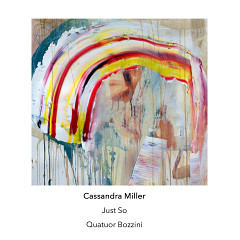
  • Just So in The Guardian

    “Review”, Andrew Clements, The Guardian, August 23, 2018
    Thursday, August 23, 2018 Press

    The Sheffield-based label Another Timbre specialises in experimental music, from the postwar US generation of John Cage and Morton Feldman to the present day. Lately, it has made a special feature of Canadian composers, and among its latest releases are two discs devoted to the music of Cassandra Miller, who grew up in British Columbia and is now based in London. Her teachers have included Michael Finnissy and Richard Ayres, but, as the eight pieces on these recordings show, her music is hard to categorise, its starting points unpredictable and wide-ranging.

    In Quatuor Bozzini’s survey of Miller’s quartet pieces, the four movements of Warblework are based on the songs of four north American thrushes, while About Bach, as its name signals, is a homage, with a solo violin spiralling high above fragments of chorales derived from the famous D Minor Chaconne. In Philip the Wanderer, composed for the indefatigable pianist Philip Thomas, the source is a recording of a Mozambican musician, while the solo-violin For Mira is based on a computer transcription of Kurt Cobain singing Where Did You Sleep Last Night. In every one of these pieces, though, Miller’s response is totally her own. The music never seems second-hand or derivative in any way.

    Perhaps the most striking of all is Duet for Cello and Orchestra, from 2015. It began, Miller says, as a homage to the composer Vincenzo Bellini, and also makes extensive use of an Italian folk song. But the solo cello (played with wonderful restraint by Charles Curtis in this performance with the BBC Scottish Symphony Orchestra and Ilan Volkov) is mostly limited to a scarcely changing sequence of alternating fifths, while the orchestra has a frieze-like succession of increasingly dense flourishes above it. The soloist only breaks free in the final moments for a brief cadenza in harmonics, which seems to belong to another musical world altogether. It’s a strange but profoundly haunting piece.

    Another Timbre launched its Canadian series last year with Drifter, a two-disc collection of pieces by Linda Catlin Smith, New York-born but now based in Toronto. The most recent batch of releases includes another album of her quietly unassuming and entrancingly beautiful Feldman-esque music.

    On Smith’s Wanderer, there are eight works played by members of Apartment House, each of them using a single musical idea to devastating effect — shared melodic lines in the ensemble pieces Knotted Silk and Stare at the River, gradations of touch in Velvet, for two pianos — and all totally beguiling.

    Cassandra Miller: Just So; O Zomer! CD review — profoundly haunting — 4 stars

    Tse in Free Jazz Blog

    “Review”, Nick Ostrum, Free Jazz Blog, August 22, 2018
    Wednesday, August 22, 2018 Press

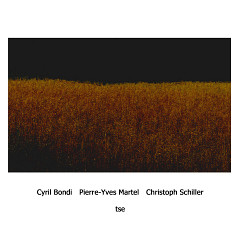
    This album places Bondi in a more intimate context with the Quebecois Pierre-Yves Martel and the German Christoph Schiller. The instrumentation on this album is notable in its own right. All three musicians play early musical instruments: Bondi the harmonium and pitch pipes, Martel the viola da gamba and pitch pipes, and Schiller the spinet. Most of the tracks on this disc are based around a framework of pre-selected pitches. Others are freely improvised, though it is difficult to distinguish which these were. The result is a series of intricately textured and meditative tracks. In ways, this ensemble resembles a stripped-down IMO.

    As Martel notes in an illuminative interview posted on the Another Timbre website, the title, Tse, is a Genevan word that simply means “here.” He then explains that this may reflect the suddenness and happenstance of the meeting of these three musicians. However, there seems to be more to it than that. The tracks almost bleed into each other. Each has its nuances and unique beauty, but one must listen closely to find this repressed dynamism. “Here” may also reflect the nuances of place and music. The pieces resemble each other in their slow, subtle, droning beauty. They also, however, represent discrete moments of musical inspiration and creation. In that sense, they reflect the singularity of being present in any moment, setting, or piece. The effect is entrancing and, at times, disconcerting. Tse actually offers six “heres,” and shows that even the superficially mundane or old can be pregnant with new and provocative possibilities.

    Tse
    The pieces resemble each other in their slow, subtle, droning beauty. They also, however, represent discrete moments of musical inspiration and creation.

    Just So in Dusted Magazine

    “Review”, Marc Medwin, Dusted Magazine, August 21, 2018
    Tuesday, August 21, 2018 Press

    “… ‘method’…. I don’t know what that is!” states Cassandra Miller in an interview on Another Timbre’s site. “Isn’t the fun of composing making up your own particular method for whatever piece you’re writing?” No better summation could be offered for her music as represented by this excellent disc in the label’s Canadian composers series, performed by Montréal’s Quatuor Bozzini.

    On one level, Miller’s work manages the astonishing task of evoking various points in music’s history while calmly, often quietly but willfully eschewing them. Even the first few violin gestures of Just So conjure the modal ghosts of neoclassical Stravinskian harmony and Heinrich Biber in full-on arpeggiated fantasy mode, but the jagged rhythms just won’t square up to either conception. Every hint at steady rhythm is diced and discarded before coming to fruition, and every suggestion of Baroque cadence is thwarted. The tempo does finally steady itself in a blaze of exuberance only to have the piece end, abruptly, like that fabled unfinished Bach fugue, but with a smile. The longer works seem to encourage similar behavior. If the first part of Warblework affords slippery glissando-filled and metrically free visions of prime Penderecke, the fourth brings back fond memories of the opening sliding mysticisms of Terry Riley’s Salome Dances for Peace, but of course, the references are covert, if they exist at all. That fourth section opens with a slowly ascending gesture that somehow defenestrates any conventional notion of pitch or history, an authoritative but calm dismissal, stunning in its understatement and just as effective in repetition. There are Romantic flourishes that then give way to gorgeous sustains that circumvent academic time and temporal perception.

    It could be that sense of temporal redefinition, or abnegation, that sets Miller’s music apart. She does it so well; just listen to the nearly 25 minutes of About Bach to hear it in full effect. Yes, the historical element is in play, as the composition emerged from one of Bach’s solo violin works, and that crazily high-register scale throughout demonstrates that Miller’s whimsy resides front and center, but a glacial change occurs. Focus gradually moves from the scale, a nearly complete B-minor repeated throughout, played at the very top of the poor violinist’s range, to the often subdued but complex and rhythmically transient harmonies below. The multileveled structure comes into sharp focus as the monochromatic scale recedes into a tremulous background, something akin to a sonorous clock against which the constantly shifting and dynamically varied pointillisms of domesticity or work-place mundanity accent the time being kept just below the surface. The two experiential levels intersect in gorgeous harmonic resonance, and in the moments when the lower level disappears, the scale takes on the shimmering qualities of silence.

    There has been so much music striving for novelty and effect but failing or reaching for the heights and depths of beauty but achieving only shallow sentimentality. Miller manages both, as heard in the rapt but glistening colors of Leaving, an absolutely perfect way to end the disc. Quatuor Bozzini was a stellar choice; their long relationship with the composer, and their ability to make every swell and timbral juxtaposition count in music where they are paramount, renders their interpretations second to none. A close but suitably resonant recording brings this alternately spare and sumptuous music to life.

    Quatuor Bozzini was a stellar choice; their long relationship with the composer, and their ability to make every swell and timbral juxtaposition count in music where they are paramount, renders their interpretations second to none.

    Sit, Damián Nisenson in Le Devoir

    “Damian Nisenson, le polyglotte du jazz”, Serge Truffaut, Le Devoir, August 11, 2018
    Saturday, August 11, 2018 Press

    S’il fallait prêter un visage actuel à l’opiniâtreté, voire au courage, alors Damian Nisenson conviendrait à merveille. Quel parcours que celui de ce saxophoniste et compositeur installé à Montréal depuis 2004! Quel destin que celui de cet homme qui propose aujourd’hui un album intitulé Sit sur l’étiquette Malasartes. Qu’on y songe: sa vie a été faite de la poésie juive des ghettos d’Ukraine et de Moldavie à la verdeur fiscale de la Suisse, en passant par le culte des kibboutz en Israël et surtout l’inclination pour l’horreur des généraux argentins. Détaillons. Du moins essayons.

    À la fin du XIXe siècle pour certains ou au début du XXe pour les autres, ses grands-parents ont fui, jeunes, les pogroms qui rythmaient la vie des ghettos d’Ukraine et de Moldavie. Destination? L’Argentine. L’un des grands-pères était un poète qui parlait une langue aujourd’hui rare: le yiddish. Il récitait et chantait non seulement ses poèmes, mais aussi ceux écrits ici et là dans l’Empire austro-hongrois ou en Russie. Les autres? Ils aimaient la musique quand ils n’en jouaient pas. Du klezmer, il va sans dire.

    De ces personnages dont les vies empruntent aux légendes se démarqua un grand-oncle. «En Argentine, il était un troubadour qui jouait du klezmer, mais aussi du tango et du jazz. Chez nous, la musique était toujours présente. Mes premiers souvenirs sonores, au début des années 1960, c’est Getz avec Gilberto et Mulligan avec Brookmeyer. À l’âge de sept ans, j’ai commencé à suivre des cours de flûte. Puis j’ai étudié pendant des années au conservatoire de Buenos Aires le violoncelle, la guitare classique.»

    Au milieu des années 1970, les généraux argentins, si convenables aux yeux de Kissinger et de la cohorte des politiciens ivres de sang, imposent une manière de faire et bien des lois calquées sur le régime qui avait servi de modèle à Juan Perón. Inutile de préciser. Chacun aura deviné lequel. Alors Damian, âgé de 18 ans à ce moment-là, sachant que les étudiants étaient particulièrement visés, prit la route de l’exil à la vitesse grand V. Direction: la Suisse.

    «Je me suis installé à Fribourg, où j’ai étudié le saxophone classique. J’ai commencé à jouer un peu partout ici et là, surtout à Genève. Lorsque la dictature des généraux a été renversée, je suis retourné en Argentine. Dans les années 1990, je jouais dans un groupe rock-pop qui avait pas mal de succès. Mais voilà, j’ai détesté ça. En 1997, j’avais quatre filles, j’ai décidé de quitter ce pays.»

    «Peu après mon arrivée au Québec, j’ai fait la rencontre de Denis Leblanc, un excellent joueur de bandonéon, qui a écrit deux noms sur une feuille de papier. Celui de Joane Hétu [l’admirable fondatrice d’Ambiances magnétiques] et du batteur Pierre Tanguay. C’est Joane qui m’a conseillé de fonder un label. C’est comme ça qu’est né Malasartes.»

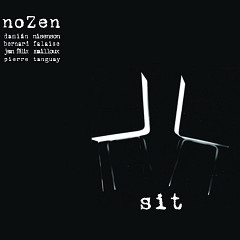
    Aujourd’hui, notre saxophoniste propose donc Sit réalisé en compagnie de Jean-Félix Mailloux, qui est l’exemple parfait de ce que solidité à la contrebasse signifie, de Bernard Falaise, aussi tranchant et vif qu’un Marc Ribot, et du batteur Tanguay, qui a ceci de littéralement prodigieux, il n’y a pas d’autre mot, qu’il a fait l’alchimie entre Joey Baron, Shelly Manne et Billy Higgins.

    Le résultat fait naturellement penser à John Zorn, celui de Masada, celui des associations avec divers cantors. En un mot, Nisenson a réussi quelque chose de très singulier: remonter le fil d’une vieille et lointaine culture avec un souci pour la finesse, la subtilité, qui fait de Sit un grand disque.

    Sit
    … avec un souci pour la finesse, la subtilité, qui fait de Sit un grand disque.

    Les porteuses d’Ô in The Squid’s Ear

    “Review”, John Eyles, The Squid’s Ear, July 23, 2018
    Monday, July 23, 2018 Press

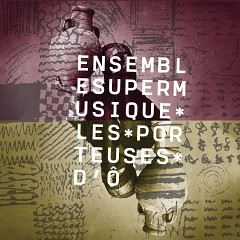
    Fittingly, Les porteuses d’Ô was released in January 2018, the year marking the twentieth anniversary of the formation of Montréal’s Ensemble SuperMusique (ESM). In the years of its existence, the ensemble has explored ways of integrating improvisation with composed music, commissioning over fifty compositions that combine the two. So, it is no surprise that this landmark album features three new graphically-scored compositions which aim to do just that. The line-up of ESM has evolved throughout its lifetime, with few ever-present members; of the twenty-six players credited on ESM’s debut album, Canevas (Ambiances Magnétiques, 2004), only four feature among the thirteen on Les porteuses d’Ô — alto saxophonist and flautist Jean Derome, alto saxophonist and vocalist Joane Hétu, alto Jean René and percussionist Danielle Palardy Roger. ESM co-founders Hétu and Palardy Roger supplied two of the album’s compositions, the third coming from Vancouver-based Lisa Cay Miller; yes, all three pieces do have female composers.

    Recorded live in concert, in Montréal, in April 2017, together the pieces run for just over forty minutes, the three being of similar lengths. The album opens with Palardy Roger’s 2014-15 piece En arrivant par le nuage de Oort, the title referring to the theoretical Oort cloud of icy objects, the origin of long-period comets such as Hale-Bopp. Palardy Roger says that “the unfolding of the composition evokes the journey one might undertake between the Oort cloud and the Sun.” Of course, the danger of such a statement is that the composition in question is listened to as programme music, with the listener literally interpreting each sound. To combat that, it would be useful to see the graphic scores themselves, but this CD does not include any of them, only their composers’ notes on them. Suffice to say that the music feels true to its composer’s intention; its soundscape begins with lots of small percussive sounds surrounded by space, and gradually becomes fuller, louder and more intense as it builds steadily to a climax.

    By comparison, the next piece, from 2015-17, Hétu’s Préoccupant, c’est préoccupant, is far more garrulous and dramatic. Fittingly, the fifteen-minute track opens with a theatrical drum roll which leads into a prolonged passage of discordant sounds from the nine musicians involved, heralding the arrival of the composer’s own voice. From there on, the piece is episodic with that voice dominating. As the composition focuses on four “concerns that can insidiously interfere in our lives”, starting with “To Fall from High”, there is plenty of scope for expressive outpourings of emotion and angst, including weeping and wailing. The calmer instrumental passages provide welcome periods of respite.

    The album closes with Miller’s 2017 composition Water Carrier which (in translation) is practically the title piece. Inspired by the issue of drinking water rights of First Nation communities in Canada, it is wholly instrumental, successfully integrating composed and improvised music. It features some poignantly melodic passages played by the ensemble’s strings. These are interspersed with some strongly rhythmic sections and others with a clear jazz influence.

    Together, these three very different compositions show radically contrasting facets of ESM and demonstrate that it is in excellent shape as it enters its third decade.

    Together, these three very different compositions show radically contrasting facets of ESM and demonstrate that it is in excellent shape as it enters its third decade.

    Torche! in Free Jazz Blog

    “Review”, Eyal Hareuveni, Free Jazz Blog, June 18, 2018
    Monday, June 18, 2018 Press

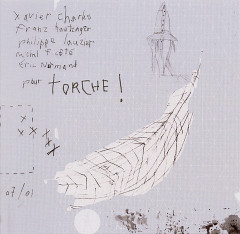
    French clarinetist Xavier Charles is a true explorer. Musically speaking, his own music and his collaborative projects range from abstract, raw noise to electro-acoustic textures, sound poetry, free improvisation and even the anarchist-punk of the Dutch The Ex (he already joined The Ex gigs for more than 120 performances, including many with the late Ethiopian sax great, Gétatchèw Mèkurya). Geographically, he seems to be all over the globe, trotting from a recording session in Québec City, Canada to Canberra, Australia and sometimes in between even enjoys the Swedish woods with his Norwegian comrades of Dans les arbres group.

    This free-improvised session was recorded on May 2016 at the Café-théâtre de Jonquière, Québec City during the local Festival des Musiques de Création, at the end of a short Canadian tour that featured the five musicians playing in different formations. The quintet features three musicians from the local Tour de Bras experimental musicians collective: percussionist Michel F Côté, bass clarinet player Philippe Lauzier and electric bass player Éric Normand plus like-minded Austrian trumpeter Franz Hautzinger and Charles himself.

    This meeting of these five distinct improvisers — all are committed to an uncompromising search and research of pure sounds and the timbres of their respective instruments, all in their own personal manners and with their own sense of invention — proves that the language of free-improvisation is truly universal. You just need to have an attentive ears — elephantine ears — trust your comrades and your instincts, and then all sounds — raw, dissonant, distorted, acoustic or electric, melodic, breathy or noisy — find their place in the mysterious great scheme.

    The eight improvisations tell different, strange, cryptic stories, with no apparent meanings, clear narratives or comforting conclusions. But all manage to draw the listener immediately into their rich, poetic universes, despite their contemplative, sometimes even austere tones. Nothing sounds radical in these improvisations, even though these musicians do produce some pretty weird sounds. Together, as a collective, they sound much larger, somehow more sensible than apart. You can hear that in the playful Alaplasse, where imaginative bird calls collide gently with noisy, electric sounds, in the almost psychedelic texture of multiphonics on Boudboi and in the extraterrestrial, minimalist-techno pulse of Izatrape. Brilliant.
    Brilliant
  • 71
  • 72
  • 73
  • 74
  • 75
  • 76
  • 77
  • 78
  • 79