actuellecd
  • This website is also available in English.

Blog

3585 results
  • 473
  • 474
  • 475
  • 476
  • 477
  • 478
  • 479
  • 480
  • 481
  • Joane Hétu, Justine, Diane Labrosse, Danielle Palardy Roger, Marie Trudeau, Ambiances Magnétiques in AllMusic

    “Portrait: Justine”, François Couture, AllMusic, June 15, 2002
    Saturday, June 15, 2002 Press

    Born out of the Montréal-based avant-rock group Wondeur Brass, Justine pushed further the ideals of challenging, thought-provoking feminist rock established in its previous incarnation for another ten years. The group released three albums during the 1990s and toured Canada, the United States,and visited Europe twice. Three of its musicians are members of the collective Ambiances Magnétiques, so the label released all their albums.

    Wondeur Brass started as a sextet in the early ’80s. By 1987 the group had been scaled down to a quartet. Bassist Marie Trudeau had joined the three original members saxophonist Joane Hétu, keyboardist Diane Labrosse and drummer Danielle Palardy Roger. That line-up released Simoneda, reine des esclaves in 1987.

    Upon starting work on a new opus in 1989, the girls decided it was time for a change. The new music taking shape was turning out to be more complex, intricate, and driven by a stronger will to improvise and make things interestingly dangerous. Thus Justine was born. The first album under the new name, (Suite), came out in 1990. It included guest appearances by Japanese singer Tenko and American harpist Zeena Parkins. In 1992, Hétu, Labrosse and Roger brought them back for a quintet project, La légende de la pluie. Although it doesn’t include Trudeau and sounds softer, more introspective, it can be considered as the second album by Justine. Around the same time the “real” quartet appeared on stage in an Ambiances Magnétiques showcase which yielded the live CD Une théorie des ensembles.

    In early 1994 Justine toured Europe, visiting many former communist countries. Back in Montréal in June they recorded Langages Fantastiques “live in the studio” — the recording of (Suite) had stretched over ten months. After its release later that year things slowed down as group members focused on individual projects: Roger on the children tale L’oreille enflée, Labrosse on a solo album (La face cachée des choses) and a duo with Michel F Côté, Hétu on a new group called Castor et Compagnie. Justine stayed together for another three years and performed at the 1997 Ring Ring festival in Belgrade (Yugoslavia) alongside Ground-Zero, Palinckx, and Kampec Dolores (a previously unreleased song was included on the commemorative compilation Ring Ring 1997). After that tour the group disbanded. Hétu, Labrosse and Roger have continued to contribute to one another’s projects.

    … Justine pushed further the ideals of challenging, thought-provoking feminist rock…

    Danielle Palardy Roger, Ambiances Magnétiques in AllMusic

    “Portrait: Danielle P Roger”, François Couture, AllMusic, June 15, 2002
    Saturday, June 15, 2002 Press

    Danielle Palardy Roger is the lesser known among the three female members of the Montréal musicians’ collective Ambiances Magnétiques. The drummer always kept a lower profile than Joane Hétu or Diane Labrosse (not to mention male counterparts like René Lussier or Jean Derome), especially since the disbanding of the group Justine. She rarely leads her own band, but she still performs regularly on the Montréal free improv circuit and composes contemporary classical music (for the Ensemble Contemporain de Montréal, among others). Maybe more importantly, her company Productions SuperMémé-SuperMusique has become a major producer of new music events.

    Roger met keyboardist Labrosse and saxophonist Hétu in the late 1970s through the loose experimental collectives that took turns animating the Montréal underground back then. Like them she is self-taught on drums. The trio founded Productions SuperMémé-SuperMusique in 1979 to take care of their own business and started playing together. With a couple more women they formed Wondeur Brass, whose first album came out in 1985 on the label Ambiances Magnétiques, immediately after they were asked to become members of the collective. Roger was also part of the trio Les Poules with Hétu and Labrosse, a group that moved away from the Rock-in-Opposition sound of the other outfit to explore freer grounds.

    Wondeur Brass made a second LP in 1988, Simoneda reine des esclaves, before transforming into the quartet Justine with Roger, Hétu, Labrosse, and bassist Marie Trudeau. With this group the drummer toured Canada, the US, and Europe, appearing at the RingRing Festival (Belgrade) in 1997. The group disbanded shortly after. While her colleagues moved on to solo projects, Roger focused on the company they had co-founded and of which she became the sole director.

    Roger has only one solo album to her credit, the creative children tale L’oreille enflée (1994). The release of Tricotage, a duo session with bassist Joëlle Léandre in 2000 marked her come-back on disc.

    Martin Tétreault, Ambiances Magnétiques in AllMusic

    “Portrait: Martin Tétreault”, François Couture, AllMusic, June 15, 2002
    Saturday, June 15, 2002 Press

    In the late ’80s and early ’90s, Martin Tétreault was the quietest member of Ambiances Magnétiques, Montréal’s influential new music collective. He was providing strange turntable collages to the projects of his colleagues and released a couple of mind-boggling solo albums. When minimal techno and experimental electronica hit the museums at the turn of the millennium, he became the label’s biggest international name, multiplying collaborations with the likes of Otomo Yoshihide, Kevin Drumm, Xavier Charles, and Janek Schaefer. This career boom was accompanied by a stylistic shift from vinyl quotation to an approach of the turntable as a “pure” sonic device. In the process, what he lost in sense of humor, he gained in harsh intensity.

    Tétreault has a background in fine arts. Much like the Czech radical artist Milan Knizak, he began to work with vinyl because paper led him to a dead-end. In 1984, for the first time he took an LP, cut it in half, flipped one piece over, pasted it back together, and played the result on a turntable. Tétreault continued to experiment at home, developing cutting and skipping techniques and collecting hundreds of cheap records he found at fleamarkets. Three or four years later, his next-door neighbor overheard his shenanigans. It was Ambiances Magnétiques guitarist André Duchesne, who quickly introduced Tétreault to his group of musician friends. Michel F Côté enrolled him in his ensemble Bruire. The turntablist’s first appearance on record can be found on the 1989 LP Le Bbarman a tort de sourire. He remained with the group throughout the 1990s and beyond. He also played with René Lussier, Jean Derome, and Diane Labrosse.

    His first large-scale album, Des pas et des mois, came out in 1990. Then, besides the occasional Bruire album, Tétreault kept a rather low profile. Things changed in 1997-1998 when he began to let go of quotation and cut-ups to develop a more textural style that eventually saw him throw away the record to play the turntable itself, sticking the tone-arm in the motor, placing the needle directly on the platter, etc. These new developments were at the heart of his duo with René Lussier, introduced by the highly abstract and noisy Dur noyau dur in 1998. A participation to the Japanese project Four Focuses opened doors; so did a subsequent duo session with Yoshihide (21 Situations, 1999) and a solo CD for the Belgian label Audiophile (La nuit où j’ai dit non, 1998). By then, the turntable had become a trendy instrument of avant-garde expression and Tétreault embarked on a busy touring and recording schedule. In 2002, he curated the “Turntable Hell” tour (in England) financed by the Contemporary Music Network.

    … what he lost in sense of humor, he gained in harsh intensity.

    liberum arbitrium in Voir

    “Critique”, Réjean Beaucage, Voir, June 13, 2002
    Thursday, June 13, 2002 Press

    Le trio Napalm Jazz a d’abord sévi sur les ondes radiophoniques de la Vieille Capitale avant d’entreprendre une existence virtuelle sur le site notype.com et de donner naissance par mutation soustractive (de trio à duo) à morceaux_de_machines. Aimé Dontigny et Érick d’Orion nous offrent donc sur ce troisième “vrai disque” de No Type une série d’improvisations réalisées lors d’une résidence aux studios d’Avatar, à Québec, avec des instruments que l’on n’a pas pris la peine d’identifier sur la pochette (on imagine une panoplie de gadgets électroniques). Ça gicle littéralement de tous bords tous côtés. La méthode favorite de composition du duo est l’accumulation, et chaque pièce nous fait découvrir une nouvelle définition du mot “saturation”. Avant de monter le volume, assurez-vous que vos haut-parleurs sont toujours sous garantie!

    … chaque pièce nous fait découvrir une nouvelle définition du mot ‘saturation’.

    liberum arbitrium, morceaux_de_machines in Vital

    “Review”, Brian Lavelle, Vital, June 13, 2002
    Thursday, June 13, 2002 Press

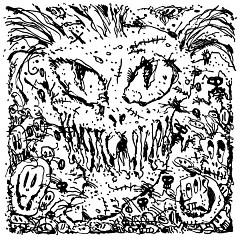
    Swathed in the closest I have yet seen to a Savage Pencil-esque liquefying demon sleeve — a truly fitting representation in pen and ink of this Canadian duo’s music — morceaux_de_machines’ debut CD is an insanely free journey into the possibilities of live laptop performance. Aimé Dontigny and Érick d’Orion’s improvisations are nothing less than startling in a context where the debate often centres mundanely around the merits or otherwise of watching individuals perform the digital equivalent of tape-based works. There is dripping sweat in this music; there is a refreshing ferocity and brutal dynamism in abundance. It seems even at times that the ghost of Coltrane’s 1966/67 interstellar live work pervades the proceedings. The resulting brew is a primordial mix of cut-ups, lifts, uncategorisable loops, acrid and acidic soundscaping and more, all the components reaching half-life at similar points in the fray. Like the sound of the multitude of layers being stripped internally from the walls of the atom, this is pure jazz fission. The penultimate track on liberum arbitrium is entitled rothko and the choice is apt, even as a generalised pointer to the sonic landscape of this disc: oversized slabs of dense, textural colour juxtaposed in an end-to-end fashion, exaggerated, confrontational, surprising — all essential qualities of a difficult but completely mesmerising sonic soup.

    There is dripping sweat in this music; there is a refreshing ferocity and brutal dynamism in abundance. It seems even at times that the ghost of Coltrane pervades the proceedings.

    Canot-camping, expédition 4 in Splendid E-Zine

    “Review”, Luke Martin, Splendid E-Zine, June 12, 2002
    Wednesday, June 12, 2002 Press

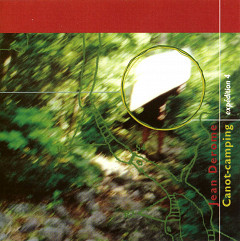
    Canot-camping is a rather strange kettle of fish. Its appearance on disc marks the preservation — though I’d imagine not in the ultimate version thereof — of a composition that’s complex, frustrating, and often surprisingly rewarding. Why so? Because it’s akin to John Zorn’s Cobra (and other segments of that composer’s other, earlier work) inasmuch as it relies on a series of gestures to inform players what to play, and when. Some of these are listed in the liner notes — it’s reassuring to note that metal’s favoured devil’s horns gesture is used to symbolize “solo” — though there are over sixty of them available to choose from. So, rather than a set score or “right” way of handling Derome’s ideas, there’s only performance to use as a yardstick: this CD is a record of the fourth canoeing excursion that’d been made, though the piece has since gone through two more iterations.

    Derome and the ten musicians under his direction try their damndest to bring the river into your headphones, to make you a part of their canoeing holiday. Largely, they succeed; the tones of the ensemble — winds, two contrabasses, strings, some brass and some self-constructed instruments — are broad enough that you can hear the “nature sounds” that are evoked, without being overly conscious of being able to namecheck the instrument from which they originate. There’s no feeling of avant-jazz chops-for-chops-sake showmanship: everything here sounds naturalistic. From the traffic sounds of the disc’s opener — all honking horns and traffic-jam frustration — to the glistening star-sounds of Lac 3/Constellations and the grunting-muso bestiary of Animaux, you’re there, in the boat, hearing (sometimes literally) the sound of paddle slicing into water. Admittedly, there are times when nothing makes sense — save for the rocking feeling of the music, which manifests itself as an occasional auditory seasickness — but the quality on display here, and the deft touch exhibited by the musicians, is enough to make you push on through the slacker pieces.

    Like much loosely-guided improv, there are moments on this disc that’ll try your patience; hard-blown horn farts and moments that are more indicative of pissing about than of a journey by canoe occur occasionally, and frustrate immensely — though thankfully, this is rare, and a mark of the high quality captured here. There are negative aspects to this trip upriver, but the evocative soundscape that’s created by this paddle-carrying troupe is superb.

    … the evocative soundscape that’s created by this paddle-carrying troupe is superb.
  • 473
  • 474
  • 475
  • 476
  • 477
  • 478
  • 479
  • 480
  • 481