actuellecd
  • This website is also available in English.

Blog

3585 results
  • 458
  • 459
  • 460
  • 461
  • 462
  • 463
  • 464
  • 465
  • 466
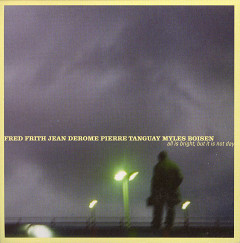
  • All Is Bright, But It Is Not Day in Le Devoir

    “Critique”, David Cantin, Le Devoir, January 11, 2003
    Saturday, January 11, 2003 Press

    Pour les amateurs de musique actuelle, cette combinaison de musiciens possède les attributs nécessaires pour convaincre sans la moindre hésitation: d’un côté, le guitariste-compositeur Fred Frith, de l’autre, les Québécois Jean Derome au saxophone ainsi que Pierre Tanguay à la batterie. On tient là des improvisateurs de haut calibre avec, comme membre en retrait, le preneur de son Myles Boisen. Enregistré directement sur deux pistes, All Is Bright, But It Is Not Day témoigne d’une rencontre intéressante entre le jazz expérimental, le rock avant-gardiste et les dernières trouvailles en matière d’électroacoustique. Est-ce facile d’accès? Pas vraiment. Il faut se laisser prendre au jeu de ces virtuoses qui inventent un registre austère et précis. Après quelques écoutes, la spontanéité du contenu se libère d’un certain poids compassé. Par la suite, on se demande pourquoi cette musique ne se libère pas davantage de ses racines européennes. Une recherche impeccable, peut-être un peu trop soucieuse de son passé iconoclaste. Entre improvisation contemporaine et effets psychédéliques.

    Il faut se laisser prendre au jeu de ces virtuoses…

    À un moment donné in Voir

    “Disques”, Réjean Beaucage, Voir, January 9, 2003
    Thursday, January 9, 2003 Press

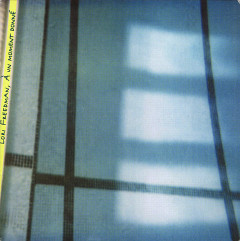
    Lâchée lousse, littéralement. C’est vraiment l’image qui vient en tête en écoutant ce premier enregistrement de Lori Freedman chez Ambiances Magnétiques. Le disque démarre en trombe avec Roofless, une œuvre très intense durant laquelle la clarinettiste déchaînée évoque le jeu hachuré de stridences d’un John Zorn des grands soirs. À la clarinette basse ou à la clarinette en si bémol, la compositrice explore sans relâche les zones les moins convenues de la palette sonore disponible. la Torontoise maintenant établie à Montréal a connu la discipline des orchestres symphoniques, recevant même les éloges de John Corigliano après avoir interprété son Concerto pour clarinette. Elle apparait ici complètement débridée, laissant libre cours à son talent et à son imagination. Parce qu’il faut bien que ça sorte, à un moment donné.

    Elle apparait ici complètement débridée, laissant libre cours à son talent et à son imagination.

    Twenty Quarter Inch Jacks in Ici Montréal

    “Compact!”, François Couture, Ici Montréal, January 9, 2003
    Thursday, January 9, 2003 Press

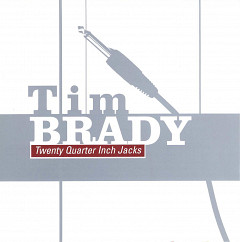
    Le guitariste et compositeur Tim Brady fait le saut chez Ambiances Magnétiques. Twenty Quarter Inch Jacks regroupe trois œuvres très différentes. La pièce-titre, de 30 minutes, est une suite pour 20 guitares électriques, toutes jouées par Brady (contrairement au concert, évidemment). Pot-pourri stylistique qui se veut un regard sur l’histoire de l’instrument, elle roule avec la pédale ludique bien enfoncée. Elle rejoint un public plus large avec ses accents rock et demeure d’une écoute agréable et intrigante, mais ce n’est pas le grand Brady des 10 Collaborations (chez Justin Time, 2000). Les deux autres pièces sont beaucoup plus solides, surtout Music Box Bell Curve (Hello Paris!), 14 captivantes minutes d’art électroacoustique croisé avec les rythmiques d’Art Zoyd.3/5

    ★★★

    À un moment donné in SOCAN — Paroles & Musique

    “Critique”, Gabriel Bélanger, SOCAN — Paroles & Musique, January 1, 2003
    Wednesday, January 1, 2003 Press

    Compositrice de talent, Lori Freedman a travaillé avec de nombreux musiciens ainsi que pour des productions théâtrales et au cinéma. Clarinettiste virtuose, elle est d’une créativité sans cesse renouvelée et nous présente ici treize nouvelles pièces improvisées. Les différentes textures sonores que l’on retrouve tout au long de cet album fascinant nous donnent l’impression qu’il met en vedette plusieurs interprètes alors qu’elle est bel et bien seule. Profondément original.

    Profondément original.

    Polaroïde in Coda Magazine

    “Review”, Marc Chénard, Coda Magazine, no. 307, January 1, 2003
    Wednesday, January 1, 2003 Press

    Late last year, the thriving Québécois alternative indie label Ambiances Magnétiques put out no less than seven new tides. In the decade since the creation of its parent distribution company DAME, this label has tripled its catalogue, from the modest 24 issued in its first nine years on the market to an even 100 as of the New Year. Generally knawn under the heading of musique actuelle, this label’s aesthetic is as much rooted in the prog rock field of the ’70s and ’80s as it is in a range of eclectic improvisational practices.

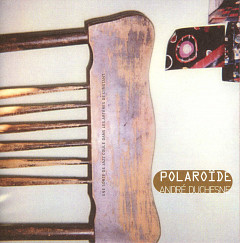
    From its latest crop, these two discs showcase some of the label’s familiar faces. The first, Polaroïde, is infused by a chamber-music aesthetic. One need not go further than its instrumentation of acoustic guiar, viola and drums/percussion to get the hint. The very disparate backgrounds of the players is worth noting. The leader, guitarist André Duchesne, is a 30-year veteran of dhe Québécois art-rock scene who seems to have tumed into a “switched off” improviser since breaking a lengthy perfomming and recording hiatus in the past couple of years. In contrast, violist Jean Rene is thoroughly trained in classical music and has extensive expe rience as an orchestral player. Drummer Pierre Tanguay is a musique actuelle regular.

    In spite of this unlikely combination, a meeting of minds does occur over the disc’s 12 tracks. With four tracks bearing the CD title, one could be tempted to all: about improvisational snapshots, each one allowing finely demiled sonic pictures to develop gradually before one’s ears. Though there are no composer credits, either individual or collective, there are many moments which manage to attain dhe clarity of a well-conceived score. The obliquely written notes (uncredited) do refer to Stravinsky, and a nod to Bartok would also have been welcome.

    Chants rupestres in Coda Magazine

    “Review”, Marc Chénard, Coda Magazine, no. 307, January 1, 2003
    Wednesday, January 1, 2003 Press

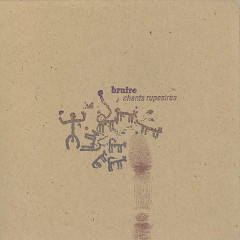
    The second disc, Chants rupestres, is quite a different proposition, because it is essentially programmaric. The titles of the 15 tracks resemble primitive-looking hieroglyphs and are virtually impossible to reproduce here. To quote the short insert blurb, this is “quartet born of haircovered and primeval sinew; cave music, prehistoric ageless and archaic. Casting our thinking about music back 100,000 years, perhaps to its very birth, to those first true pioneering musical experimenters, our ancestors.

    Given much of the debate raging these days about reclaiming musics of the past, one has to commend drummer Michel F. Côte for outdoing everybody in that department, yet one has to wonder if there is some sort of underlying irony also at work in this. In this most unusual project of his group “Bruire”, he produces an imaginary primitive music with the help of bassist Normand Guilbeault, reedist Jean Derome (on baritone sax throughout, an appropriate horn to capture the lumbering ways often attributed to our earliest ancestors) and Martin Tétreault (whose turntable playing blends so seamlessly into the whole). As in the first disc reviewed, it’s unlikely that there are compositions worked out in any pre-ordained or notated ways, but there are definite frameworks which allow for collective structuring and individual expression alike. In the 48 minutes of this disc, this musical project not only succeeds in tweaking our imaginations, but also offers a welcome antiddote to the masses of nimble-fingered musical demonstrations heard in every musical style, jazz and free improv included.
    … this musical project not only succeeds in tweaking our imaginations, but also offers a welcome antiddote to the masses of nimble-fingered musical demonstrations heard in every musical style, jazz and free improv included.
  • 458
  • 459
  • 460
  • 461
  • 462
  • 463
  • 464
  • 465
  • 466