actuellecd
  • This website is also available in English.

Blog

3585 results
  • 362
  • 363
  • 364
  • 365
  • 366
  • 367
  • 368
  • 369
  • 370
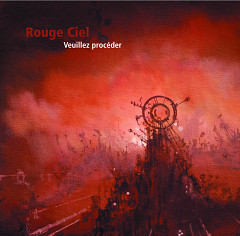
  • Veuillez procéder in Downtown Music Gallery

    “Review”, Michael Anton Parker, Downtown Music Gallery, September 30, 2005
    Friday, September 30, 2005 Press

    A totally unexpected avant-prog monster! This is a very young band with four multi-instrumentalists covering violin, turntable, electronics, mandolin, piano, keyboards, guitars, drumkit, trumpet, flugelhorn and percussion in various combinations. This rich timbral palette is deployed in the service of thorny, ambitious constructions ranging across an Art Zoyd / Univers Zero sound alternately subdued and much more aggressive than these groups, buoyant Miriodor jaunts, pastoral fusion, pyrotechnic prog-fusion, crazed free jazz violin solos, pedestrian avant-jazz, post-Kagel deconstructionism by way of free improvisation, etc. While heavily tending towards a somewhat conventional jazz or prog foundation, this group is extremely unusual in the extent they use harsh and experimental elements. It hits the avant-prog prototype dead-center and will be a serious revelation for fans of the genre. With its intricacy, playfulness, and occasional manic abandon, it carries on the abandoned tradition of Debile Menthol.

    I can’t help but feel that post-modernism this brash and fabulous can only come from Quebec, and, indeed, Rouge Ciel represents something of a new generation emerging from the astoundingly fertile Musique Actuelle scene in the Montréal area. The label, Monsieur Fauteux, is a subdivision of Ambiances Magnetiques and the album was even produced by the great Joane Hétu. Even with Rouge Ciel’s much stronger rock emphasis, the stylistic collages are rather similar to Jean Derome et les Dangereux Zhoms (a special favorite group of mine), rarely adapting an idiom wholesale. For example, even with a handful of truly out free jazz violin and piano solos, the rhythm section never shifts into a free jazz mode, sticking with fairly simple and regular accompaniment instead. It’s this kind of rootedness in easily grasped structures combined with adventurous elements that defines that happy medium most avant-prog fans yearn for. For all their brashness and variability, Rouge Ciel spend a lot of time in some prog or post-jazz comfort zone or another, great places to be when it’s done this well. Stepping back from the specific aesthetic choices of the ensemble and considering a wider musicological context, maximal postmodernism as a general possibility that Rouge Ciel nicely exemplifies is rather rare and in itself unlikely to be anything less than thrilling, but there’s a serious gap that deserves to be acknowledged between thrilling and transcendental. Rouge Ciel and Dangereux Zhoms don’t reach the transcendentalism of the two pinnacles of maximal postmodernism looming above all others, A.D.D. Trio and Gregg Bendian’s Interzone, and it’s easy to see why: Rouge Ciel’s postmodern synthesis is primarily quotational and cumulative, whereas those two towering singularities of creative music rarely leave a trace of their sundry atomic inspirations. It’s a difference between escaping categories and multiplying them. Correspondingly, Rouge Ciel doesn’t attempt to travel the other historically witnessed path to transcendental maximal postmodernism, the jump-cutting of Naked City. These theoretical remarks are only meant to put my roiling enthusiasm for Rouge Ciel in perspective and avoid hyperbole. The bottom line is that this disc knocked my socks off and I had to play it three times in a row because I was so flabbergasted to discover such distinctive and elite avant-prog!!! They have one earlier release from 2001 I’ll be checking out ASAP.

    A totally unexpected avant-prog monster!

    Jean Derome, Ensemble SuperMusique (ESM) in Le Devoir

    “En bref — Escale artistique au Vieux-Port”, Le Devoir, September 23, 2005
    Friday, September 23, 2005 Press

    Demain et dimanche, la deuxième édition des Escales improbables prend d’assaut le quai King Edward du Vieux-Port de Montréal.

    L’événement éclectique conjugue cette année autant de disciplines diverses que le théâtre de marionnettes, le chant lyrique, le cinéma et surtout la musique. Des musiciens-performeurs interprètent des œuvres du compositeur Michel Smith à partir de machines-instruments ambulants. Nicolas Brault fait tomber des baleines du ciel dans un film-conte animé. Jean Derome et SuperMusique proposent une expédition de canot-camping allégorique le long d’une rivière imaginaire. Les côtes gaspésienne et italienne se croisent dans Cargo, théâtre d’image et de marionnettes. On découvre ces performances extravagantes et audacieuses en déambulant au bord du fleuve, comme une invitation au voyage.

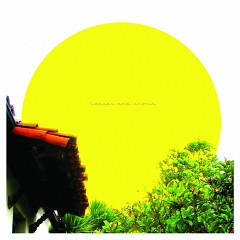
    Leaves and Snows in Les Cahiers de l’ACME

    “Critique”, Roald Baudoux, Les Cahiers de l’ACME, no. 224, September 17, 2005
    Saturday, September 17, 2005 Press

    Ce CD contient une quinzaine de musiques du trio d’improvisateurs Bethiaume — Sirjack — Teale. Si Quentin SirJack (piano et percussions) et Antoine Berthiaume (guitare et percussions) œuvrent sur des instruments acoustiques, Norman Teale ne se contente pas d’enregistrer et de mixer le tout, mais fournit aussi une prestation électroacoustique discrète. Sur ces courts morceaux (de une à cinq minutes), on découvre un travail (qui relève avant tout de l’improvisation) sobre et juste réalisé par des musiciens qui — tout simplement — (s’)écoutent.

    … sobre et juste réalisé par des musiciens qui — tout simplement — (s’)écoutent.

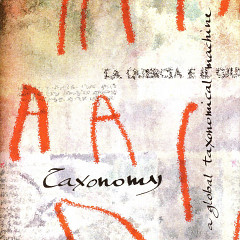
    A Global Taxonomical Machine in Les Cahiers de l’ACME

    “Critique”, Roald Baudoux, Les Cahiers de l’ACME, no. 224, September 17, 2005
    Saturday, September 17, 2005 Press

    Taxonomy est un trio italien formé en 2003 et composé de Elio Martusciello (guitare et instruments électroniques), Graziano Lella (ordinateur portable), également connu sous le pseudonyme arg, et Roberto Fega (échantillonnage et traitement). Martusciello n’est pas un inconnu, puisqu’il mène une carrière de compositeur électroacoustique et a remporté de multiples concours dans le monde entier. Mais ici, les musiques sont co-composées avec les autres membres de la formation. De plus, l’improvisation occupe également une large part dans la construction de ces musiques (Martusciello et Fega font d’ailleurs partie du groupe d’improvisation bien connu Ossatura). Les matières sonores présentes A Global Taxonomical Machine démontrent un savoir-faire certain dans l’utilisation de l’outil électroacoustique au travers de la qualité de facture, presque équivalente à ce qu’on peut trouver dans des pures musiques de studio. Taxonomy parvient à relier de manière heureuse des univers variés et des atmosphères sonores contrastées, tantôt agitées, tantôt d’un calme olympien. Malgré ces qualités indéniables, il manque à ces musiques un peu de densité dans l’écriture et surtout une forme. En effet, la succession d’états statiques basés sur des figures sur fond ne donne pas à percevoir une réelle dynamique à l’œuvre dans le temps.

    Taxonomy parvient à relier de manière heureuse des univers variés et des atmosphères sonores contrastées, tantôt agitées, tantôt d’un calme olympien.

    A Global Taxonomical Machine in Sands Zine

    “Review”, Marco Carcasi, Sands Zine, September 15, 2005
    Thursday, September 15, 2005 Press

    Martusciello, Fega and Lella: almost quietly and without unnecessary roars, this trio has released an agile and slim album, one that after a few listenings firmly takes place in your cd player. A Global Taxonomical Machine is made of microstatic, granulous bursts, and of evocative, placid and never too silent silences, often interrupted by sly-as-a-serpent’s-kiss acoustic forays.

    The magnifiyng lens the trio uses has been already tested on many live occasions-the three musicians generate a sound path made of microscopic, isolated cells, each one of them being the constituent of larger structures.

    This is errant electroacoustic music, moved by a quest for the detail; an acousmatic shadow-line that-as in the beautiful Behind Me-crosses and trespasses different stylistic strata, always with an economy of means, careful not to get stuck too long in too fixed a place.

    These are fast and serene neural migrations that move along a series of sensorial, fascinating ellipses; that rummage between improvised spasms and sneaky, minimal instances; a sarcastic behind-the-scene aftertaste that makes all the difference.

    These pieces seem fantastic, strange stammering creatures, grown in the shadow of a mountain made of doubts; they are simple creatures that move continuously and involuntarily forward right when you stumble upon them; they are rude and not really talkative; they do not offer easy grips to be interpreted with, only a general fragrance floating in the air after they’re gone, a particular, interior resonance that deeply shakes without ever being hostile. Harmony and awareness.

    Action and praxis.

    These are fast and serene neural migrations that move along a series of sensorial, fascinating ellipses…

    A Global Taxonomical Machine in Kathodik

    “Review”, Marco Carcasi, Kathodik, September 8, 2005
    Thursday, September 8, 2005 Press

    Reality continuously mutates, depending on the point of observation. A road is not only a road, it has been a mountain, a forest, probably an open sea; maybe even nothing at all.

    Time itself is a concept that most frequently appears to be nothing more than a “market trick” that very little adds to each individual’s life. Quite the contrary indeed!Martusciello, Lella and Fega seem to be perfectly aware of the duplicity hidden under every thing and every event; their solo activities clearly show the unstoppable need to trespass the worn schemes of most electroacoustic improv music; their ideal model is loss, not certainty.

    The language of this unitarian approach seem to greatly amplify their single voices, and to act as an hypothetic convex mirror generating altered visions of the surroundings.

    Ad Esempio, for instance, with its mysterious clarinet moving on the surface of a series of background noise, is exemplary in its enigmatic pace; the distant jerks seem to be actual disturbances of everyday life that suddenly break forward; is this a bad dream fully aware of being bad?

    Probably yes. Everything becomes even clearer in Eme, when a female voice set against silence and a whole array of sound disturbances, exclaims “scamorza e prosciutto”, before being swallowed one more time into the noisy background.

    This is the soundtrack to a hypothetic documentary on a silent Miles Davis, or a reportage on Throbbing Gristle while preparing the sauce for their pasta during the recordings of 20 Jazz Funk Greats, or even a movie yet to be filmed. This is the perfect shell to listen to if you’re treasure-hunting; but if what you will listen is just the sound of the sea, or even nothing at all, do not worry; only the shell and what you want to ear, counts. Everything else will show up, sooner or later, whether you want it or not. The lunar or circus-like contortions-according to your state of mind-that permeate Dipinto sul Nulla are, if that’s still possible, yet another confirmation of everything said so far.

    The crossing over of the mere act of seeing and earing. A road that suddenly transforms itself into a forest and then a stone and then back again into a road. This is without any doubt one of the crucial pivot of our own home-grown contemporaneity.

    Go out and bring it home at any cost.

    Voto 8

    This is without any doubt one of the crucial pivot of our own home-grown contemporaneity.
  • 362
  • 363
  • 364
  • 365
  • 366
  • 367
  • 368
  • 369
  • 370