actuellecd

Blog

3585 results
  • 254
  • 255
  • 256
  • 257
  • 258
  • 259
  • 260
  • 261
  • 262
  • La notte fa in Blow Up

    “Waves”, Stefano Isidoro Bianchi, Blow Up, no. 127, December 1, 2008
    Monday, December 1, 2008 Press

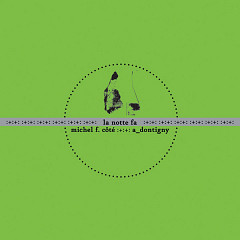
    Aimé Dontigny è il turntablist del duo morceaux_de_machines (con Érick d’Orion), Michel F Côté è il batterista dei Klaxon Gueule; gli ospiti del loro disco sono Bernard Falaise e Alexandre St-Onge, rispettivamente chitarra e basso degli stessi Klaxon Gueule, Alexander MacSween dei Foodsoon (batteria aggiunta in un brano) e Jean René (viola in un brano). Chi segue le vicende dell’impro-rock canadese sa che abbiamo a che fare con un grumo di musicisti che si collegano, scambiano e ritrovano in mille dischi diversi con formidabili capacità camaleontiche e dissimulatorie: in pratica riescono a suonare letteralmente di tutto e lo fanno con estrema nonchalance. Stavolta la coppia Côté-Dontigny propone un suono sfasciato e destrutturato — la masterizzazione è dell’esperto Paul Dolden: a quando un nuovo disco suo? — ma solidamente ancorato a una visione da ‘track’ ampia e accogliente, aperta ad input diversi e de/strutturata cum grano salis, facendo in modo cioè che restino linee maestre come se si trattasse della scrittura di autentiche ‘canzoni’. Tutto si basa nell’interazione di batteria-percussioni e cut-up da dischi e computer: Ritmi di oggetti, Jumping Off Minoru Yamasaki’s Building e Target=”blank_” con l’impeto di grooves ottusi e nebbiosi, Unlisted Card Number come dialogo elettronico di glitch e microwaves, Paxil Origami Club e Naines qui gesticulent in astrazioni di breakbeat e galleggianti tastiere spacey, Bounce dat ARN e The Book Burner come impossibili out-funk alla Super_Collider, Lube liqueur e Visiones nocturnae disperdendosi in sublimi scie di filamenti jazz.

    Un’operazione che può ricordare DJ Shadow in una visionaria versione impro-jazz-rock e senza la passiva dipendenza da culto del vinile: i cut-up sono sempre funzionali a se stessi e non meri ammenicoli da esporre con matematico scientismo, strumenti puri d’arrangiamento all’interno di un raffinatissimo modello di scrittura ri/creativa che ruota come una girandola mostrando sempre nuove facce e dettagli infiniti a ogni ascolto. Tenuto e trattenuto insieme dal collante di un’intesa perfetta e di una comunicativa a tratti persino vagamente ‘pop’, La notte fa è l’ennesima conferma di due talenti — e con loro di un’intera comunità di musicisti — dalle possibilità pressoché infinite.

    La notte fa è l’ennesima conferma di due talenti — e con loro di un’intera comunità di musicisti — dalle possibilità pressoché infinite.

    10 Taxonomical Movements in Blow Up

    “Altrisuoni”, Dionisio Capuano, Blow Up, no. 127, December 1, 2008
    Monday, December 1, 2008 Press

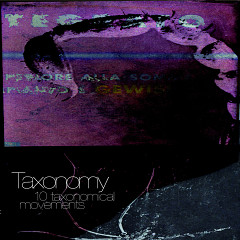
    Più programmatico del lavoro d’esordio, è un letto fluido creativo senza soluzione di continuità ma nel quale si distinguono dieci segmenti con un proprio tematismo. A parte il primo e l’ultimo movimento, semplicemente intitolati Ouverture (un drone sinusoidale più loop di voce femminile affannata) e Epilogue (cangiante di piano elettrico, chitarra, elettronica e che chiude similmente all’apertura), le altre composizioni hanno una duplice denominazione che ne sottolinea il carattere strutturale-dinamico e di contenuto. La qualità sonora di II Sostenuto — Sospeso è definita da un continuum elettronico-digitale, graniglia elettroacustica, e da un drone che sembra (farvi) levitare nello spazio. III Andante con moto (Tema) è jazz da camera elettro-cubista, con ritmo informale ed il clarinetto basso di Fega che disegna un tema melodico anti-accademico. In VII Larghetto — Appassionato (tema) la melodica intona una specie di tango mentre il basso di Lella e le corde di Martusciello disperdono sulla trama note pizzicate. IX Grave — narrante inizia con (quello che sembra) il rumore di fondo, basso e sordo, di un microfono aperto e poi dipana field recordings di voci, suoni parassiti e d’ambiente. Taxonomy elabora un approccio spontaneo al suono che trova un rigoroso arrangiamento in dieci movimenti tassonomici attraverso la fase compositiva. Come dire che la fase compositiva diventa un momento di analisi ‘etico-politica’ e la musica che ne scaturisce l’espressione dinamica delle idee. Sullo sfondo engagé paiono esserci gli AMM e fors’anche gli Ultra-red. Sia ben chiaro, nulla di manifesto (di che parliamo: scontro tra nord e sud? neo-consumismo? intolleranza ideologica? Ogm?) ma l’urgenza critica di simili lavori s’impone e non ci si può non interrogare su quello che ci accade intorno.

    Taxonomy elabora un approccio spontaneo al suono che trova un rigoroso arrangiamento in dieci movimenti tassonomici attraverso la fase compositiva.

    Musique pour objets en voie de disparition in Touching Extremes

    “Review”, Massimo Ricci, Touching Extremes, December 1, 2008
    Monday, December 1, 2008 Press

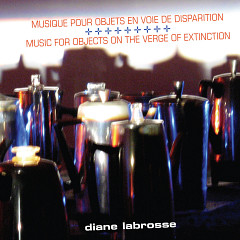
    In the late 80s/early 90s Ambiances Magnétiques was among my darling labels but, inexplicably, with the passage of time I kind of lost contact and became less aware of their production. My loss, as this CD from 2007 is indeed a clever-sounding artifact needing to be rescued from a dimension of implicit oblivion. Diane Labrosse has always been a bright-minded artist, collaborations with the likes of Jean Derome, Michel F Côté, Geneviève Letarte and Joane Hétu just a small fraction of a career expanding through the whole gamut of avant-garde. As the record title explains, the tracks were constructed around the utilization of “objects on the verge of extinction”, such as alarm clocks, black and white TV sets, old printers and electric percolators. Labrosse, who’s gifted with a wholehearted compositional wisdom allowing her to understand what’s the ideal balance of the ingredients in a piece, utilized the “voices” of the machines in relatively comprehensible contexts, typically featuring a maximum of one or two instruments. She was helped by Marie-Soleil Bélanger, Jean Derome, Bernard Falaise, Lori Freedman, Jean René and Pierre Tanguay, stalwarts of the Quebecoise scene who contributed with efficient proposals and untarnished inventiveness to Labrosse’s conceptions. This is a delightful assortment of physical antiquity and instrumental individuality that leaves plentiful spaces for the intellect to take action, moments of charged standstill to be found amidst systematic reiteration and mechanical interplay. Above all, the sense of joyful mischievousness characterizing the album causes us to realize why there’s no need of disproportionate solemnity to conceive stimulating music.

    Above all, the sense of joyful mischievousness characterizing the album causes us to realize why there’s no need of disproportionate solemnity to conceive stimulating music.
    Édifices naturels in Touching Extremes

    “Review”, Massimo Ricci, Touching Extremes, December 1, 2008
    Monday, December 1, 2008 Press

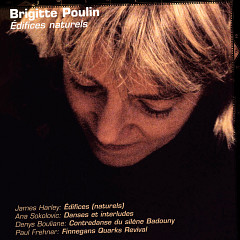
    This is my initial encounter with Canadian pianist Brigitte Poulin who, besides being a refined soloist, is also active as a chamber musician and vocal accompanist tackling many kinds of repertoire “from the invention to the deconstruction of the piano”, as per biographic notes. Not a surprise then that she got a doctorate in interpretation of contemporary piano literature at the University of Montréal. Édifices naturels is an absorbing collection in which she executes pieces by four young composers — James Harley, Ana Sokolović, Denys Bouliane and Paul Frehner, all of them perfect strangers to this writer (mea culpa). There seems to be a sort of aesthetic continuity among these scores, whose stylistic range comprises graceful elegies, dissonant eruptions, hints to Chick Corea circa Children Songs and materials at the border with pure improvisation. Poulin’s approach with the program is characterized by zeal and elegant restraint at once, her phrasing releasing scents of awareness, a degree of nostalgia for the past, the grief-stricken consciousness of an impossible-to-relive atmosphere. The impressive aspect of this woman’s style is that both impetus and rarefaction appear to be factors of a same equation, the music wrapped by an aura of longing that lets us soak up even the most convoluted segments with contentment, the level of sober musicianship high throughout, a lovely feminine sensitiveness perceptible ever since the very first tones of each composition. This was a much welcomed soundtrack for a dismal November evening.

    … a lovely feminine sensitiveness perceptible ever since the very first tones of each composition.

    BASE in La Scena Musicale

    “Critique”, Annie Landreville, La Scena Musicale, no. 13:4, December 1, 2008
    Monday, December 1, 2008 Press

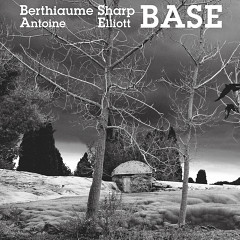
    Certains enregistrements sont comme des recueils de poésie: épars au milieu de quelques dizaines de pages surgissent des instants de grâce inopinés, ou encore de pures émotions provenant de sons acoustiques ou trafiqués. La démarche suivie par les deux guitaristes Antoine Berthiaume et Elliott Sharp dans ce disque pourrait bien être qualifiée d’extrême puisqu’ils nous proposent un véritable mur de son. La densité et l’intensité du propos n’est pas sans rappeler un Iannis Xenakis ou encore le Canadien Paul Dolden. Les 11 plages sont construites sur des strates sonores multiples, le tout foisonnant de textures, de mouvements et de profondeur. L’écoute s’avère fascinante, quoique à la limite du tolérable, du moins pour certaines oreilles. Ce tandem nous propose une musique apocalyptique aux confins de l’exploration la plus débridée, pour ne pas dire de la débauche sonore. Pourtant, on ne peut qu’apprécier ce travail pour le seul défi qu’il lance aux auditeurs.

    … une musique apocalyptique aux confins de l’exploration la plus débridée…

    Face à la dérive in La Scena Musicale

    “Critique”, Annie Landreville, La Scena Musicale, no. 13:4, December 1, 2008
    Monday, December 1, 2008 Press

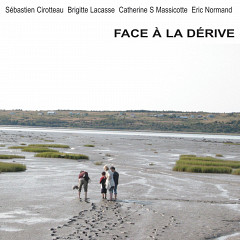
    À l’instar du Trésor de la langue de René Lussier, Face à la dérive est un documentaire sonore qui donne la parole… au fleuve Saint-Laurent. La création de cette œuvre s’est réalisée en deux temps: la collecte de sons de la nature et des témoignages enregistrés aux abords du fleuve ont d’abord été employés dans une série de spectacles de musique improvisée; par la suite, ces matériaux ont été retravaillés durant une résidence en France pour réaliser ce document. Le bassiste Éric Normand, la pianiste et accordéoniste Brigitte Lacasse et la violoniste Catherine S Massicotte, qui habitent tous le Bas-Saint-Laurent, complètent les propos avec sobriété, inventivité et une évidente complicité. Il y a ici un bel équilibre entre les musiques, les sons et la parole. Il est aussi touchant d’y entendre des gens qui travaillent dans le coin, qui fréquentent ou qui aiment tout simplement ce fleuve. On s’amusera d’ailleurs à entendre Normand apprendre à ramer, littéralement. Signalons enfin la participation de Sébastien Cirotteau au projet en tant que preneur de son, responsable des traitements et d’un montage final fort bien ficelé.

    Il y a ici un bel équilibre entre les musiques, les sons et la parole.
  • 254
  • 255
  • 256
  • 257
  • 258
  • 259
  • 260
  • 261
  • 262