actuellecd
  • This website is also available in English.

Blog

3585 results
  • 252
  • 253
  • 254
  • 255
  • 256
  • 257
  • 258
  • 259
  • 260
  • Little Man on the Boat in Paris Transatlantic

    “On Barnyard”, Nate Dorward, Paris Transatlantic, December 12, 2008
    Friday, December 12, 2008 Press

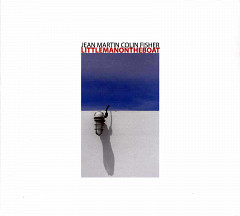
    Martin seems to like duets, though the examples of the format on the label are about as different from each other as you could imagine. Little Man on the Boat, his collaboration with saxophonist/guitarist Colin Fisher, is a homemade brew of warped pop, rock, free jazz and ambient textures. The production is elaborate but small-scale, constructing a serenely artificial world out of layered instruments, loops, overdubs, and soft chorales of horns and voices; even a rock guitar solo here is oddly scaled-down, suggesting the comfortably self-enclosed pleasures of a child’s toy. The disc is often best when the materials are reduced to a bare minimum: the title track, for instance, is a gentle whirl of acoustic guitar and consoling horns; A Long Way from Beacon Hill blends hushed ambience, weightless keyboards, trumpet, and a guitar loop that splits apart like light across rippling water. “Cat Song” is especially barebones: hearttugging guitar chords issue at the slowest of drips while Martin’s brushes skim the surface of his cymbals; halfway through, a third element intrudes, hesitant whinnies from what sounds like a sax with a child’s kazoo stuck in its bell. Even the busier tracks avoid clutter: Koyaya, for instance, shows Martin’s deft producer’s touch, as he nibbles away at Fisher’s rubbery jazz-rock guitar solo with typewriter percussion, chilly organ chords, and pert horn sections that drop in erratically for just a note or two. As with a lot of Barnyard releases, it takes a few listens for the disc’s surface playfulness to wear off and the underlying seriousness and musical substance to come through.

    The production is elaborate, constructing a serenely artificial world

    I’m a Navvy in Paris Transatlantic

    “On Barnyard”, Nate Dorward, Paris Transatlantic, December 12, 2008
    Friday, December 12, 2008 Press

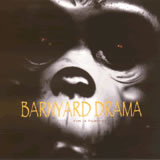
    Barnyard Drama is the Toronto husband-and-wife duo of singer Christine Duncan and drummer/multi-instrumentalist Jean Martin, though more recently the group has doubled in size with the addition of guitarists Justin Haynes and Bernard Falaise (the latter on loan from Montréal’s musique actuelle scene). The churning guitars and dark, hallucinatory sound of I’m a Navy set it apart from other offerings on Barnyard Records, which generally tend towards quiet, everyday surrealism (as the punning title of one release on the label puts it, “piano music”). Some of the pieces are too arch, especially the overripe The Blues and Duncan’s faux-naive ballad about “that butt’ry burning feeling”, sung in a butter-wouldn’t-melt-in-her-mouth British schoolgirl accent. But the air of wicked mischief is generally quite engaging, the musicians conjuring up a black magic rite out of grungy blues, snarling electronica, and the guitar-driven meltdown at the end of The Big Gundown. Duncan’s voices range from gorgon to sexpot to blithering idiot to chanteuse, but isn’t mere grotesquerie (which tends to wear thin very quickly, as witness countless free-improv vocal albums); she takes the trouble to really occupy these different personae, until the music becomes a dizzying meditation on female innocence and experience. Great choice of cover tune, too: the lyrics of Noel Coward’s Little Girl Blue may express bemused pity for the girl, but the music’s already leaving the human scale behind, floating off into the zero-gravity dark, the stars twinkling all around in detached bemusement.

    The music’s already leaving the human scale behind, floating off into the zero-gravity dark, the stars twinkling all around in detached bemusement

    Bozzini Quartet, Pierre Alexandre Tremblay in The Observer

    Cage and Stockhausen meet their match as the Huddersfield Contemporary Music Festival hits 30”, Guy Dammann, The Observer, December 7, 2008
    Sunday, December 7, 2008 Press

    “The British may not understand music but they absolutely love the sound it makes.” So quipped Thomas Beecham, and he certainly put his finger on something. For while the conductor and one-time pillar of the British musical establishment was no friend of the musical avant-garde, one of its guiding principles has none the less been to liberate the sound music makes from the various kinds of ‘understandings’ with which it has been reined in.

    It should be no surprise, on Beecham’s account, to find that the British play host to one of the best-loved avant-garde music festivals, where musicians from all over the world come each November to witness the latest fruits of musical experimentation in Huddersfield, West Yorkshire. That said, with the festival reaching its 30th anniversary, this year’s event had a distinctly retrospective flavour to it, with the closing event consisting of a modified recreation of a John Cage concert organised in 1958 by the artists Robert Rauschenberg and Jasper Johns.

    The original concert was a riot, the musicians protesting as loudly as the audience against the minute unpredictability of the Concert for Piano and Orchestra, an hour-long work in which the pianist struggles through 60 pages containing 84 different kinds of notation. The Huddersfield recreation, masterfully handled by Philip Thomas and the Apartment House group, was an altogether tamer affair, a reminder that much of Cage’s output is, while still fresh, classic primarily in the documentary sense of that term.

    The first part of the concert, though, revealed Cage at his lasting best — in particular the Webernesque miniatures of 1934’s Six Short Inventions and 1943’s muted She is Asleep — and the second part departed from the original by presenting six new compositions. Witty tributes from Alvin Curran and Philip Corner framed offerings from younger composers — short pieces by Markus Trunk and Claudia Molitor confirming that Cage’s musical influence remains a powerful force.

    Stockhausen was also well served during the festival, particularly by the mesmerising talents of the Neue Vocalsolisten Stuttgart, who performed his 1968 work Stimmung. Performers of Stockhausen must be accomplished acolytes as well as musicians, and witnessing the weird sounds and occult antics required by ‘the master’ in performance can yield the impression of a musical L Ron Hubbard, perpetrator of an inconceivably vast aesthetic con trick. Stimmung consists of six voices passing around intricately worked-through motifs, interrupted by occasional ejaculations spoken in various languages. “C’est complètement nul!” one of them shouts, some way in, seemingly inviting the obvious affirmative response. But in fact the piece both anticipates and quickly absorbs any attentive audience’s responses, literally ‘reattuning’ them to their environment.

    The great discovery of the festival for me was James Tenney, a theorist and composer who worked with both Stockhausen and Cage. Before he died in 2006, Tenney amassed a significant and still relatively untapped body of extremely concentrated work, unfolded in a series of three concerts by the enterprising and gifted Canadian string quartet Quatuor Bozzini. Though diverse in terms of the techniques employed and soundworlds explored, Tenney’s œuvre is unified by its single-minded investigation of the listening experience. Especially memorable was Koan, a work in which five melodic lines move steadily towards and away from each other by microtonal degrees. There’s nothing to ‘get’, no complex puzzle to solve, simply blissful sounds sliding into and out of existence, like patches of forest floor illuminated fleetingly by the sun’s slow arc above the canopy.

    Two further highlights included the Piano Baschet, a visually and aurally arresting exploded piano mechanism fitted with pyramidal cones which catch the eye as well as sustain and alter the vibrations of the instrument. Of three newly composed works for the object, reconstructed by Pierre Malbos, only Pierre Alexandre Tremblay’s imaginative evocation of the casting of bells seemed to make full use of the instrument’s oddly restricted sonic capabilities. Another was Dutch composer Peter Adriaansz’s Prana, which uses electric-magnetic bows to turn a piano and three guitars into powerful sustaining instruments, generating slow-moving progressions, rich in overtones, to unfold a minutely constructed eternity.

    Fundamentally static, devoid of the grand emotions associated with the classical repertoire, such music prompts many to ask what the point of it is. After a concert of Tenney and Stockhausen, when you emerge into the dull, cacophonous roar of the city, you may find that it suddenly yields a gentle, secret harmony. At this point, though your question may remain unanswered, you’ll certainly have forgotten why you asked it.

    … enterprising and gifted…

    Pas de deux in Voir

    “Ambiances percussives”, Réjean Beaucage, Voir, December 4, 2008
    Thursday, December 4, 2008 Press

    La compositrice et percussionniste Danielle Palardy Roger prépare un concert-lancement avec Fred Frith et sort sa batterie de cuisine avec l’Ensemble SuperMusique.

    En mai dernier, sa musique, écrite, était interprétée par les musiciens de l’Ensemble contemporain de Montréal dirigés par Véronique Lacroix; mercredi prochain, elle improvisera de A à Z le temps d’un concert en duo avec le grand guitariste Fred Frith; la semaine suivante, elle sera au sein de l’Ensemble SuperMusique pour interpréter sa musique (et d’autres) notée(s) sur des canevas rigoureux, mais ouverts, dans un programme imaginé par Joane Hétu. Pour Danielle Palardy Roger, tous les moyens sont bons pour exprimer sa musicalité, du «carcan» de la partition à la spontanéité la plus crue.

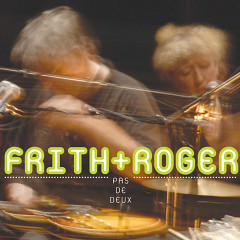
    Lorsque je lui demande si le concert avec Frith sera du même genre que ce que l’on peut entendre sur leur disque Pas de deux, enregistré en 2006 et qui sera lancé au même moment, elle répond: «Je n’en sais rien, il y a bien longtemps que nous avons joué ensemble! On le saura le soir du concert. Nous n’avions jamais joué ensemble avant les deux concerts qui ont servi à faire le disque, mais la rencontre de la musique de Fred a été fondamentale dans ma démarche. Je ne suis pas une vraie batteuse de rock, mais dans Wondeur Brass ou Justine, c’était tout de même mon rôle, et je me sens des atomes crochus avec Fred de ce côté-là». Peut-être même que le multi-instrumentiste européen jouera aussi de la batterie puisqu’il y en aura deux sur scène ce soir-là. Michel F Côté et Isaiah Ceccarelli, deux percussionnistes assez éclatés, se produiront juste avant pour nous donner un aperçu de leur disque Vulgarités, aussi lancé lors de cette soirée.

    Une semaine plus tard, Danielle Palardy Roger passera deux soirs à la SAT pour participer au programme Y’a du bruit dans ma cabane, avec l’Ensemble SuperMusique (Jean Derome [briqueteur], Joane Hétu [maître de chantier], Diane Labrosse [ébéniste], Pierre-Yves Martel [plâtrier], Pierre Tanguay [maçon] et Martin Tétreault [plombier]!). Avant et après, elle occupera ses fonctions de présidente du regroupement Le Vivier, qui offrira bientôt aux musiques nouvelles une Maison au cœur du Quartier des spectacles. Espérons seulement que ce n’est pas Martin Tétreault qui y fera la plomberie!

    Kim Myhr in The Wire

    “On Location: Open Frame Festival (Brisbane, Australia)”, Andy Hamilton, The Wire, no. 298, December 1, 2008
    Monday, December 1, 2008 Press

    Kim Myhr from Norway was more leftfield, though that wasnt evident at first from the haunting, spare guitar which bookened his set. His little instruments — an egg whisk with motor attached, comb, metal bowl and plate, and what sounded like a toy dulcimer — produced a compelling pattern of tiny percussive and vaguely-pitched sounds, with echoes of Harry Partch. Myhr has recorded with Jim Denley among others, but brought no CDs with him — so, a true artist, but maybe he needs to develop more of that entrepreneur spirit.

    … a true artist…
  • 252
  • 253
  • 254
  • 255
  • 256
  • 257
  • 258
  • 259
  • 260