actuellecd
  • This website is also available in English.

Blog

3585 results
  • 222
  • 223
  • 224
  • 225
  • 226
  • 227
  • 228
  • 229
  • 230
  • Somewhere the Sea and Salt in Vital

    “Review”, Dolf Mulder, Vital, no. 703, November 1, 2009
    Sunday, November 1, 2009 Press

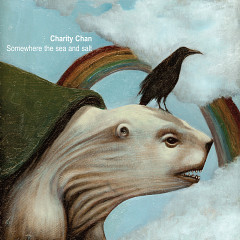
    Solo album Somewhere Sea and Salt by pianist and improvisor Charity Chan. Chan studied and plays classical and modern repetertoire, but she focuses mainly on improvised music today. The piano is her tool. She uses all kinds of objects to trigger unheard sounds, timbres and resonances from the piano. With this wide palette of possibilities she carefully choses the sounds, etc. she can use. Not just to demonstrate a bunch of extended techniques, but in function of a minute and detailed research into all the subtleties between the different sounds that can be generated from the piano. This, sometimes in a way that it is hard to imagine that the sounds come from the piano. As a result Chan creates a diversity of moods and textures, sonic landscapes that one loves to explore.

    Chan creates a diversity of moods and textures, sonic landscapes that one loves to explore.

    Ice Machine in Vital

    “Review”, Dolf Mulder, Vital, no. 703, November 1, 2009
    Sunday, November 1, 2009 Press

    Mankind is the name of a duo that started in 2006 comprised of Alexis O’Hara and D Kimm. They combine sound poetry, noise improvisations and ambient plus performance into something of their own. Ice Machine‚ is the first result from their work. On stage the two multitalented, interdisciplinary performers use costumes, video projections, etc. to complete their multimedia art. It has been a long time ago since I found a manifest by the artists inside a record. But here we have one: "we are fresh and naïve, curious and open to all discipline, media, philosophy or technique. That said, we have an opinion on everything and will speak it regardless of whether it is asked of us." And so on. Although there french poems are not comprehensible for me, there is enough to be enjoyed here. They create intriguing soundscapes in an lo-fi and trashy manner. Very noisy ones like in the instrumental My favorite Agression, with drones like in Post-Colonial. Charming is almost a poppy song and The Anti Rules a chanson.

    They create intriguing soundscapes in an lo-fi and trashy manner.

    Ugly Beauties in Vital

    “Review”, Dolf Mulder, Vital, no. 703, November 1, 2009
    Sunday, November 1, 2009 Press

    Marilyn Lerner (piano), Nick Fraser (drums) and Matt Brubeck (cello). Fraser moved from Ottawa to Toronto in 1996 and developped himself into a very busy and active musician who has played with a long list of musicians. Brubeck is a performer specialized in improvisation on the cello. So most of his work is within field of jazz and improvisation. However he played also for many years with Waits, plus Dixie Chicks and Sheryl Crow. Lerner is a reputed pianist and improvisor of worldwide fame, working in the worlds of jazz, improvisation, klezmer and 20th century classical music. Besides she composes for film, theatre, radio and television. They recorded their first one in may 2008 in a Toronto studio. It is made up of collective improvisations plus compositions by all three musicians. Ugly Beauties makes you forget the differences and boundaries between jazz, contemporary classical music and improvisation. These are are very virtuous musicians who demonstrate their talent in a very coherent way with engaging interplay. The pieces focus on different musical aspects. This way the trio shows many faces. The opening track Windsor is one of the most odd grooving pieces I have ever heard. Oubliette comes from another planet, and is a very lyric jazz improvisation. Harold Lloyd plays with rhythm and switches from modern classical to jazz and backwards. Other pieces are very free improvisations, leaving jazz idiom, etc behind. So their explorations go in many directions, implying that there is a lot to discover on this one.

    Their explorations go in many directions, implying that there is a lot to discover on this one.

    Live • 33 • 45 • 78 in Where’d All My Friends Go?

    “Review”, M, Where’d All My Friends Go?, October 31, 2009
    Saturday, October 31, 2009 Press

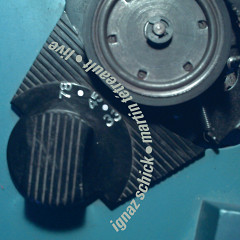
    Live • 33 • 45 • 78 is a collaboration of two beyond-deconstructionist turntablists: the Canadian Martin Tétreault and the German Ignaz Schick. They’re well past the idioms marked by the ‘broken music’ approach or Christian Marclay — their sound comes from the machine itself, removed from vinyl + needle friction. Schick is the younger of the two, but has honed an improvisational approach with Charlemagne Palestine and Don Cherry, while Tétreault has played and recorded with, as well as influenced many in the field of modern creative or improvised music such as Otomo Yoshihide and Jean Derome. Here, a pair of 2006 live performances from Belgium and Switzerland document the duo seizing from their machines sounds which are then forced to move in three tempos — quick, quicker, quickest. The disc gurgles, buzzes, and oozes across the aural spectrum.

    The disc gurgles, buzzes, and oozes across the aural spectrum.

    Manivelle in Downtown Music Gallery

    “Review”, Bruce Lee Gallanter, Downtown Music Gallery, October 30, 2009
    Friday, October 30, 2009 Press

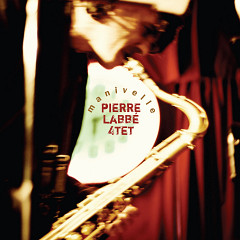
    This is saxist & composer, Pierre Labbé’s second disc for the Ambiances Magnétiques label, although he was also a member of Les Projectionnistes with Bernard Falaise as well. Mr. Falaise is one of the best and busiest guitarists to emerge from the great Québécois scene and can be heard on dozens of discs. Over the past few years drummer Isaiah Ceccarelli has also been busy playing a number of fine AM sessions as as one with him as the leader. Pour Le Moment is a subdued song for elegant jazz guitar, warm tenor sax and sizzling brushes.I dig the dancing groove that Isaiah sets up on Corpus. Although Pierre is the main composer here, he does a great job of setting up Bernard Falaise to play lots diverse guitar parts and taking inspired solos. Each piece provides a different challenge for the quartet, since Pierre keeps changing the structures. For the title piece, Pierre plays an ongoing rhythmic groove on his sax while the rest of the quartet has to shift changing tempo or balance. I dig the way the quartet uses space on Fes to carefully place notes in a most suspenseful way. This music is in between categories like jazz and rock, but does use elements of both. Matos shifts between more rockin’ sections and abrupt spacious interludes, it seems to work but it hard to explain exactly why. I dig the way Isaiah’s exuberant drums kick off La Kuchika, yet it is the laid back clicking groove that fuels the rest of the piece. Mr. Labbé does a consistently good job of keeping two shifting ideas moving along together with various interconnected parts. The occasional twisted guitar solo by Falaise is an added plus. This is one of those unrecognized gems that will take some time to fully absorb all of the fine points and intricate ideas buried within.

    This is one of those unrecognized gems that will take some time to fully absorb all of the fine points and intricate ideas buried within.

    Shadows of Forgotten Ancestors in Downtown Music Gallery

    “Review”, Bruce Lee Gallanter, Downtown Music Gallery, October 30, 2009
    Friday, October 30, 2009 Press

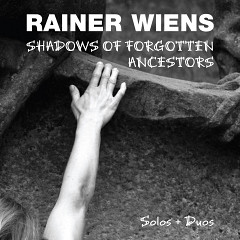
    This is Rainer Wiens third appearance on the AM label, both previous ones have involved new music violinist Malcolm Goldstein. I can’t think of many other discs which have featured the kalimba or thumb piano in a new music setting except for Richard Crandell who has two discs on Tzadik. The Valley of Green Ghosts opens with a sublime, earthy kalimba solo, delicate and enchanting. If a Bird Sings in the Forest is a fine solo for soprano sax, rich and slightly twisted. Blood Fever is violin solo by Mr. Goldstein and it is stark and a bit eerie. The title track features violin (Joshua Zubot) and flute shadowing each other in a most mysterious way playing some bent (written) harmonies. Since Mr. Wiens only plays on a few of these pieces, it sounds as if he has written or at least directed the other solo & duo pieces. All of these pieces do fit together and seem to evoke an ancient ritualistic vibe, hence the CD’s title. Jean Derome plays some superb flute on Bird of Jade, an instrument which he doesn’t get to play often enough. Shh… Whisper to the Wind features some more strange, bent violin and breath-like vocal sounds or whispers. If I didn’t know better, I would’ve thought that this disc was a soundtrack to a native American psychedelic ceremony. Does anyone still do peyote or magic mushrooms? I wouldn’t know.

    If I didn’t know better, I would’ve thought that this disc was a soundtrack to a native American psychedelic ceremony.
  • 222
  • 223
  • 224
  • 225
  • 226
  • 227
  • 228
  • 229
  • 230