actuellecd
  • This website is also available in English.

Blog

3585 results
  • 214
  • 215
  • 216
  • 217
  • 218
  • 219
  • 220
  • 221
  • 222
  • Infininiment in Where’d All My Friends Go?

    “Review”, Where’d All My Friends Go?, January 16, 2010
    Saturday, January 16, 2010 Press

    Klaxon Gueule (translated, “Horn Scream”) is a Montréal group featuring three top tier players of the improv arena, Michel F Côté (percussion), Bernard Falaise (guitar), and Alexandre St-Onge (bass), who put aside very successful careers (solo and otherwise) every few years for a Klaxon Gueule release — some of the strongest records in the Ambiances Magnétiques catalog. Following an exciting 1997 debut (Bavards) the group shifted away from energetic free-improvisation to a tense electro-acoustic style of ominous improvisation characterized by the use of heavily manipulated instrumentation. Klaxon Gueule, armed with instruments almost entirely non-manipulated, make a bit of a return to its previous inclinations with Infininiment, inviting in a reeds section, including Jean Derome, Gordon Allen, and Philippe Lauzier, to back them. The thirteen tracks presented here are less energetic than the group was back in 1997, but this disc is probably better realized than was Bavards. The music here moves fluidly over very uneven terrain at speeds necessitated by the territory, squirming over, around and, at times, even through the particular landscape. Derome, Allen, and Lauzier enter the mix sparingly, reacting in accord with the core trio to fill in sparse areas here and there. A stimulating exercise in free-improvisation.

    A stimulating exercise in free-improvisation.

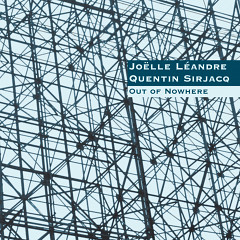
    Out of Nowhere in AllMusic

    “Review”, Donald Elfman, AllMusic, January 16, 2010
    Saturday, January 16, 2010 Press

    Out of Nowhere, the title of French double bassist Joëlle Léandre’s new recording with pianist Quentin Sirjacq, her student at Mills College, tells us a great deal-the two look into the universe and pull music out of what seems like an emptiness. What’s notable is that they are able to give form and, more importantly, expressive shape to their improvisations. Sirjacq is something of a spare minimalist, which gives a simple context for Léandre to open up exploration, often bowing her bass and/or utilizing harmonics. A dazzling track is Ruin, in which some otherworldly vocals from Léandre create a volcanic power, pulling more raw intensity from Sirjacq before returning to an almost eerie quiet. Awakening finds Sirjacq adding to his sonic arsenal by playing prepared piano.

    Érick d’Orion in Le Courrier

    “Critique”, Le Courrier, January 15, 2010
    Friday, January 15, 2010 Press

    Érick d’Orion, artiste de l’installation, compositeur et musicien autodidacte, réunit de vieux pianos pour l’exposition Solo de musique concrète pour 6 pianos sans pianiste. Grâce aux nouvelles technologies, cette installation, à la fois visuelle et sonore, crée un environnement musical. Chacun des pianos résonne aux rythmes des impulsions des moteurs désaxés disposés dans leur ventre. Érick d’Orion cherche à comprendre le rapport harmonieux entre l’imaginaire du spectateur devant des objets familiers et l’espace acoustique. L’exposition, parfois dérangeante, invite à une exploration de la musique concrète, du «noize», du free jazz et de l’électroacoustique. L’œuvre d’Érick d’Orion est originale, percutante et d’une grande sensibilité.

    L’œuvre d’Érick d’Orion est originale, percutante et d’une grande sensibilité.

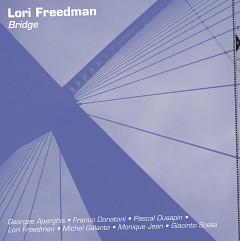
    Bridge in Voir

    “Critique”, Réjean Beaucage, Voir, January 14, 2010
    Thursday, January 14, 2010 Press

    On connaît bien la clarinettiste Lori Freedman, l’une des musiciennes les plus actives sur la scène montréalaise des musiques improvisées. On sait aussi, pour l’avoir vue à la SMCQ, avec l’ensemble Transmission, ou ailleurs, qu’elle peut avec la même extraordinaire aisance interpréter les œuvres les plus exigeantes du répertoire contemporain. Elle nous offre les deux ici, interprétant des œuvres de Michel Galante (avec la pianiste Brigitte Poulin), Pascal Dusapin, Giacinto Scelsi, Franco Donatoni, Georges Aperghis et Monique Jean, et improvisant en studio trois «ponts» reliant le tout. Qu’elle joue de la bonne vieille clarinette en si bémol, de la basse ou de la contrebasse, elle étonne par sa virtuosité et les sonorités surprenantes qu’elle tire de ses instruments. (3,5/5)

    … elle étonne par sa virtuosité et les sonorités surprenantes qu’elle tire de ses instruments.

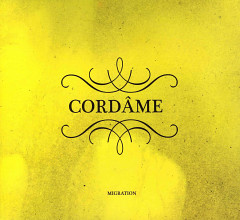
    Migration, Interview, Live au Upstairs in Vital

    “Review”, Dolf Mulder, Vital, no. 713, January 11, 2010
    Monday, January 11, 2010 Press

    The continuity of interesting releases by Ambiances Magnétiques is also the case for the sublabel Malasartes Musiques, that was started by Damian Nisenson several years ago. This time Nisenson presents his new group Nozen, a quartet by Pierre Tanguay (drums), Jean Félix Mailloux (bass), Bernard Falaise (guitars) and Nisenson himself on (alt and tenor sax). They interpret 12 compositions by Argentina-born Nisenson that move between jazz, new music and musical traditions of Jewish Eastern Europe. After the revival of klezmer in the 90s, it was also embraced by jazz musicians. Just think of John Zorn’s Masada or Burton Greene’s Klezmokum. Nozen is also exponent of this development as Nisenson also strives above all for a combination of jazz and klezmer. He does so very successfully. Their playing is modest and inspired. The music often starts very calm but gradually effervescent passages takes over and climaxes are reached. Very satisfying are the few tracks where guitarist Falaise impresses with fine solo work and dissonant, like in the opening track and in the fantastic Spread the News. They counterbalance perfectly with the pieces that pass by relatively unnoticed because they are built around klezmer-like themes that sound to common and therefore insignificant. Like the closing track No Milk No Sugar. However after the short silence a new piece begins that is added as a ghost track. This is by far the most experimental track and was probably produced in the studio.

    Jean Félix Mailloux is ready for his second record by his group Cordâme (Marie Neige Lavigne — violin, Julie-Odile — violoncello, Rémi Giguere — guitars, Ziya Tabassian — percussion, vibraphone, Pierre Tanguay -drums). Migration draws inspiration from Persian, Indian and Armenian music, and modal and improvised music. In this respect it is a similar project as Nozen, as both integrate eastern musical traditions in a western context. In contrast with Nozen Mailloux moves further east, not only geographically but also in the music he composes. Jazz-influences, as well as other western idioms are less obvious then in the case of Nozen. Mailloux is not interested in opposing or confronting these influences with western traditions. He brings an ode to eastern musical traditions, leaving behind all the ornaments that characterize this music often in its original form. Of course one can hear immediately that the music is played by western players, who — that is also very evident — are very dedicated to this music. It is evident that Mailloux is very fond of eastern music. However the compositions are not always satisfying or engaging from beginning to end. A bit too spun out from time to time. The music often moves along in the same slow — walk like a egyptian — pace. If you can surrender yourself to this it is a very pleasant slow journey. Very organic and pleasing chamber music. Constantly in the same relaxing mood but played very spirited.

    With Interview something else is going on. This is the fist solo effort by the young trumpeter Amy Horvey. She works mainly as a contemporary, orchestral and Baroque trumpeter and appeared as a soloist with numerous ensembles and orchestras. On her first solo-album she interprets works from very different composers. The CD opens with Quattro pezzi per tromba sola, a beautiful composition by Giacinto Scelsi. It is followed by pieces from unknown contemporary composers: Musica Invisible (Cecilia Arditto), Interview (Anna Hostman). In Apparatus Inconcinnus (Ryan Purchase) a story of the Russian writer Daniil Charms is read by Horvey, interrupted by instrumental parts. Overture to The Queen of the Music Boxes features Jeff Morton on music boxes, toy instruments and electronics. It sounds like an improvisation, but I can be wrong. To conclude I can say that Horvey made the right decision in including a wide variety of compositions, showing that she feels at home as a trumpeter in very different musical worlds.

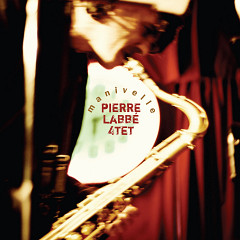
    Manivelle in Hour

    “Spins”, Mike Chamberlain, Hour, January 7, 2010
    Thursday, January 7, 2010 Press

    This is a most-pleasing release by tenor saxophonist Pierre Labbé and his quartet of guitarist Bernard Falaise, bassist Clinton Ryder and drummer Isaiah Ceccarelli. Labbé has a beautiful, warm tone on his horn, and Falaise, who it seems can play anything on a guitar, brings much of the same rock edge to this project as on his work with Les Projectionnistes. Ryder and Ceccarelli are solid and flexible, as the music moves between rock, funk and free jazz. Music to keep you warm.

    Music to keep you warm.
  • 214
  • 215
  • 216
  • 217
  • 218
  • 219
  • 220
  • 221
  • 222