actuellecd

Blog

3585 results
  • 162
  • 163
  • 164
  • 165
  • 166
  • 167
  • 168
  • 169
  • 170
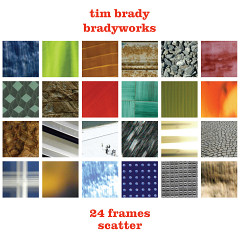
  • 24 Frames — Scatter in Monsieur Délire

    “Listening Diary”, François Couture, Monsieur Délire, September 26, 2011
    Monday, September 26, 2011 Press

    It took Tim Brady five years to complete 24 Frames, a series of 24 solo and duo pieces for electric guitar and electronics. On record, 24 Frames is split across two separate releases. Released earlier this year, 24 Frames: Trance features the last six “frames” on a CD accompanied by a DVD. 24 Frames: Scatter features pieces 1 through 18 on two CDs. Disc 1 contains six duos with members of Bradyworks and Quasar, plus other musicians. Jazz singer Karen Young is the most surprising duettist here, in Frame 1: Scatter, but the best track is Frame 2: In Almost Unison with baritone sax player Jean-Marc Bouchard. Disc 2 features 12 short pieces for solo electric guitar grouped in three cycles, with and without electronics — a tour de force that brings back the fact that, beyond his symphonies and multimedia projects, Tim Brady remains an exceptional guitarist and a commanding composer for his instrument. Recommended.

    … a tour de force that brings back the fact that, beyond his symphonies and multimedia projects, Tim Brady remains an exceptional guitarist…

    Envoi in The Squid’s Ear

    “Heard In”, Florence Wetzel, The Squid’s Ear, September 26, 2011
    Monday, September 26, 2011 Press

    In a recent article on the late great trumpeter Bill Dixon (1925-2010), the newspaper’s purported photo of Dixon was actually a photo of multi-instrumentalist Giuseppi Logan. Jazz fans were understandably miffed by the blatant error; as Squid’s Ear writer Kurt Gottschalk wryly noted on Facebook, “Giuseppi Logan looks about as much like Bill Dixon as a saxophone looks like a trumpet.”

    And yet, it’s highly probable that Dixon would have been amused by the snafu. In jazz historian Ben Young’s essential bio-discography Dixonia, Dixon states, “The way to get me away from something is have everybody dig it — then I’m off and running.” Dixon was a man who always went his own way, often spending years ignoring the public eye and the music marketplace. This is one of the reasons why someone of his enormous talent and intelligence is not better known, despite his major contributions to jazz history, which include his role as organizer and producer of the seminal October Revolution in Jazz in 1964, as well as founder of the equally seminal Jazz Composers Guild in 1965.

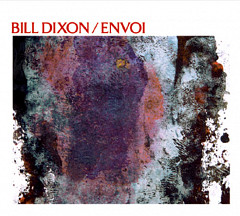
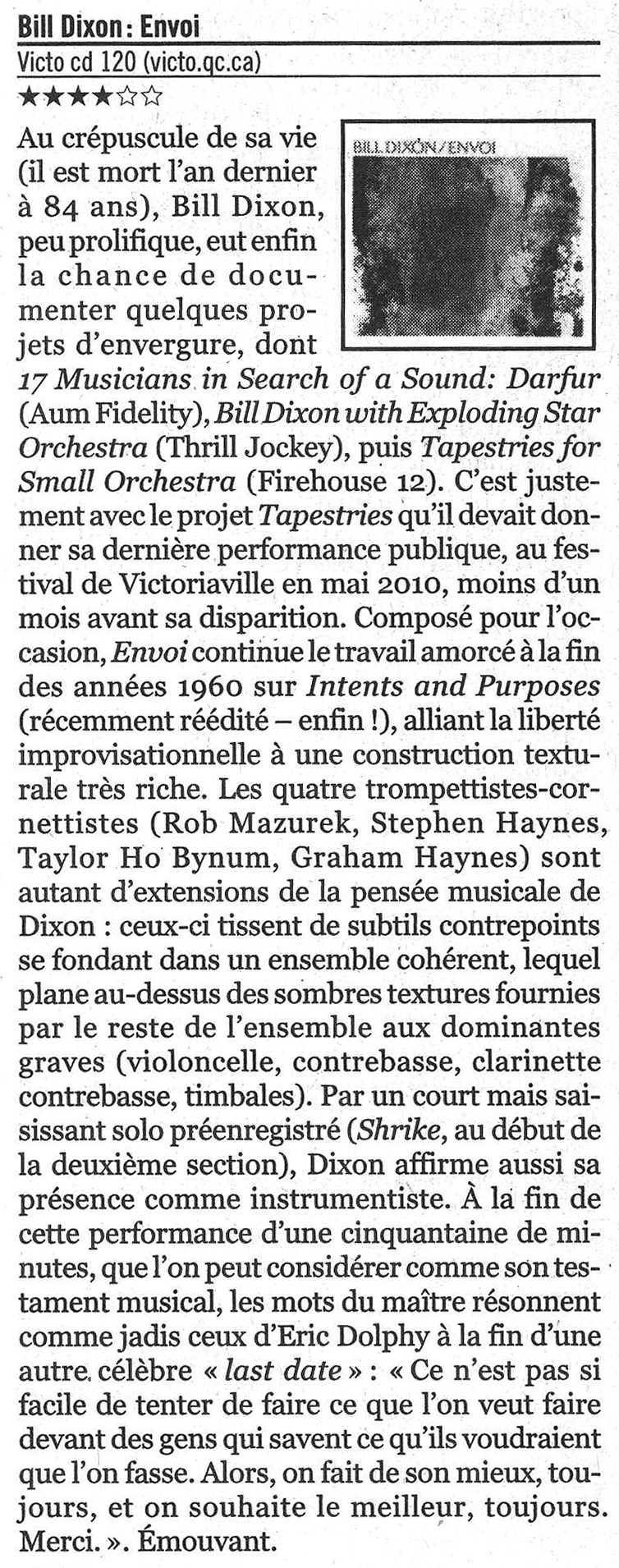
    Releases by Dixon have always been cause for celebration, and that’s particularly true now with Envoi. A recording of Dixon and a staggeringly talented band at the 2010 Victoriaville Festival in Quebec, this turned out to be Dixon’s last concert and last recording — in fact, he died a few weeks after the festival. Envoi consists of two long sections performed by nine musicians, including Taylor Ho Bynum, Ken Filiano, and the luminous Warren Smith. Dixon provided the music and the direction, and although he didn’t actually play at the concert, he provided a brief prerecorded solo at the beginning of Section II entitled Shrike. The solo is a powerhouse: Dixon shreds sound, and then shreds those shreds in an absolute burning fury.

    Overall Envoi is a stunningly beautiful work that the listener will return to again and again. The work has the grandeur and mystery of the Miles Davis-Gil Evans’ masterpiece Sketches of Spain, but unlike that work, where a perfectly aligned orchestra provides a steady foil for Davis, the horns here have no security whatsoever. Foreground and background shift constantly as the brass drops back and the rhythm section moves forward, and beautiful melodic lines often end abruptly or dissolve into distortion. Dixon has created a field of sound where just about anything can emerge, and as each section unfolds the listener is entranced by the harmonic interweaving, and enfolded into the music’s profound emotional depths.

    The word “envoi” means a brief stanza that concludes certain forms of poetry, and one can certainly look at this concert as a work that concludes a long and important career. The CD itself also has an envoi: at the end of the concert the audience breaks into enthusiastic applause, and then Dixon makes the following statement: “It is not so easy to attempt doing what you want to do in front of people who know what they would like for you to do. So, one does one’s best, always, and one hopes for the best, always. Thank you.”

    Envoi is an indispensable release. Period.

    Envoi is an indispensable release. Period.
    Érick d’Orion in Québec Hebdo

    “Folie/Culture propose un nouvel atelier: création audio”, Isabelle Chabot, Québec Hebdo, September 9, 2011
    Friday, September 9, 2011 Press

    L’organisation oeuvrant auprès des personnes ayant des problèmes de santé mentale, Folie/Culture, lance un nouvel Atelier de création en art audio. L’activité unique est gratuite et offerte à environ huit personnes.

    Le projet est organisé en collaboration avec le centre Avatar et animé par Érick d’Orion. L’artiste sonore est également musicien et commissaire à l’occasion. Il proposera aux participants l’exploration et l’expérimentation sonore. «L’idée est de les amener plus loin dans un processus de création. C’est une façon de valoriser grâce à la présentation publique prévue. Ça donne une certaine importance et ça les met aussi en contact avec des artistes professionnels», explique la directrice de Folie/culture, Céline Marcotte. Cette dernière souligne que l’atelier n’est pas une forme d’art thérapie. Personne n’étudiera ou n’analysera les participants.

    L’idée est de les amener plus loin dans un processus de création.

    Tremblement de fer in Blow Up

    “Recensione”, Enrico Bettinello, Blow Up, no. 160, September 1, 2011
    Thursday, September 1, 2011 Press

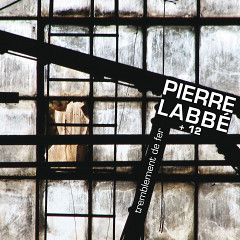
    Derome e Tanguay sono anche presenti nella versione discografica di Tremblement de fer del compositore Pierre Labbé. Commissionata dall’Off Jazz Festival di Montréal per un organico di cinquanta elementi, la suite è qui eseguita da un ensemble che abbina un quartetto d’archi a una sezione ritmica ad alto tasso di elettricità [Bernard Falaise è alla chitarra] e a quattro strumenti a fiato. Massiccia e coinvolgente. (7)

    7

    Danse à l’Anvers in Blow Up

    “Recensione”, Enrico Bettinello, Blow Up, no. 160, September 1, 2011
    Thursday, September 1, 2011 Press

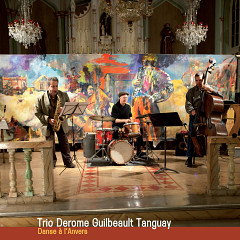
    Non c’è volta che io ascolti un disco del trio composto da Jean Derome [ance], Normand Guilbealult [contrabbasso] e Pierre Tanguay [batteria] e non lo trovi men che eccellente. Stanno in Canada i tre — attivissimi sulla scena del Quebec — ma se solo fossero di downtown New York ci potete scommettere la testa che i festival se li contenderebbero. Ma tant’è e accontentiamoci di questo Danse à l’Anvers, spettacolare accostamento di temi di Derome con classici di Ellington, Dolphy e Mengelberg tra gli altri. Energia, tiro, ironia, fantasia e intelligenza improvvisativa fanno di questo disco un lavoro da ascoltare in heavy rotation. (8)

    8
  • 162
  • 163
  • 164
  • 165
  • 166
  • 167
  • 168
  • 169
  • 170