actuellecd
  • This website is also available in English.

Blog

3585 results
  • 160
  • 161
  • 162
  • 163
  • 164
  • 165
  • 166
  • 167
  • 168
  • Lieux imaginés in Monsieur Délire

    “Listening Diary”, François Couture, Monsieur Délire, November 2, 2011
    Wednesday, November 2, 2011 Press

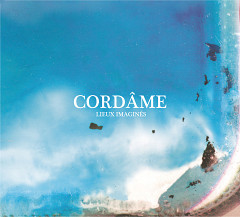
    Doublebassist Jean-Félix Mailloux’s string trio Cordâme is getting better and better with each album — it is actually making giant leaps. Migration was already very strong, but Lieux imaginés highlights composition skills that are so rich and sophisticated, yet so accessible! Thirteen pieces bearing names of cities Mailloux never visited. Santiago and Dans la tête de M. Sakamoto stand out. Influences from Bar Kohkba and tango music, but a highly personal style.

    Migration was already very strong, but Lieux imaginés highlights composition skills that are so rich and sophisticated, yet so accessible!

    Teoria dell’elasticità di Girolamo Papariello in Monsieur Délire

    “Listening Diary”, François Couture, Monsieur Délire, October 27, 2011
    Thursday, October 27, 2011 Press

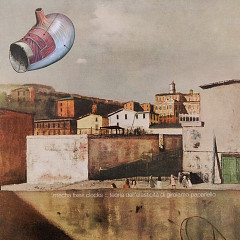
    The vagrancy of Michel F Côté’s project Mecha Fixes Clocks continues: after an album on alien8 and one on &records, the third opus is now out on Ambiances Magnétiques. Recorded last year at Studio 270, this CD features a new expanded line-up (Côté, Freedman, Lauzier, Epps, Zubot, René, Thiessen, Martel, St-Onge, Falaise, Tétreault). The music is still as mysterious and shapeshifting as before: textural improvisation, occasional suggestions of rhythmical and melodic elements, confluences of synergetic ideas giving the impression not of chaos but of a highly complex compositional will. Different than and on par with the first two albums. I wish long life and ongoing renewal to this great project!

    Different than and on par with the first two albums. I wish long life and ongoing renewal to this great project!

    At Christ Church Deer Park in Monsieur Délire

    “Listening Diary”, François Couture, Monsieur Délire, October 18, 2011
    Tuesday, October 18, 2011 Press

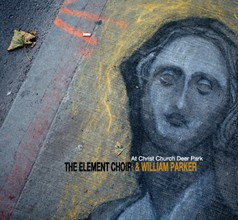
    At a CD launch event organized by Barnyard Records, were simultaneously on stage at some point the Lewis/Downing/Martin trio, William Parker, and Christine Duncan’s Element Choir. The result: 45 minutes of happiness to follow up on the large vocal improvisation ensemble’s debut. Less grand and revelatory than their first CD, but still a very honest effort. The first 20 minutes are gorgeous — nice synergy between pipe organ, choir and instrumentalists. But the piece looses its way afterward. Start with At Rosedale United.

    45 minutes of happiness to follow up on the large vocal improvisation ensemble’s debut.

    Abandoned Ballroom in Monsieur Délire

    “Listening Diary”, François Couture, Monsieur Délire, October 18, 2011
    Tuesday, October 18, 2011 Press

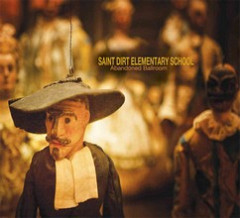
    A second opus for Saint Dirt Elementary School, an ensemble led by lap-steel player Myk Freedman. And this one’s a big step forward, a truly beautiful record of short naive pieces, so pretty they’ll make you smile in harmony. The opening tune As America Crumbles, I Sit in My Room Dreaming Up Silly Songs has an unavoidable Klimperei feel (the glockenspiel), while the Latin rhythms in Zombies Love Dancin’ to this Number bring to mind Jono El Grande shacking up with Perrey & Kingsley. Elsewhere, the music displays strong affinities with Fanfare Pourpour, Pascals and Swedish duo Sagor & Swing. Candy for the ear, instantly endearing.

    Candy for the ear, instantly endearing.

    Daniel Rothman, Ernstalbrecht Stiebler: Sens(e) Absence, Jean Derome, Joane Hétu: Le mensonge et l’identité in Vital

    “Review”, Dolf Mulder, Vital, no. 801, October 10, 2011
    Monday, October 10, 2011 Press

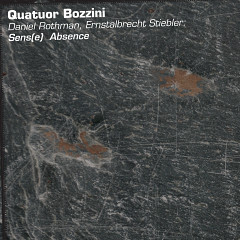
    Founded in 1999 this string quartet has built a reputation in interpreting all kinds of modern Music in well-defined projects. Earlier releases concentrated respectively on Steve Reich, James Tenney, etc. This year two new releases saw the light. Sens(e) Absence has two lengthy and otherwise related works by Ernststalbrecht Stiebler (Sehr langsam) and Daniel Rothman (Sense Absence). Sehr langsam from veteran German composer Stiebler, describes perfectly how this piece progresses. It moves very slowly forward, through a constant fading in and fading out of the strings, who play long extended notes. The piece breaths a deep sonority and ask for an exercise in patience, in just listening without expecting much to happen. Rothman is an american composer of a younger age, who composed a piece that is closely related to Sehr langsam. Also his composition is about drones and moves on very slowly, again through the playing of long extended notes. In both pieces little intervals, harmonies and other details are discovered when listening attentively. On Le mensonge et l’identité the Bozzini Quartet shows a different face. It is a work by Joane Hétu and Jean Derome for string quartet, “whom members speak, move about, improvise, and accompany themselves with a prerecorded tape.” The work is divided in three sections. In the first part we see the classical quartet. In the second part the musicians start to move on stage from their original positions. In the third section the musicians operate individually. Over the pieces the music moves from composed to improvised, from constructed to deconstructed. But whatever happens, throughout the musicians play together, cooperating in one work. The music is also meant as a metaphor for what happens in our society. Institutions disappear, leaving the individual alone and homeless. However music is a force that create community as well spiritually as physically. That is the philosophy of this piece, and that can be picked up from the spoken parts. Sometimes the music is interrupted by spoken words, and other places they move along unisono. Personally I’m not a fan of music where spoken words are part of the concept, to communicate some message. But that is a matter of taste. Not an easy work this suite. Life isn’t an easy matter either.

    Not an easy work this suite. Life isn’t an easy matter either.

    Damián Nisenson, Trio Derome Guilbeault Tanguay in CISM

    “Journal de bord de l’OFF: Trio Derome Guilbeault Tanguay + Socalled / Nozen”, François Dunlop, CISM, October 8, 2011
    Saturday, October 8, 2011 Press

    Trio Derome Guilbeault Tanguay

    Qu’il n’y ait qu’un seul jazz ou plusieurs, que son existence même soit remise en question ou pas, personne ne pourrait réunir plus de consentement que le trio de force de Jean Derome, Normand Guilbeault et Pierre Tanguay sur le sujet. Difficile donc de commenter un concert où les parrains de notre scène ne font que le plus naturel des gestes: étaler leur art dans sa plus pure version. Poursuivant dans l’élan du magnifique Danse à l’Anvers (Ambiances Magnétiques Jazz, 2011), le trio a doucement navigué entre les compositions de maître Derome et celui de la grande histoire du jazz, déconstruisant au passage le classique de Ray Henderson, The Best Things In Life Are Free. Autre moment phare de la prestation fut celui où ce même Derome fredonna doucement les paroles d’un You Can Depend On Me, sous le délire d’une foule décidément bien heureuse par la surprise. Inutile de le répéter, mais faisons-le tout de même, Normand Guilbeault commanda sa contrebasse comme seul lui sait le faire et Pierre Tanguay n’a que réitéré son titre de premier batteur de la nation.

    Socalled / Nozen

    Rappelons-nous de cette première mouture du Tremblement de fer de Pierre Labbé et ses 50 musiciens, une commande de l’OFF qui, après un départ un peu éparpillé, a pris beaucoup de gallon en se réorientant vers une (inévitable) formation plus réduite et plus concise. Un projet de la sorte n’aurait jamais vu le jour sans le support de l’OFF. La même conclusion pourrait être tirée de cette fusion entre le projet du multi-instrumentiste Socalled et la formation free-klez (bah, utilisons ce terme au dépit d’un autre…) Nozen de Damian Nisenson. Gravitant généralement autour du répertoire du quartet et de quelques mélodies hébraïques, le concert s’est lentement dirigé vers une finale plus socalledienne au plaisir des quelques disciples de la star montréalaise qui n’hésitèrent pas à improviser un petit plancher de dans dans un Lion d’Or confortablement assis. Alors que l’intégration des échantillons laissait à désirer par une cohésion brouillonnant les rythmes de Pierre Tanguay (batterie) et Jean-Félix Mailloux (basse et contrebasse), celle des piano et claviers relevait d’un cran le jeu d’ensemble des musiciens. L’histoire saura nous dire si Nozen retentera l’expérience avec un Socalled délaissé à ses simples pianos et accordéons. Preuve fut d’ailleurs servie lors d’une très jolie finale tout en acoustique où saxophone, accordéon, et contrebasse défilèrent en plein milieu d’un public conquis par un esprit festif n’ayant jamais manqué au rendez-vous.

    Qu’il n’y ait qu’un seul jazz ou plusieurs, que son existence même soit remise en question ou pas, personne ne pourrait réunir plus de consentement que le trio de force de Jean Derome, Normand Guilbeault et Pierre Tanguay sur le sujet.
  • 160
  • 161
  • 162
  • 163
  • 164
  • 165
  • 166
  • 167
  • 168